REVIEW · GDANSK
Gdansk Old Town Half-Day Private Walking Tour
Book on GetYourGuide →Operated by PT Team · Bookable on GetYourGuide
Gdańsk feels personal on foot. This half-day private tour is a smart way to stitch together Gdańsk Old Town landmarks with the sea-and-merchants story that shaped the city, starting at the Golden Gate and rolling through Dluga Street on the Royal Route. My favorite part is the stop at St. Mary’s Basilica, where you can see why this Gothic brick powerhouse matters—and if you go up, you get tower views that put the whole area in perspective.
I also love the way the tour mixes big monuments with hands-on craft. The Arthur’s Court Museum stop explains how merchants organized their lives, and later the amber workshop’s polishing demonstration shows you how raw Baltic amber becomes jewelry and décor. The only real drawback to plan around is that the meeting point can vary by booking option—so double-check where you’re supposed to start.
In This Review
- Key highlights that make this tour worth your time
- Golden Gate to Dluga Street: the Old Town story starts fast
- A practical tip
- Arthur’s Court Museum: where merchant life had a meeting point
- Neptun Fountain and St. Mary’s Basilica: symbols plus skyline views
- What to consider
- Old Crane and the Motława River: the ship-and-crane engineering story
- A good “takeaway” from this section
- Amber workshop: turning raw resin into something you can picture
- What to watch for
- How the pacing works in a 4-hour private format
- A small planning thought
- Price and value: what $17 gets you, and what it doesn’t
- Who this tour suits best
- Should you book this private Old Town walk?
- FAQ
- How long is the Gdańsk Old Town Half-Day Private Walking Tour?
- Where does the tour start?
- What’s included in the tour price?
- Are entry fees to attractions included?
- Is this a private tour?
- What languages are available for the guide?
- Can I get a full refund if I cancel?
- Can I reserve now and pay later?
- How many reviews does it have and what rating is shown?
Key highlights that make this tour worth your time
- Golden Gate start plus Dluga Street Royal Route for quick first bearings in Old Town
- Arthur’s Court Museum to understand the city’s merchant fraternity culture
- St. Mary’s Basilica with the option to connect architecture to wider city views
- Old Crane and Motława River banks for the maritime “how ships got built” story
- Amber polishing demonstration so the amber legend turns into something you can picture
Golden Gate to Dluga Street: the Old Town story starts fast
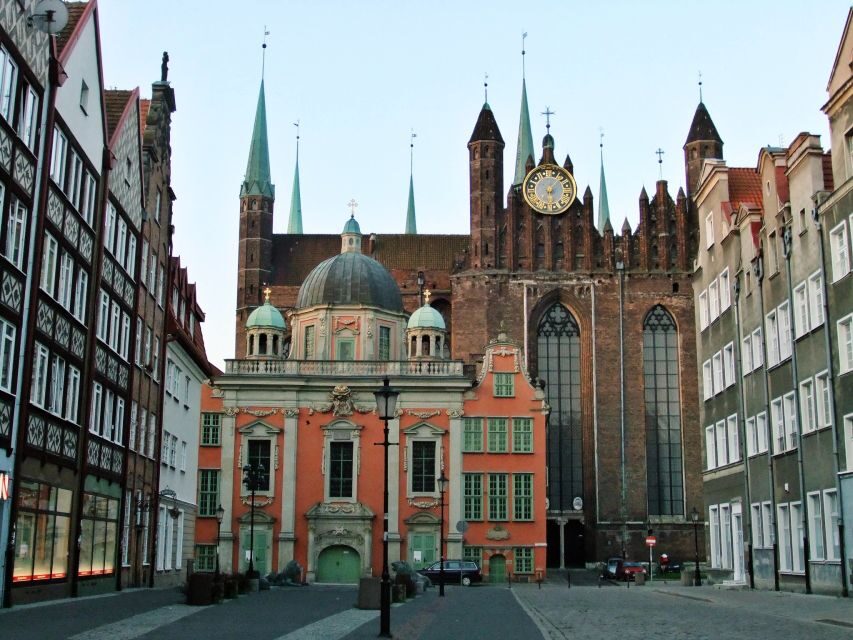
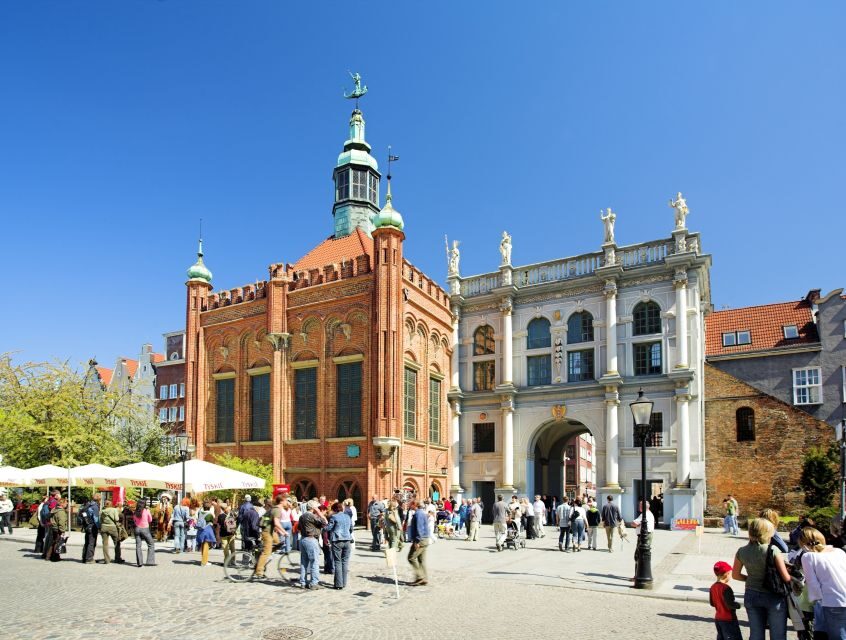
Your tour kicks off at the Golden Gate, a historic Renaissance city gate that’s a great “first landmark” because it feels like the threshold between modern Gdańsk and the older core. Starting here matters. Without it, it’s easy to wander the Old Town like a photo route. With a guide, you start learning how the city was laid out and why certain streets and buildings became the main stage.
From the Golden Gate, you head along Dluga Street—the Royal Route. This is the spine of the historic center, and it’s where you’ll see the mix of architectural styles that Gdańsk is known for: colorful burgher houses, Renaissance buildings, and the kind of civic structures that signal power. You’re not just looking at façades. You’re learning what the streets were for, who used them, and why the city’s prosperity showed up in stone and paint.
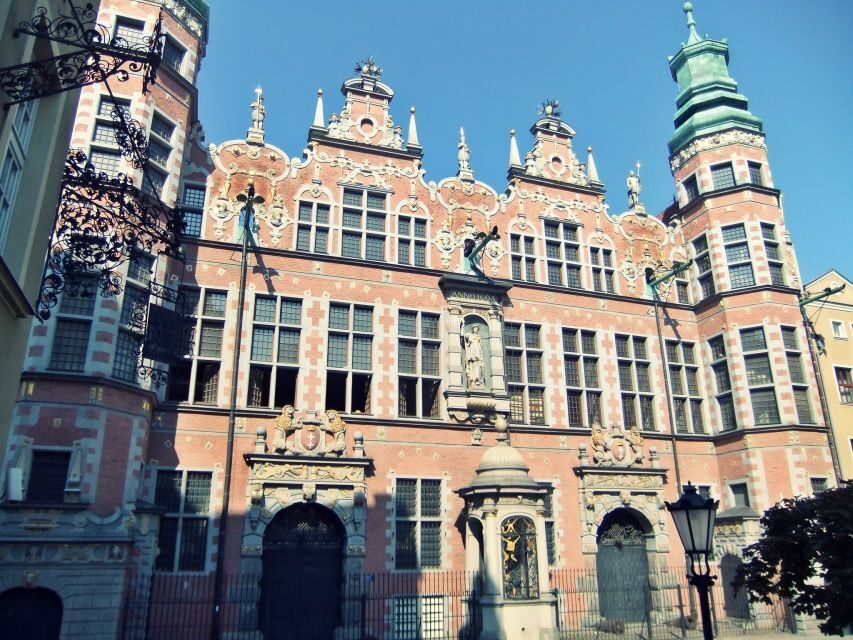
You’ll also get a close look at the flamboyant Town Hall. It’s one of those buildings that rewards careful watching, because details feel like they’re shouting for attention. A good guide helps you pick out what you’re seeing—so it feels less like a blur of pretty fronts and more like a city telling you its resume.
Other Old Town walking tours we've reviewed in Gdansk


A practical tip
Wear comfortable shoes. Even though it’s only about 4 hours, Old Town streets are cobbled and you’ll be doing a steady walking pace between stops.
Arthur’s Court Museum: where merchant life had a meeting point
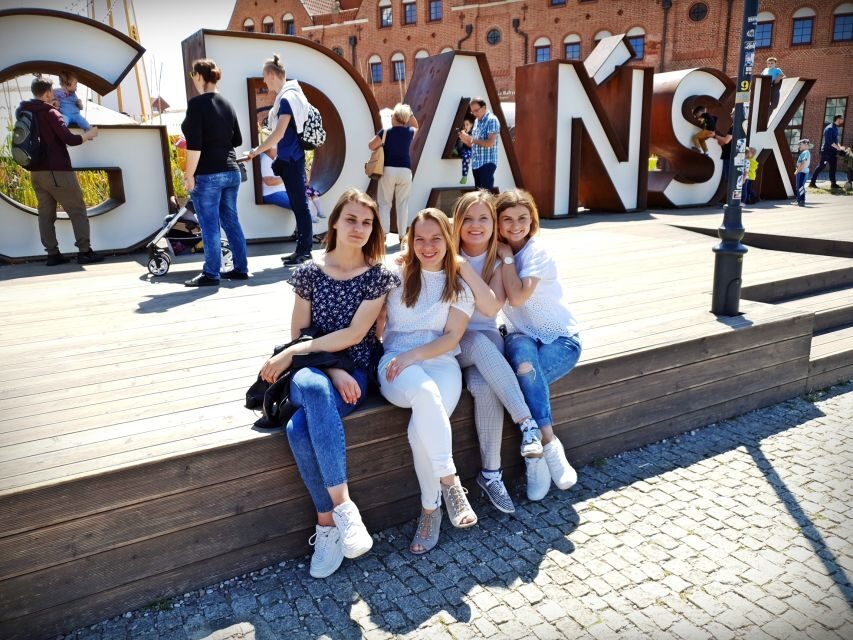
Next you move into a quieter, more “how the city worked” part of the walk with a visit to Arthur’s Court Museum. This complex dates back to the 14th century and historically served as a meeting place for merchant fraternities and social organizations. That might sound like background info, but it changes how you see everything else.
When you understand that merchants weren’t just running businesses—they were building networks—you start noticing the civic meaning behind the big showpieces you pass later. These were not random buildings. The city’s wealth depended on organized trade, and places like Arthur’s Court were where communities connected, negotiated, and made decisions.
You’ll likely pick up a few useful “mental links” that stick: how commerce shapes architecture, how social groups influence what gets built, and why public spaces matter in cities that grew from shipping and manufacturing.
Neptun Fountain and St. Mary’s Basilica: symbols plus skyline views
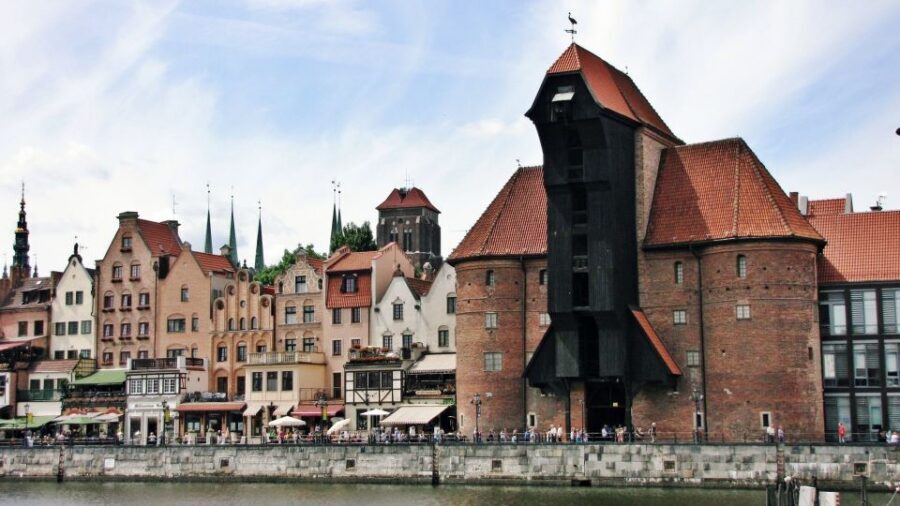
After Arthur’s Court, you take a photo moment at Neptun Fountain. It’s one of the city’s best-known monuments, and the point isn’t just that it’s famous. It’s that it reflects Gdańsk’s strong connection to the sea and maritime heritage. In a city shaped by ports, you quickly learn that symbols aren’t decoration—they’re messaging.
Then comes St. Mary’s Basilica, often described as the biggest Gothic brick church in Europe. Even if you’re not a hard-core architecture person, you’ll feel the scale. Brick Gothic has a distinct look, and this church carries it with confidence.
The real payoff here is the option of tower views. Being up high helps you make sense of the Old Town’s layout—where the river sits, how the street grid feeds into the waterfront, and why the city’s maritime identity shows up again and again in landmarks.
What to consider
Entry fees for attractions are not included. So if you plan on going up in the tower or paying for other internal access, budget a little extra.
Other walking tours we've reviewed in Gdansk





Old Crane and the Motława River: the ship-and-crane engineering story
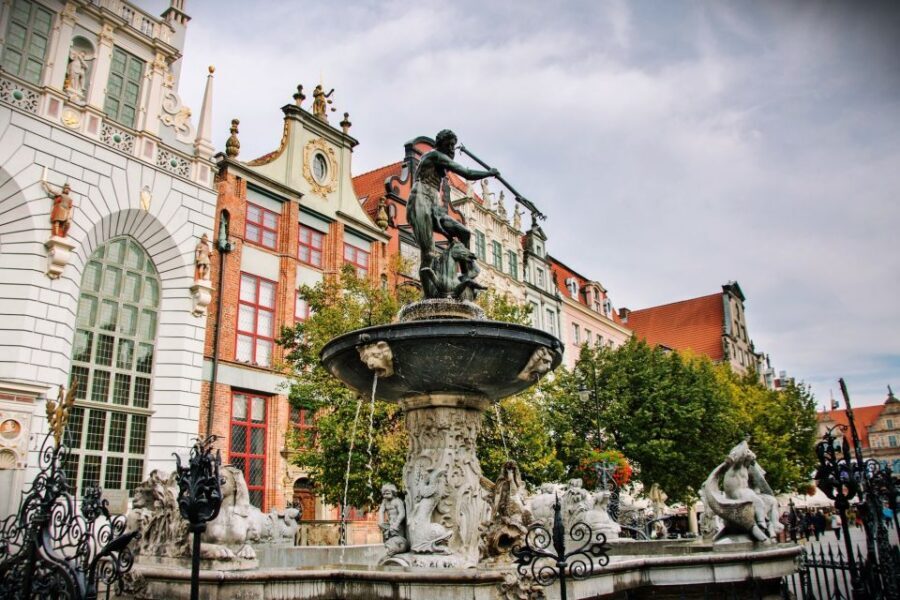
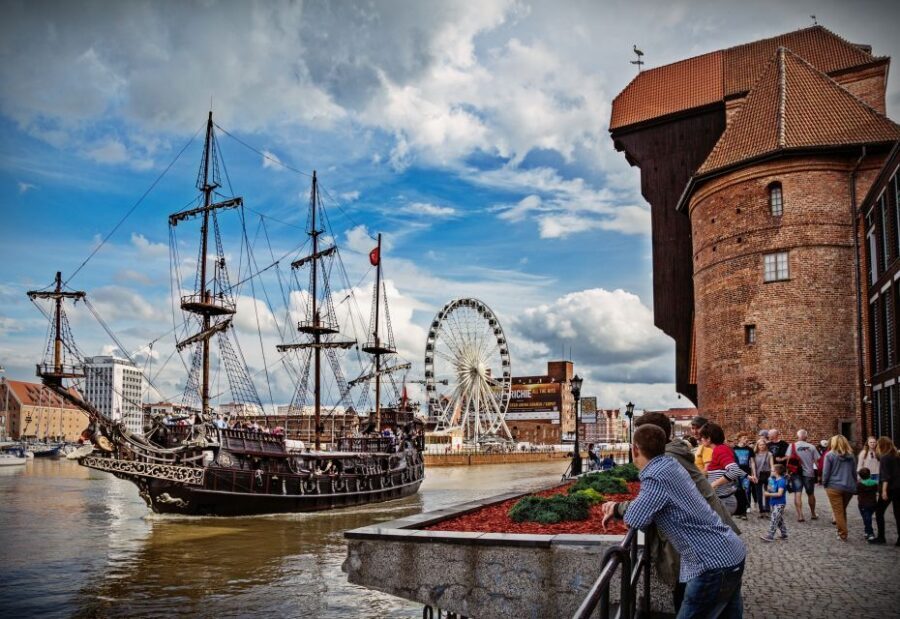
Now the tour shifts into a very Gdańsk kind of mindset: maritime engineering and waterfront life. You’ll visit Old Crane, a historic port crane and one of the city’s most recognizable landmarks. What makes it special is its age—dating back to the 15th century—and the practical purpose: it was used to install masts on ships.
That detail is more valuable than it sounds. It connects a landmark you might otherwise treat as scenery to a very specific job. You start picturing how masts were handled, how ships were loaded and maintained, and why the waterfront was central to the city’s economy. It’s a small piece of medieval logistics, right there in metal and structure.
From there, you walk along the banks of the Motława River, lined with beautifully restored medieval buildings. This is also where you’ll see the Green Gate, another architectural marker that keeps the focus on how the Old Town transitions toward the water.
This riverside stretch is ideal for a break. One of the practical nice touches is the suggestion to pause for coffee at one of the riverside restaurants. You’re not losing time; you’re absorbing the atmosphere while the guide points out what matters.
A good “takeaway” from this section
If you’ve ever been to port cities and felt like you only saw the tourist version of the waterfront, this walk helps you reconnect the story. Gdańsk’s design makes more sense when you understand that trade and shipbuilding were daily business, not a chapter in a book.
Amber workshop: turning raw resin into something you can picture
The amber portion is one of the most memorable elements of this tour because it’s included and it’s visual. You’ll visit an amber workshop to watch an amber polishing demonstration, and the guide explains how amber is transformed into jewelry and decorative items.
Amber has a way of sounding like a “cool souvenir” until someone shows the process. Watching polishing makes it easier to understand why amber is so valued: the look depends on refinement, and craftsmanship is what turns rough material into the finish people want to wear or display.
This stop also gives you context. You’re not only learning what amber looks like—you’re learning why it became a meaningful product connected to trade routes and regional materials. In a city where the maritime world is everywhere, amber fits naturally into the larger economy story.
What to watch for
Because the workshop is part of the included experience, you’ll get more value from the explanation than if you just browse shops on your own. Still, if you’re hoping to buy something specific, consider leaving a little extra time after the tour to compare items.
How the pacing works in a 4-hour private format
A 4-hour private walking tour hits a sweet spot: enough time to see major anchors of Old Town, but not so long that you feel dragged through it. Private format matters here. You can often move at the pace you want, and you get a guide who can tailor the emphasis depending on what you’re most curious about.
The guide languages include Spanish, English, German, Polish, Russian, French, Italian, and Portuguese. That matters if you’re traveling with someone who wants to ask questions and get real answers instead of guessing through a script.
From past participant feedback, guides such as Piotr Ruta have been praised for strong knowledge and staying flexible to what people wanted to focus on, and Marius has been noted for arriving on time with a clear, engaging approach. That kind of guide presence changes the whole feel of the walk.
A small planning thought
If you care about tower access inside St. Mary’s or other paid entries, decide that ahead of time. Since entry fees aren’t included, you don’t want to get to a spot and realize you’re short on cash or time.
Price and value: what $17 gets you, and what it doesn’t
At $17 per person for a 4-hour private walking tour, the value is mostly in three areas:
First, you’re paying for an expert guide to connect the dots between landmarks—Golden Gate, Dluga Street, Arthur’s Court, Neptun Fountain, St. Mary’s, Old Crane, and the Motława waterfront—so your time feels efficient.
Second, the amber polishing demonstration is included, which is the sort of “experience” that’s usually extra on tours like this. You’re not just walking past storefronts; you’re watching a process.
Third, you get the structure of a guided route without the overhead of a full-day itinerary. For many people, this is the best way to get oriented and then explore deeper afterward on your own.
What’s not included is important: entry fees to attractions. So think of this tour as the guided framework, and budget separately for ticketed access like tower visits.
Who this tour suits best
This is ideal if you like:
- Architectural landmarks but want context, not just descriptions
- Maritime stories that explain why certain sites exist where they do
- A mix of major sights plus one hands-on stop (amber polishing)
- A private pace where questions don’t get lost
It’s especially good for first-time visitors to Gdańsk Old Town who want to avoid the common problem of seeing “pretty stuff” without understanding what’s driving the city’s identity.
Should you book this private Old Town walk?
I think you should book it if you want a high-impact 4 hours in Gdańsk that covers the city’s most important symbols and its craft economy—without spending your whole day crisscrossing aimlessly. The guide-led structure, the Arthur’s Court context, and the included amber workshop are the main reasons this feels like more than a basic sightseeing stroll.
You might skip or at least plan carefully if you’re extremely price-sensitive about entry tickets inside attractions, or if you’re strict about where you meet—because the meeting point can vary depending on the option you choose.
FAQ
How long is the Gdańsk Old Town Half-Day Private Walking Tour?
The tour lasts 4 hours.
Where does the tour start?
The meeting point may vary depending on the option booked.
What’s included in the tour price?
A foreign language speaking Gdańsk city guide for 4 hours and a visit to an amber workshop for an amber polishing demonstration are included.
Are entry fees to attractions included?
No. Entry fees to attractions are not included.
Is this a private tour?
Yes, it’s a private group tour.
What languages are available for the guide?
Spanish, English, German, Polish, Russian, French, Italian, and Portuguese.
Can I get a full refund if I cancel?
You can cancel up to 24 hours in advance for a full refund.
Can I reserve now and pay later?
Yes. You can reserve your spot and pay nothing today.
How many reviews does it have and what rating is shown?
The rating shown is 4.9 based on 62 reviews.