REVIEW · GDANSK
Nature Walk and Wildlife Tour in Sobieszewo Island
Book on Viator →Bookable on Viator
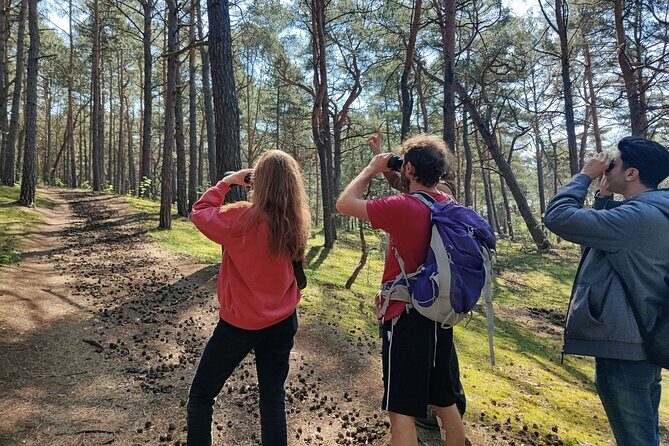
Bird spotting starts in the forest. This short walk on Sobieszewo Island focuses on real wildlife-viewing from observation hides inside the Ptasim Raju area, so you’re not guessing where to look. I like how the route moves from freshwater views (lakes) to open water (the bay and the coast), giving you a better mix of birds in just a few hours.
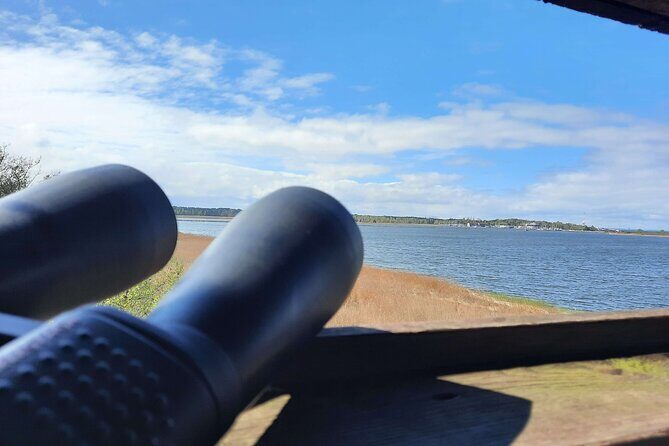
Two other things I really enjoy: binoculars are included, and you stay in a small group (max 8), which helps the guide keep pace while everyone gets chances to see. One consideration: the tour depends on good weather, and you’ll be walking from a scenic forest path out to the beach, so plan for layers and comfortable shoes.
In This Review
- Key highlights you’ll actually notice
- Sobieszewo and Ptasim Raju: why this route works
- Price and value: what you get for about $67
- The walk itself: a stop-by-stop birdwatching route
- Stop 1: Wieża Obserwacyjna Imienia Baboli in Ptasim Raju (Jezioro Karaś)
- Stop 2: Wieża Obserwacyjna Nr2 in Ptasim Raju (Jezioro Ptasi Raj + the bay)
- Stop 3: Znak Ptasi Raj (bench stop for rest and a picnic moment)
- Stop 4: Plaża 19 (beach time for sea birds)
- Stop 5: altana przy Ptasim Raju (final bench area near the exit)
- Why the towers beat a random self-guided walk
- What the guide brings (and why it affects what you see)
- Getting ready: simple tips for a smoother day
- Who this tour suits best
- Should you book the Sobieszewo Island wildlife walk?
- FAQ
- How long is the Sobieszewo Island nature walk and wildlife tour?
- What time does the tour start?
- Is the tour offered in English?
- How big is the group?
- Are binoculars included?
- Is there an admission fee at the viewing stops?
- Where does the tour start and end?
- Does the tour include lunch or snacks?
- What happens if the weather is poor?
Key highlights you’ll actually notice
- Observation towers built for birdwatching with hides that keep you in the right spot without disturbing wildlife
- Two-story viewing at the second hide for better angles over Jezioro Ptasi Raj and the bay of Gdańsk
- Free admission for every main stop, so you’re not paying extra as you go
- A beach stretch at Plaża 19 where you may spot white-tailed eagles, cormorants, terns, and more sea birds
- Short resets built in (a bench stop at Znak Ptasi Raj) so the birdwatching doesn’t feel nonstop
Sobieszewo and Ptasim Raju: why this route works
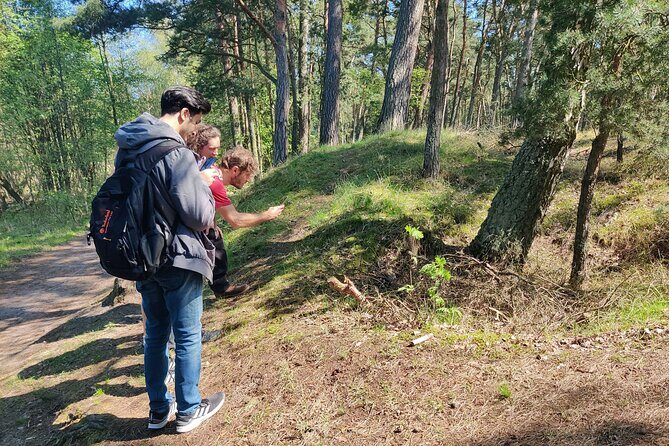
If you only have half a day in Gdańsk and you still want nature to feel like the main event, this is a smart pick. The tour is designed around how birds behave: they stick to water edges, sheltered shorelines, and predictable corridors. So instead of long hiking loops, you get a guided sequence of viewpoints—each one timed and placed for a different kind of habitat.
What makes it especially worthwhile is the flow. You start in a forest setting, move to lake-and-bird hides, take a breather, then end with a beach stop where sea birds show up. That mix tends to keep the bird list interesting without turning the day into a fitness test.
You’ll also feel the “small-group” advantage. With a maximum of 8 people, the guide can manage sight lines at the towers and spend real time on what you’re seeing, not just moving fast to the next photo spot.
Other zoo and wildlife experiences near Gdansk

Price and value: what you get for about $67
At $67.43 per person for roughly 3 to 4 hours, the value mostly comes from three things: your guide’s time, the included gear, and the lack of added entry costs.
Here’s what factors into the price:
- Binoculars are included, which saves you from renting or buying for a single trip.
- The key viewing areas are listed as admission ticket free, so your cost doesn’t quietly grow stop-by-stop.
- It’s offered in English, which matters if you want explanations tied to species and habitat, not just pointing.
What’s not included is also pretty clear: there’s no lunch or snacks, and private transportation isn’t included. If you come hungry, you’ll want to plan a light snack for yourself (or treat the picnic bench stop as your moment to eat).
The walk itself: a stop-by-stop birdwatching route
The day starts at 9:30 am at Nadwiślańska 133 and finishes near the reserve exit at Nadwiślańska 139B (Polana przed wejściem do Ptasi Raj). The full duration includes some added travel time, so you’re not surprised when it runs toward the 3–4 hour range.
The tour keeps shifting your viewpoint on purpose. Each stop has a job, and the timing is long enough to let birds show up (or to wait through the quiet moments that birding requires).
Stop 1: Wieża Obserwacyjna Imienia Baboli in Ptasim Raju (Jezioro Karaś)
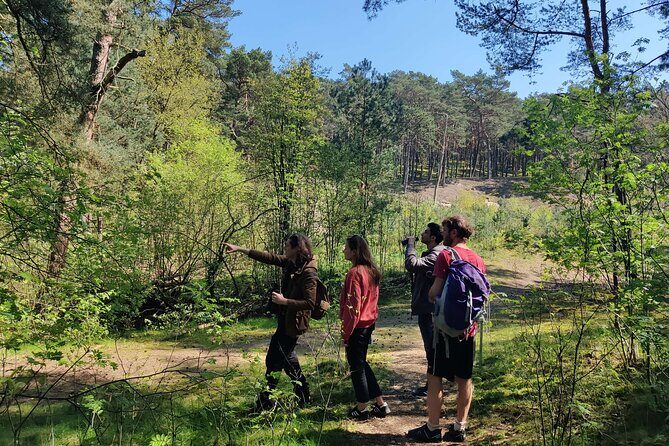
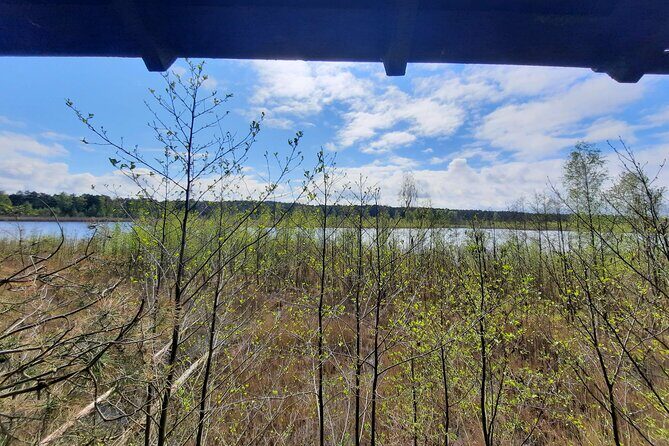
You begin by walking down a scenic forest path to the first hide. This matters more than it sounds—getting to the tower without rushing sets the tone, and the shaded start is usually easier on the nerves and feet.
From the hide, you’re aiming at a view of the smaller lake, Jezioro Karaś. This is where you focus on aquatic bird species. The stop lasts about 30 minutes, long enough to scan the waterline and spot movement before the group has to move on.
What to expect here:
- You’ll likely spend time watching rather than walking.
- The guide’s explanations (especially on what to look for) tend to help you separate similar-looking birds.
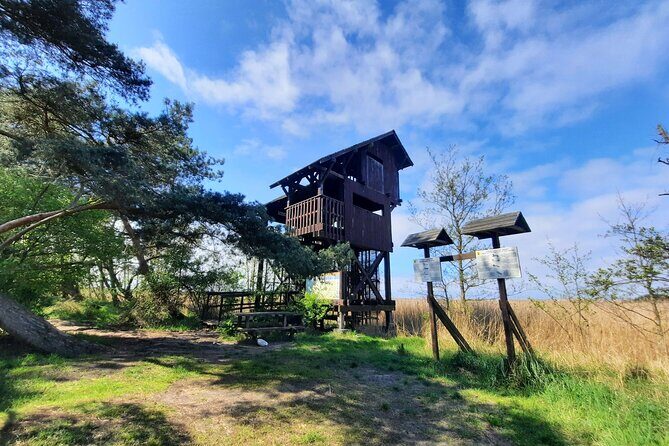
Stop 2: Wieża Obserwacyjna Nr2 in Ptasim Raju (Jezioro Ptasi Raj + the bay)
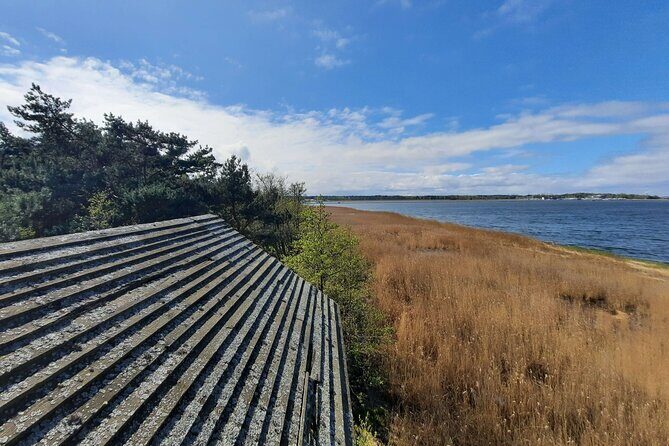
The second hide is where the views broaden. You get a marvellous outlook over Jezioro Ptasi Raj and the bay of Gdańsk, which changes the type of birds you’re likely to see.
This stop is about 40 minutes, and it’s described as one of the best viewing points in the reserve because it offers many opportunities for viewing thanks to two-story platforms. In plain terms: different floors give you different sight angles, so birds aren’t all competing in the same visual lane.
This is also the part where sea birds and waders come into play. If you’re a first-time birder, this is a great place to learn the “habitat logic”—how birds use shorelines, shallow edges, and open water depending on what they’re feeding on.



Stop 3: Znak Ptasi Raj (bench stop for rest and a picnic moment)
After two tower stops, your brain deserves a break—and this one is built in. At Znak Ptasi Raj, you reach a sheltered bench area where you can rest, and it’s also a natural spot for a short picnic.
This segment is about 20 minutes. I like stops like this because you return to the next viewing point with better attention. Birdwatching rewards patience, and fatigue kills patience.
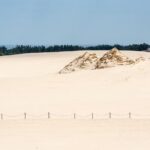
Stop 4: Plaża 19 (beach time for sea birds)
Then you shift from water-in-a-lake to open-air coastline. The route takes you to Plaża 19 in Gdańsk, and that’s where the tour leans into the dramatic birds people hope for.
The beach stop is about 30 minutes, and it’s explicitly described as a chance to see white-tailed eagles, plus cormorant, terns, and various other sea birds.
A practical way to approach this stop:
- Keep your scans steady. Eagles and larger raptors often show up as distant motion, not instant close-up surprises.
- Be ready for the wind. Beaches can be breezy, so pack layers even if the morning feels mild.
Also, one of the best “why this tour is more fun” details from past guests is the guide’s attention to amber during the forest-to-beach stretch. Even when you’re not actively collecting, the conversation can make the shoreline feel like part of the experience rather than just the walk-out-the-door ending.
Stop 5: altana przy Ptasim Raju (final bench area near the exit)
You finish at altana przy Ptasim Raju, ending near the bench area by the exit of the reserve. This final viewing moment is about 10 minutes.
It’s short on purpose, like a gentle landing after the best odds of sightings. Think of it as time to catch anything you missed, or to wrap up with one last calm scan before you’re on your way out.
Why the towers beat a random self-guided walk
A self-guided nature walk can be great, but birdwatching is also about timing and placement. These towers are built for looking in the right direction at the right altitude.
The real win is the hide approach:
- You can watch water edges and bird-feeding zones without pushing deeper into the reserve.
- You’re less likely to spook wildlife, compared with wandering closer than you should.
- You get structured time at each habitat, instead of constantly recalculating where to go next.
The second hide’s two-story platforms deserve special mention. If birds are higher up or farther out, the upper vantage can make a difference. If they’re closer to the waterline, lower angles can help too. Two floors means more “good viewing moments,” not just one perfect angle that you might miss.
What the guide brings (and why it affects what you see)
The guide is central to why this tour feels high-quality. Past guests specifically praised the Ladybird guide for being prepared, passionate, and calm—especially the way their pacing seemed to help with spotting more wildlife.
That calm approach matters because birding is a mental game. If someone rushes, you stop looking well and you start only reacting to whatever pops up instantly. A patient guide helps you scan properly and notice slow movement.
You’ll also benefit from targeted explanations tied to each stop—what you’re likely to see at a lake hide versus a bay-and-coast platform, and how to use the view time efficiently. Even without claiming instant miracles, the guide’s style clearly improves the odds of a good day.
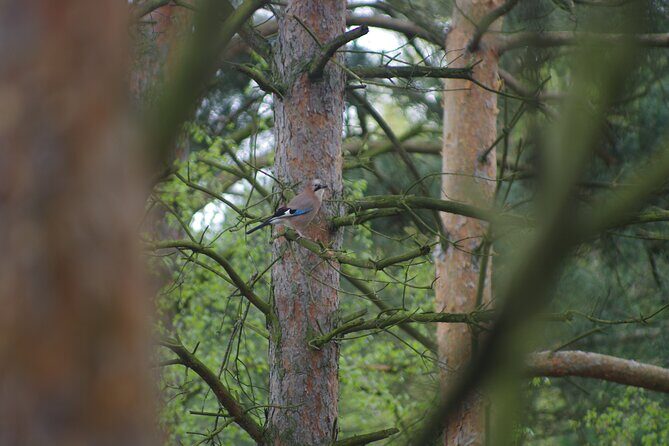
One more practical note: people have reported unusual sightings during this kind of day, including a moose and a rare lizard. You can’t count on those, of course, but the takeaway is encouraging—when the guide slows down and reads the moment, nature sometimes surprises you.
Getting ready: simple tips for a smoother day
This tour is short, but it touches multiple environments. Here’s what you’ll want to plan for so you can focus on birds instead of discomfort.
- Wear comfortable walking shoes. You’re moving between viewpoints on a forest path and then out to the beach.
- Bring a light layer. Wind can pick up near the coast, and hides aren’t always warm.
- Pack water. The tour doesn’t include lunch or snacks, and the bench stop is a good time for something small.
- Use the binoculars well. If you’re not sure how, start by scanning the waterline, then focus on any movement.
- Expect a good weather requirement. If conditions are poor, the tour may be rescheduled or refunded, so check forecasts the morning of.
Who this tour suits best
This is a strong fit if you:
- Like birdwatching, especially when someone helps you interpret what you’re seeing.
- Prefer a nature outing with structure—tower viewpoints, rest moments, and a clear finish.
- Want a half-day activity in the Gdańsk area that doesn’t require major planning or equipment beyond what’s provided.
- Travel in a small group mindset and enjoy paying attention over speed.
It’s also great for couples and solo travelers who want a guided route but still like quiet observation. With a max of 8 people, you usually get a more personal feel than big-bus tours.
If you’re looking for an all-day hike, a food-focused outing, or a guaranteed “must-see” animal lineup, this isn’t built around that. It’s built around the best viewing sequence—and then letting nature do its thing.
Should you book the Sobieszewo Island wildlife walk?
I think this is a book-worthy tour if your goal is quality wildlife viewing time, not just checking a nature box. The included binoculars, the small group size, and the fact that the main stops are free to enter add up to solid value. The forest-to-beach route also keeps the birdwatching fresh, and the hides do the heavy lifting for you.
I’d skip it (or at least be ready to be flexible) if:
- You can’t handle walking between viewpoints.
- You’re traveling on a day with iffy weather and you hate rescheduling.
- You want lunch and snacks built in, since the tour doesn’t provide them.
If you pick the right day and you’re willing to slow down and scan, you’ll get a very satisfying nature-focused morning with plenty of chances to see sea birds and waders from proper viewing points.
FAQ
How long is the Sobieszewo Island nature walk and wildlife tour?
It runs about 3 to 4 hours, including added travel time.
What time does the tour start?
The start time is 9:30 am.
Is the tour offered in English?
Yes, it’s offered in English.
How big is the group?
There’s a maximum of 8 travelers.
Are binoculars included?
Yes, binoculars are included in the tour.
Is there an admission fee at the viewing stops?
The main stop descriptions note admission tickets as free.
Where does the tour start and end?
It starts at Nadwiślańska 133, 80-680 Gdańsk and ends at Polana przed wejściem do Ptasi Raj, near Nadwiślańska 139B, 80-680 Gdańsk.
Does the tour include lunch or snacks?
No. Lunch and snacks are not included.
What happens if the weather is poor?
The tour requires good weather. If it’s canceled due to poor weather, you’ll be offered a different date or a full refund.