REVIEW · GDANSK
Main City in Gdańsk – tour in Polish
Book on GetYourGuide →Operated by Walkative Tours · Bookable on GetYourGuide
Gdańsk’s power games start underground. I love how this walk links merchant fortunes to the Prison Tower and Torture Chamber, and I also like the clear focus on big civic-and-social landmarks like the Artus Court and the Main Town Hall. The main drawback is that it’s a Polish-only tour, so if you don’t follow Polish, plan on using a translation app.
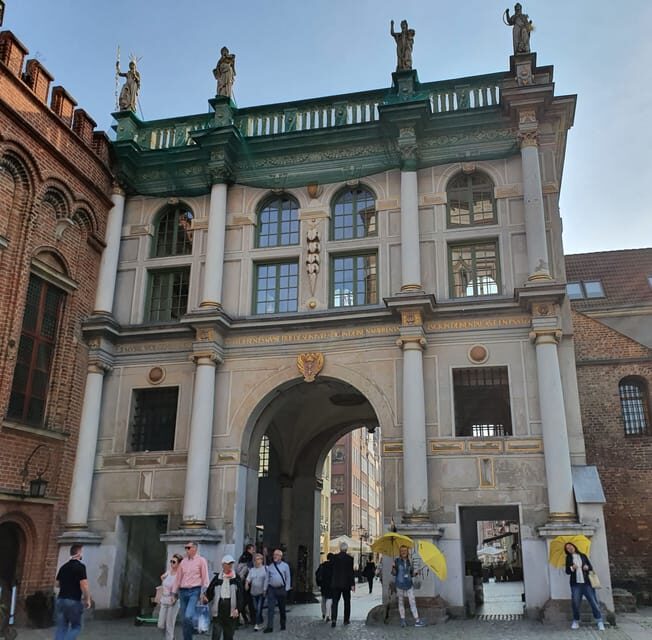
Meet at Złota Brama (Golden Gate) and keep an eye out for the yellow umbrellas. This 150-minute guided walk is led by Polish-speaking guides such as Kasia Dynamit, Klaudia, and Marcin, and the best part is how they shape the tone—humor where it fits, weight where it matters—while still keeping time moving.
In This Review
- Key things worth knowing before you go
- Gdańsk’s story is built into the street plan
- Entering the “merchant city” mindset at the Golden Gate
- Prison Tower and Torture Chamber: why fear had a job
- The Great Armory: trade wealth needs protection
- Artus Court: the merchant meeting place behind civic power
- Main Town Hall: where decisions lived
- The bigger historical threads you’ll hear along the way
- The guide matters: passion, humor, and good answers
- Price and value: $26 plus a pay-what-you-see tip
- Who this tour is best for (and who should skip it)
- Should you book this Polish tour of Gdańsk?
- FAQ
- Where do we meet for the tour?
- How long is the tour?
- What language is the tour guide?
- Is the tour wheelchair accessible?
- What are the main sights included?
- How much does the tour cost?
- Is there free cancellation?
- Can I reserve without paying right away?
Key things worth knowing before you go
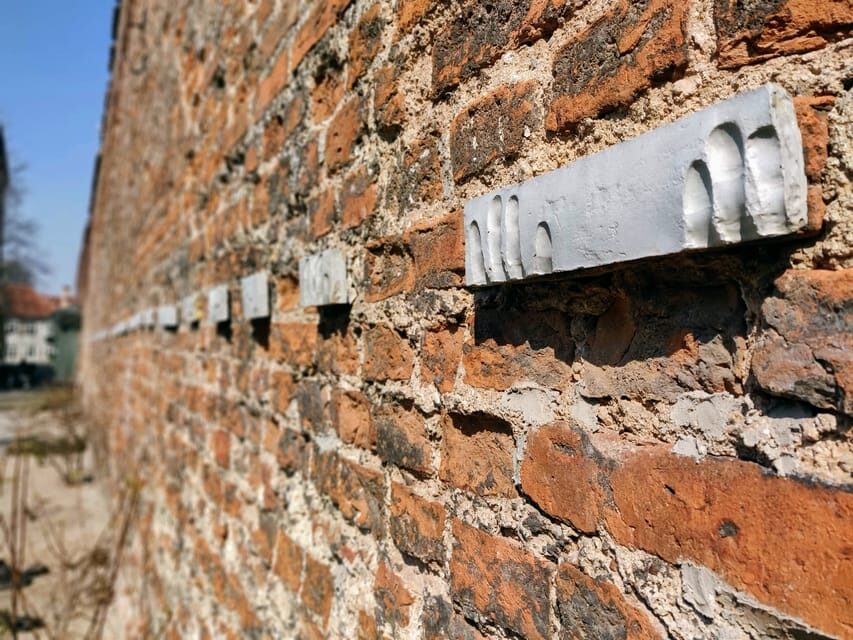
- Golden Gate meetup with yellow umbrellas makes it easy to start on time.
- Prison Tower and Torture Chamber adds a darker thread to Gdańsk that most quick city loops skip.
- Great Armory helps you understand why a trading port needed serious muscle.
- Artus Court and Main Town Hall show how merchants and city officials shaped daily power.
- Polish guides with strong delivery, including Kasia Dynamit and Klaudia, keep the pace lively.
- Wheelchair accessible means this is not only for able-bodied walkers.
Gdańsk’s story is built into the street plan
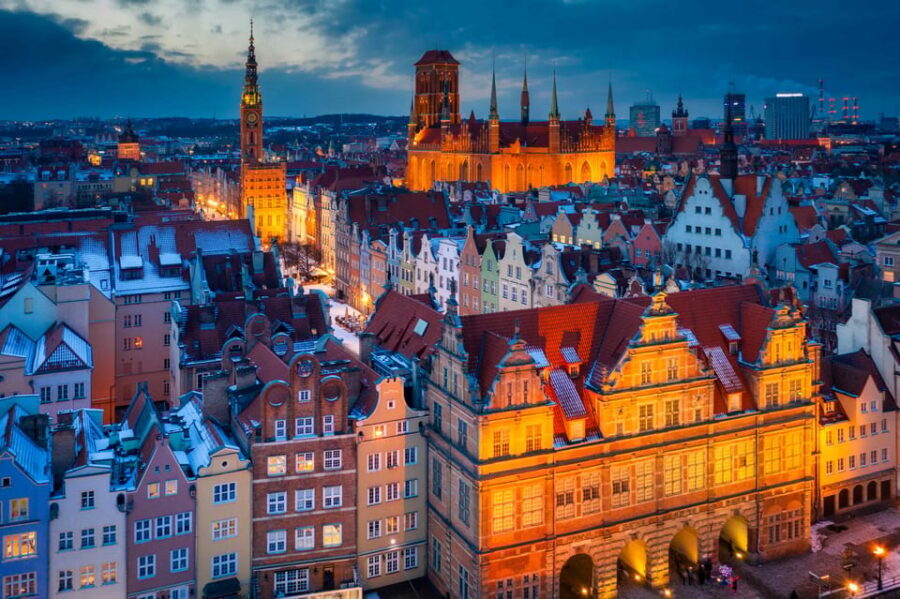
Gdańsk can feel like several cities stacked on top of each other. You’ll hear the name spelled a bunch of ways—Gdanzc, Dantzig, Danzig—and that’s not just trivia. It reflects how international this place was long before it became fashionable to call a city “historic.”
The core idea you’ll come away with is simple: Gdańsk grew because traders were wealthy, connected, and persistent. People called Gdańsk residents Danzigers, and their port fed the city with essentials like grain and wood. Then came the Baltic Sea’s most famous trade item—amber—so valuable it became part of the city’s identity.
Once that’s clear, the tour stops start making sense. A merchant city doesn’t just build pretty facades. It builds places to govern, defend, punish, and host. That’s why you’re not only walking through landmarks—you’re walking through systems.
Other Old Town walking tours we've reviewed in Gdansk


Entering the “merchant city” mindset at the Golden Gate
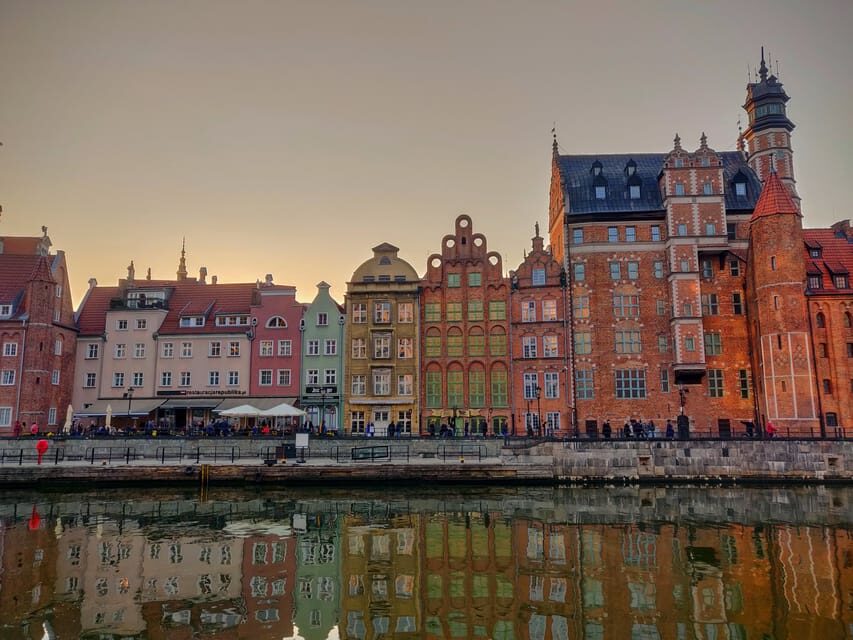
Your start point, the Golden Gate (Złota Brama), is a smart choice. Even before the first major stop, it sets the tone: Gdańsk was a show-city for incoming wealth and incoming ideas.
From there, the guide’s job is to help you connect dots fast. In about 150 minutes, you don’t have time to linger on every corner. What you can do—if you pay attention—is learn the pattern: trade brings influence; influence builds institutions; institutions leave architecture.
The guides also keep the energy moving. One reason the ratings are so consistently high is that the tour isn’t delivered like a lecture you survive. Guides like Kasia Dynamit and Marcin are described as mixing humor with seriousness depending on the location, and that matters. History that’s treated like a list of dates stays flat. History treated like a living argument stays interesting.
Prison Tower and Torture Chamber: why fear had a job
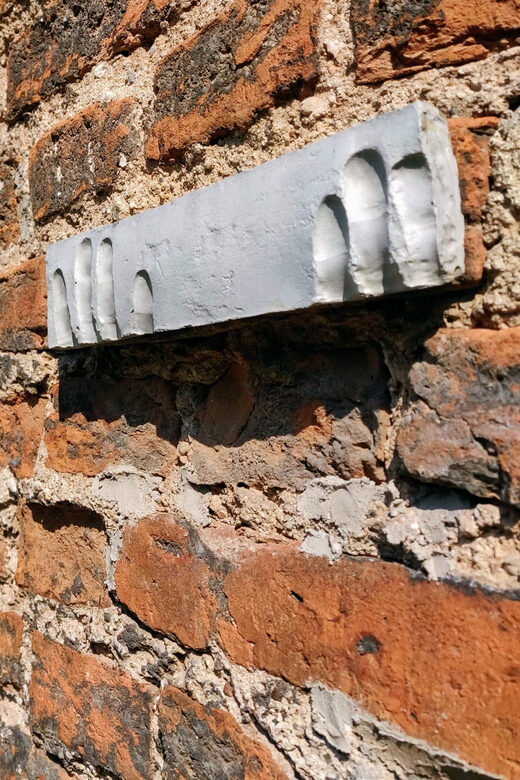
The Prison Tower and Torture Chamber are the tour’s boldest contrast to the city’s merchant glamour. This is where you see how authority worked in practice, not just on paper.
Even without turning it into gore, the value of this stop is how it forces perspective. In a city with powerful families and major commercial stakes, law wasn’t an abstract idea. Punishment and control protected order, protected property, and protected whoever held power at the time.
If you like history that explains how societies actually function, this stop delivers. You’ll likely walk away thinking about three questions:
- Who had the power to accuse?
- What did the city protect?
- How did the legal system reflect trade wealth and political pressure?
One practical note: this is an interior-style subject, so it can feel heavier in mood. If you want a lighter, postcard-only tour, you may find this portion more intense than you expect. If you want depth, it’s one of the best places to get it fast.
The Great Armory: trade wealth needs protection
After the darker legal side, the Great Armory shifts your brain back to power in a different form: defense and readiness.
Armories are where commerce meets real-world risk. A Baltic port wasn’t isolated. Ships arrived with goods—and with enemies nearby in one form or another. The guide’s framing here matters: it’s not just about weapons as objects. It’s about why a city that thrives on movement also invests in protection.
This is also a good stop for people who like to understand the “why” behind architecture. When you connect armories to the fact that Gdańsk became a major Baltic Sea port, the city looks less like a museum and more like a working organism. The wealth brought ambition; the ambition demanded security.
If you’re visiting mainly for photo stops, you might not expect this to be as satisfying as it is. But the tour’s strength is that it turns sites into explanations.
Artus Court: the merchant meeting place behind civic power
Next comes the Artus Court, and this is one of those stops that feels essential even if you’ve never heard of it. In a trading city, business didn’t happen only in warehouses. It happened socially—in meeting spaces where deals formed and reputations circulated.
The Artus Court represents that side of Gdańsk: negotiation, status, and the human network behind the money. You’ll get a sense that city life wasn’t just survival. It was also performance and relationship-building.
This stop pairs especially well with the Prison Tower/Torture Chamber contrast. Together, they show two sides of the same system:
- control and punishment on one end
- social order and deal-making on the other
If you enjoy architecture that signals what kind of people used the space, you’ll like this one. It’s a place that helps you picture the city not as a backdrop, but as a stage.




Main Town Hall: where decisions lived
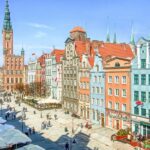
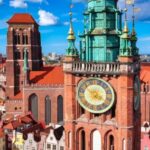
The Main Town Hall is the civic heartbeat of Gdańsk, and the guide’s framing helps you see it as more than a handsome building. This is where authority was organized and where the city’s direction would have been argued, approved, or resisted.
In a port city shaped by wealthy traders, town halls and civic buildings are rarely neutral. They represent governance in a place where economics and politics tangled.
When the tour gets to the Main Town Hall, you’ll likely connect it back to the larger sweep of Gdańsk’s past: how the city’s independence could be celebrated, contested, and eventually brutalized. The story of Gdańsk isn’t gentle. It’s a sharp mix of power and survival.
And that larger story is part of what makes this tour worth doing. You’re not just ticking off famous places. You’re learning why the city became the key hub it was, and why later events hit with such impact.
The bigger historical threads you’ll hear along the way
One thing I really like about this walk is that it doesn’t trap you in local trivia. The guide connects Gdańsk to major European shifts, then ties them back to what you’re standing near.
Here are the threads you can expect to hear:
- Gdańsk’s rise as a major Baltic port tied to trade flows of grain, wood, and amber.
- Famous people born in the city, including Daniel Fahrenheit, Arthur Schopenhauer, and Günter Grass.
- Napoleon’s framing of the city as a strategic key—he created the first Free City of Danzig and said something along the lines of Gdańsk being the key to everything.
- World War II turmoil, including the role of Gdańsk in the Nazi era, with NSDAP headquarters, and one of the early armed clashes tied to defending the Polish Post Office in the Free City of Gdańsk.
- The shipyard workers’ strike led by Lech Wałęsa, tied to the end of communism in this part of Europe.
This kind of context makes the stop-to-stop walking more meaningful. You’ll understand why people fought over the city, not just that they did.
The guide matters: passion, humor, and good answers
A historical tour succeeds or fails on the guide’s control of pacing and tone. Here, the strength is consistent in the feedback: guides keep a strong group connection, invite questions, and answer them with detail.
You’ll hear examples of different delivery styles. One guide—Kasia Dynamit—was praised for telling the story in a very interesting way, with humor in the right moments and seriousness when it counted. Another, Klaudia, was highlighted for energy, engagement, and presenting anecdotes and facts in a way that held attention. Marcin was also singled out for being excellent, colorful, and very substantive.
What you should take from that, as a traveler: don’t be shy about asking questions during pauses and transitions. The tour seems built for interaction. If you like learning by curiosity, this one rewards you.
Price and value: $26 plus a pay-what-you-see tip
The listed price is $26 per person for a 150-minute guided walk. That’s the headline number, but the real value depends on how you treat the pay-what-you-see approach.
Here’s how to think about it:
- You’re paying for a live Polish guide and a structured city walk that covers major highlights.
- When you reserve, you pay a tip for the guide through the platform, based on what you think the experience was worth.
- With a top rating (5 out of 14), the model seems to work well when the guide is doing strong work.
If you’re the type who values storytelling and context—not just photos—this price is reasonable. If you only want a self-guided highlights checklist, you might feel underwhelmed. But if you want connections between politics, trade, and architecture, you’re paying for that synthesis.
Who this tour is best for (and who should skip it)
This is a great fit if you:
- want a fast, structured way to learn Gdańsk’s center in about two and a half hours
- like guided history that connects dark and civic topics without losing momentum
- enjoy asking questions and getting real answers
- prefer a Polish guide and can follow Polish (or use a translation tool)
You might want to choose something else if you:
- don’t speak Polish and don’t want to rely on translation
- prefer purely scenic walks with no heavy themes like prisons or torture chambers
- need long stops to read details on your own. This route is about coverage, not lingering.
Should you book this Polish tour of Gdańsk?
Book it if you want a compact walk that teaches you how Gdańsk became what it was—and why it mattered to Europe. The combination of Prison Tower and Torture Chamber, Great Armory, Artus Court, and the Main Town Hall gives you a full slice of city life: punishment, defense, merchant society, and governance.
Skip it if language is a deal-breaker for you. Since it’s Polish-only, you’ll enjoy it most when you can follow along.
If you do book, come with two mindsets: dress for the weather (the tour is a walking experience), and plan to ask questions. This tour is built for engagement, and the guides you’ll meet—Kasia Dynamit, Klaudia, Marcin—seem to bring the story to life in a way that’s worth staying with.
FAQ
Where do we meet for the tour?
You meet at the Golden Gate (Złota Brama). Look for the group using yellow umbrellas.
How long is the tour?
The tour lasts 150 minutes.
What language is the tour guide?
The live guide speaks Polish.
Is the tour wheelchair accessible?
Yes, the tour is wheelchair accessible.
What are the main sights included?
The tour highlights include the Prison Tower and Torture Chamber, the Great Armory, Artus Court, and the Main Town Hall in Gdańsk.
How much does the tour cost?
The price is listed as $26 per person.
Is there free cancellation?
Yes. You can cancel up to 24 hours in advance for a full refund.
Can I reserve without paying right away?
Yes. There is a reserve now & pay later option, so you can book your spot and pay nothing today.