REVIEW · GDANSK
Historic City Center Tour Gdansk in German
Book on GetYourGuide →Operated by Walkative Tours · Bookable on GetYourGuide
Gdańsk tells its story in stone, brick, and muscle power. This Historic City Center Tour is a great way to connect the cobbled streets to the big places that shaped the city, especially the Golden Gate and St. Mary’s Church. I like the clear, human-scale pace for a 150-minute walk, but one thing to consider is that the tour can include a lot of names and dates, so it helps to be ready for history-heavy explanations.
You’ll meet at the Golden Gate (Złota Brama) and follow your guide through the Law Town’s elegant lanes and terraces, even if the weather turns. The tour is led in German by a live guide, and the practical tip I’d repeat from recent experiences is to dress warm in winter—this is still a walking tour in real air, not a museum visit.
In This Review
- Key highlights at a glance
- Meet at the Golden Gate, then start reading Gdańsk
- High Gate and Golden Gate: why city walls still matter
- St. Mary’s Church: the brick giant you’ll want to look up
- Right-Town Town Hall and Arthur’s Court: power in plain sight
- The medieval crane: Europe’s largest, powered by humans
- Polish Post Office in the Free City of Danzig: where old and modern collide
- Price and value: what $26 buys for 150 minutes
- German guide style, winter weather, and how to get the most out of it
- Should you book this Gdańsk city center tour?
- FAQ
- How long is the Historic City Center Tour Gdansk in German?
- Where do we meet?
- What are the main stops on the tour?
- What language is the guide?
- Does the tour run in bad weather?
- Is the tour wheelchair accessible?
- Is hotel pickup included?
Key highlights at a glance
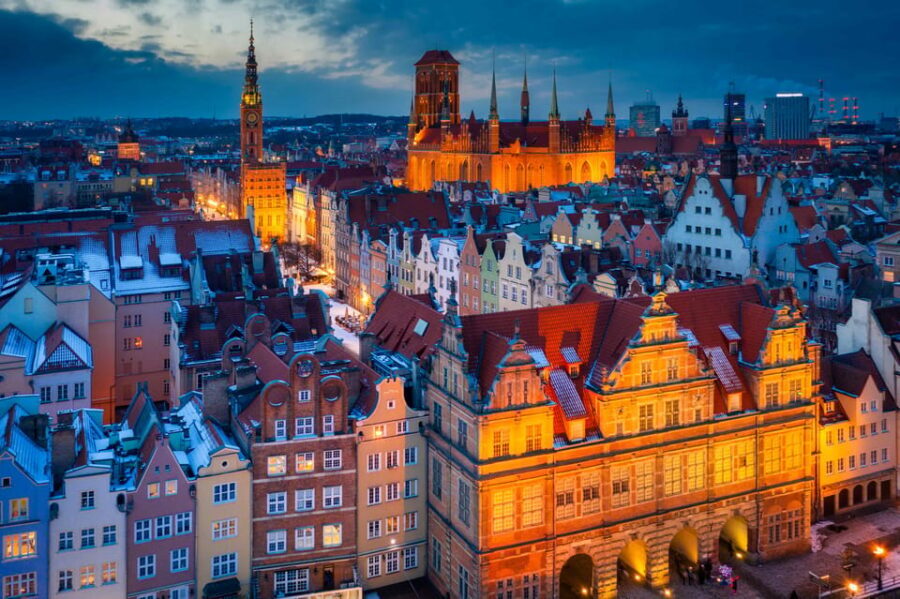
- Golden Gate (Złota Brama): start your walk with a landmark that feels like a doorway into the whole old town
- High gate and Law Town gates: you’ll see how the city guarded itself and managed movement
- St. Mary’s Church: the world-famous brick giant you can’t properly appreciate from photos
- Right-Town Town Hall: the civic heart that links politics, trade, and daily life
- Arthur’s Court and the crane area: work, commerce, and power in the same city blocks
- Polish Post Office in the Free City of Danzig: a key place for modern history in an old setting
Meet at the Golden Gate, then start reading Gdańsk
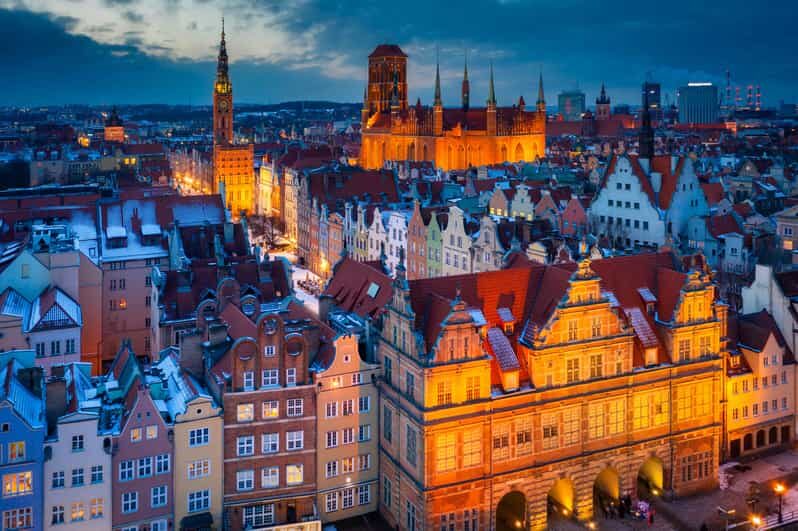
Let’s start with logistics that actually matter. This tour is 150 minutes long, and you meet at Golden Gate (Złota Brama). Look for yellow umbrellas—it’s an easy visual cue, and it saves you from wandering around the wrong side of a historic square trying to spot your group.
The tour is a walking tour with a guide, and there’s no hotel pickup. That’s normal for a city-center route, but it’s also a plus: you begin right where the old town starts to feel most alive. From the first streets, you’ll be in the Law Town area—cobbled paths, slender buildings, and that mix of elegance and old-world function that makes Gdańsk different from many “just pretty” old towns.
This is the kind of tour that works best if you’re willing to let a guide connect the dots. Instead of just pointing at sights, you’ll hear how people living here—local and indigenous to Gdańsk—created big ideas and shaped decisions. If you like history but also like your facts to have a real place behind them, this style usually clicks.
One small caution: the narration is German, and it can get detail-packed. A recent review noted the history portion could include lots of dates and information, and they couldn’t store it all. No problem—you don’t need to memorize everything. Use the tour to build a framework, then let the best details stick naturally.
Other Old Town walking tours we've reviewed in Gdansk


High Gate and Golden Gate: why city walls still matter
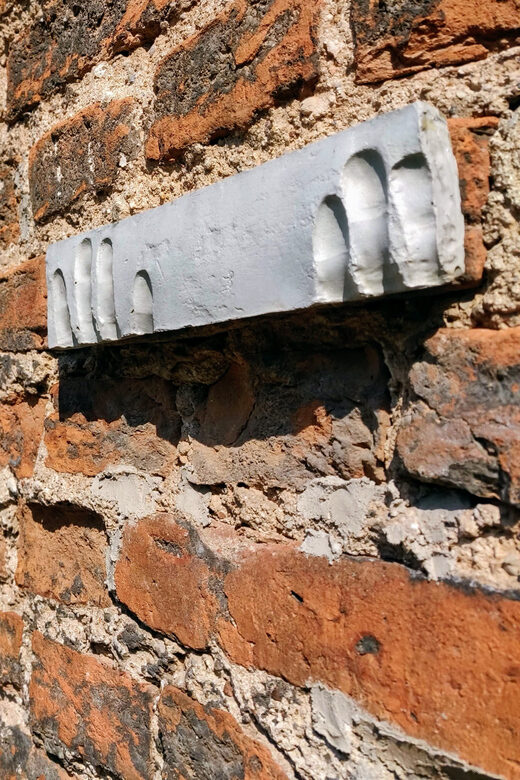
The tour includes High gate and Golden Gate, which sounds simple until you start noticing what gates actually do. In old cities, gates weren’t decoration; they were control points. They decided who moved in and out, how goods traveled, and how power protected itself.
Golden Gate is the headline moment because it’s so recognizable—bright, symbolic, and hard to miss. But the surrounding context is the real lesson: Gdańsk’s old town developed with a defensive mindset and a trading mindset at the same time. So when you see gates, you’re also seeing the city’s balance of protection and movement.
A big value here is that these gates give you orientation. After Golden Gate and High gate, it becomes easier to understand the layout you’re walking through later: where civic buildings sat, where commercial activity concentrated, and where the city’s working power was visible.
If you’re the type who likes “why this is here” more than “what it looks like,” you’ll appreciate the way the guide uses the gates as historical anchors. And since the tour runs rain or shine, you’ll likely see the old stone with different moods—wet cobbles change the vibe fast.
St. Mary’s Church: the brick giant you’ll want to look up
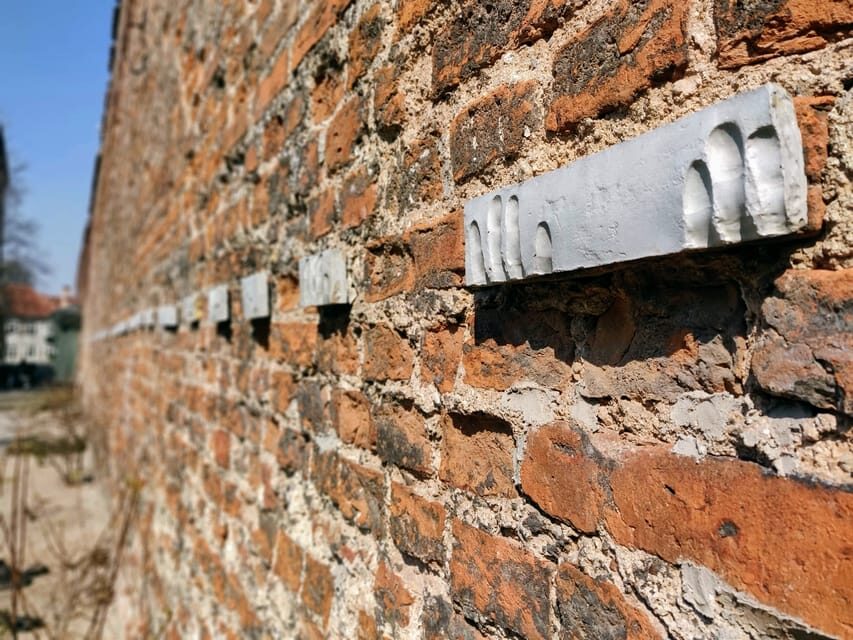
St. Mary’s Church is the stop you’ll remember days later, even if you only caught it briefly at the right angle. You’re visiting the huge St. Mary’s Church, described as the largest brick church in the world. That’s a claim you can’t fully feel until you’re there and your eyes struggle to take in the scale.
What makes this stop worth the time is not only size. Brick churches in northern Europe carry a particular kind of authority: they show resources, craftsmanship, and long-term effort. In a walking tour like this, the guide’s job is to connect that effort to the people and the ideas that shaped Gdańsk over centuries.
You’ll likely spend time understanding why the church mattered beyond religion—because big churches in trading cities also functioned as social and civic landmarks. They were places where people gathered, where identity was expressed, and where the city could show what it could build.
Do note one possible drawback from recent experience: one review said the church history was explained a bit too far in some parts. That doesn’t mean the stop is bad—it just means you should go in with the attitude of learning a lot, not collecting a neat, short summary. If you care most about key takeaways, you might want to glance around yourself during the longer explanations and let the guide’s main points land on what you can see.
Practical tip: when you’re outside a monumental church, your best photos usually come from looking up at the façade and then stepping back to catch the full mass. This tour format won’t be a slow photo shoot, but you’ll still get chances to orient yourself.
Right-Town Town Hall and Arthur’s Court: power in plain sight
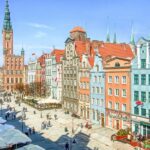
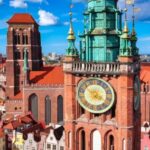
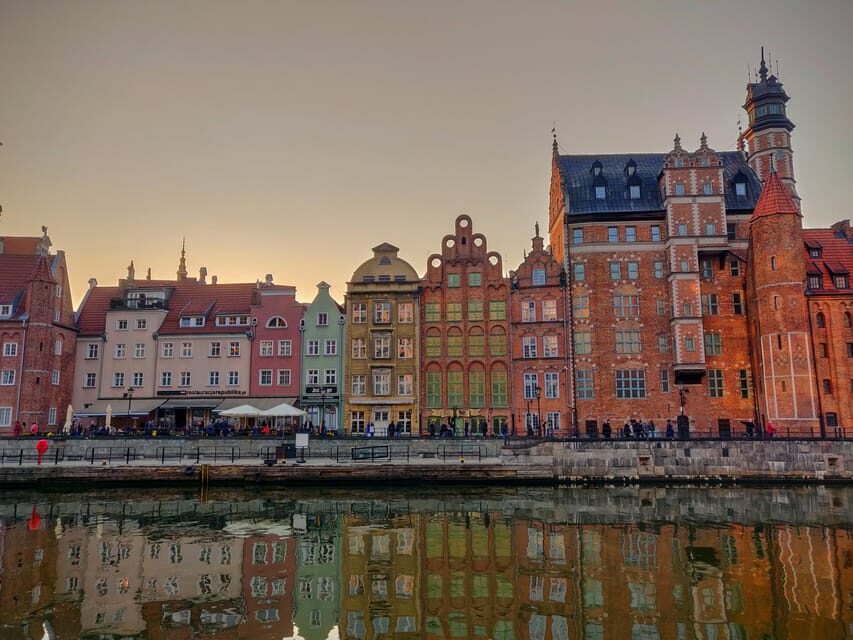
Next comes Right-town town hall and Arthur’s Court, and this pairing is smart. Town halls and court spaces tell you how a city governed itself—who made decisions, how disputes were handled, and how commerce and law stayed in the same neighborhood.
Even if you don’t read every inscription or façade detail, you can get a lot from the guide’s storytelling here. The “why” matters: in historic cities, civic buildings were designed to be seen and respected. They weren’t hidden behind churches or behind trade docks. They sat where people could notice them, because legitimacy was part of the system.
Arthur’s Court adds another layer: it’s a reminder that the city’s identity was shared through places that felt both formal and local. Arthurian themes show up in different European towns, but here the guide’s explanation is what helps you connect the idea to Gdańsk’s own story rather than treating it like generic decoration.
I also appreciate that this stretch gives your feet a break from constant “walk and look.” You start seeing patterns: this is where civic life clustered, and that helps the later stops (like the crane and post office) make more sense. By the time you reach the working-history sites, you’ll understand that governance and industry were not separate worlds.
The medieval crane: Europe’s largest, powered by humans
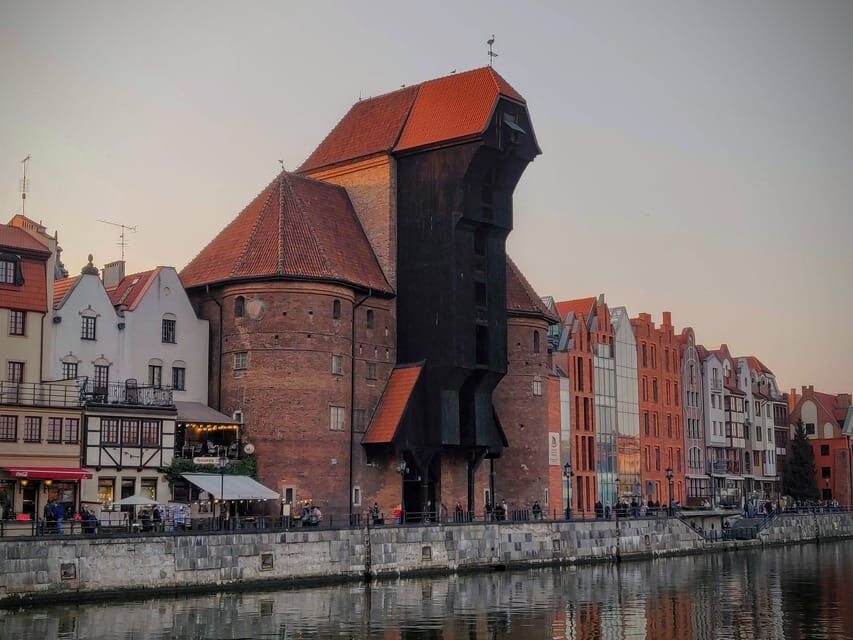
The highlight that changes the tone of the tour is the largest medieval crane in Europe. It’s one of those sights that turns history into something physical. You can almost imagine the motion, because the crane was built to lift real cargo in a real economy.
The tour description emphasizes that it was once moved by human muscle power. That detail is more than trivia—it helps you picture the effort behind shipping, trade, and the city’s wealth. When people talk about cranes today, it’s usually about machines. Here, it’s about labor. That alone makes the story feel more grounded.
Why this stop is so valuable on foot: a crane is a city-sized “tool.” It’s architecture tied directly to work. When you’re walking the streets around it, you’ll start noticing how close civic spaces, trade spaces, and community spaces were. That closeness is part of what made ports and trading cities thrive.
This is also where you’ll likely feel the tour’s pacing shift toward vivid images. Reviews praised the tour explanations and historical background, and the crane is the kind of landmark where good guiding really shows—because the structure invites questions you didn’t know you had.
If you’re sensitive to long explanations, you may find this stop refreshing because it’s easier to visualize. Look at how the crane’s shape relates to the space around it, then connect that to the city’s maritime and commercial life.
Other German-language tours in Gdansk
Polish Post Office in the Free City of Danzig: where old and modern collide
One of the most important named stops is the Polish Post Office in the Free City of Danzig. This is one of those places where you get history with consequences, not just history as architecture.
I like that this tour doesn’t stop at the medieval layer. It brings you to a site that connects Gdańsk’s older streets to political change in more modern times. That matters for your understanding of the city: if you only see the old stone, you miss the pressure and turning points that came later.
What makes the stop work within a walking route is contrast. You go from churches and civic buildings built to represent stability, to a post office connected to a period when the identity and administration of the city mattered deeply. The result is a more complete mental map of Gdańsk—old town as a living stage, not a frozen set.
This portion also helps you remember that the city’s identity wasn’t only created by grand buildings. Communication—letters, instructions, official services—was part of the systems people fought for and defended. A post office is a fitting symbol for that.
Price and value: what $26 buys for 150 minutes
At $26 per person for a 150-minute guided walking tour, you’re paying for two things: time with a live guide and a route that ties multiple major sights into one coherent walk.
This isn’t a cheap “take your own photos” pass. It’s a guided experience that includes a walking tour and the guide, and the tour is in German. There’s no hotel pickup, but that’s typical and actually keeps costs lower while forcing you to meet at the main landmarks.
Also, keep in mind the tour is described as joining a general walking tour. That usually means you’ll share the guide with other participants rather than having a dedicated private pace. If you’re the type who likes asking lots of questions or moving slowly through details, you may want a smaller private tour. The good news is the supplier explicitly offers the option to contact them for a smaller tour setup.
Where value really shows: the itinerary covers multiple heavy hitters—Golden Gate, St. Mary’s Church, Right-town Town Hall, the crane, and the Polish Post Office—so you’re not paying just to see one famous stop. You’re buying a guided thread through the center.
German guide style, winter weather, and how to get the most out of it
This tour runs with a live tour guide in German, and you’ll hear stories about ideas created by the local people of Gdańsk. One review specifically praised a German guide named Sandra for telling the story in an interesting, engaging way. That’s a good sign because it suggests the guide is doing more than reciting facts.
Still, another review noted the tour sometimes includes a lot of history data. Here’s how I’d handle that: don’t try to “collect” everything. Pick a few themes that matter to you—architecture and civic power, shipping and labor, or the shift into modern political history. Then let the guide’s details fill in those themes as you walk.
Weather is the other big factor. The tour takes place rain or shine, and winter can be cold. A recent review recommended dressing warmly and noted that the guide kept the tour pleasant even in cold conditions. So bring layers, and don’t rely on hope that it’ll be mild.
Finally, if you want the best experience, show up a little early. Meeting at a historic gate with yellow umbrellas is easy, but you’ll be happier if you can settle your coat, confirm the group, and start walking without rushing.
Should you book this Gdańsk city center tour?
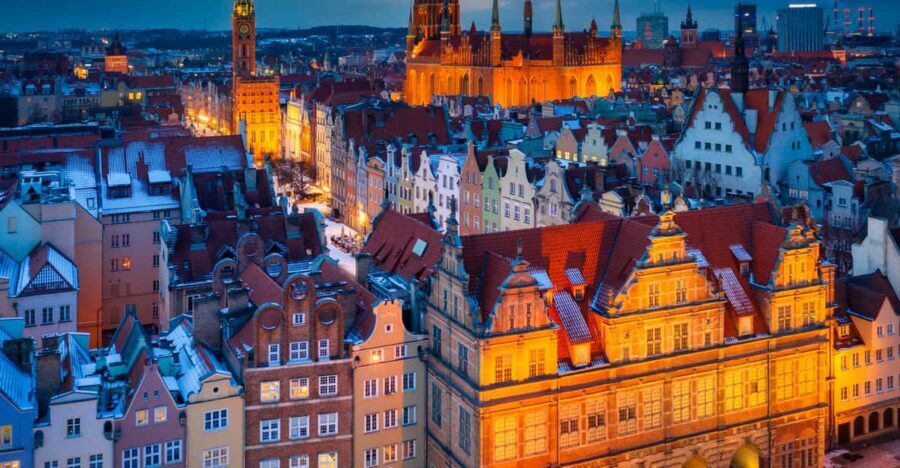
Yes—this is a strong pick if you want a guided walk that covers the main landmarks of Gdańsk’s historic center and ties them together into a story you can actually follow. The combination of Golden Gate, St. Mary’s Church, the medieval crane, and the Polish Post Office in the Free City of Danzig gives you both the medieval and the modern layers without feeling like you’re bouncing around the map.
Book it if:
- you like guided history told through real places
- you’re comfortable hearing details in German
- you want one efficient 150-minute route through the center
Maybe skip or adjust if:
- you get overwhelmed by long, date-heavy explanations and need a lighter narrative
- you prefer private pacing for lots of questions (a smaller tour may suit you better)
If you do book, go in dressed for the weather, with one theme in mind, and you’ll come away with a much clearer sense of how Gdańsk worked—civic power, church scale, maritime labor, and modern turning points all living in the same streets.
FAQ
How long is the Historic City Center Tour Gdansk in German?
The tour lasts 150 minutes.
Where do we meet?
You meet at the Golden Gate (Złota Brama). Look for yellow umbrellas.
What are the main stops on the tour?
The tour includes Golden Gate, High gate, St. Mary’s Church, Right-town town hall, Arthur’s Court, the crane, and the Polish post office in the Free City of Danzig.
What language is the guide?
The live tour guide speaks German.
Does the tour run in bad weather?
Yes, it takes place rain or shine.
Is the tour wheelchair accessible?
Yes, it is wheelchair accessible.
Is hotel pickup included?
No. Hotel pickup and drop-off are not included. You’ll start at the Golden Gate meeting point.