REVIEW · GDANSK
Gdańsk: Islands and Canals Private Kayak Tour
Book on GetYourGuide →Operated by AroundGdansk Tours & Adventures · Bookable on GetYourGuide
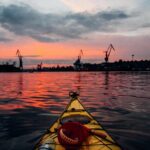
Gdańsk looks different when you paddle under bridges. I love the small private group pace and the fact that you get guided stops on the water where most sightseeing stays on land. My other favorite part is the sense of access, like you’re seeing secluded canal corners that don’t show up on typical photo routes. One possible drawback: this is an active paddle, and you should be ready to get wet and wear a lifejacket for the full time.
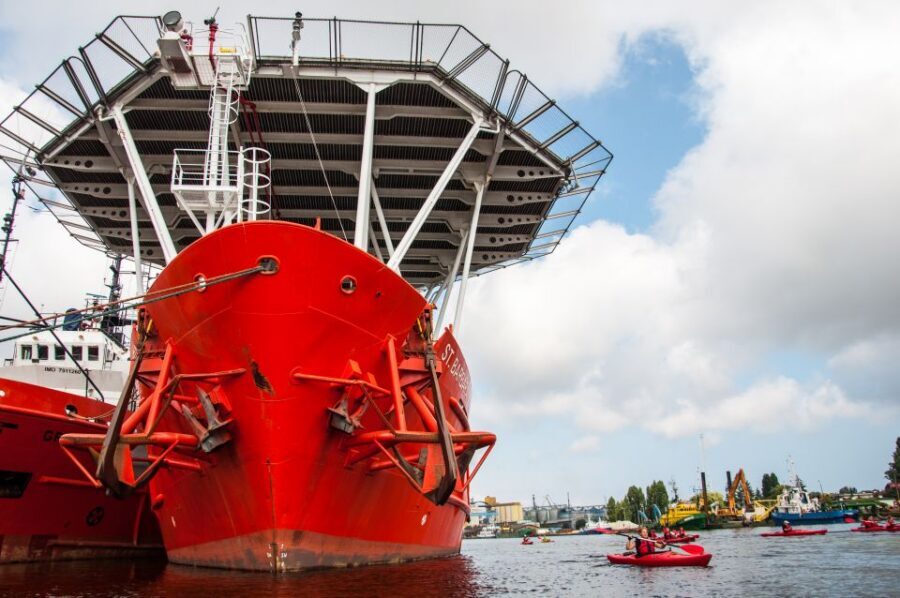
You’ll follow the Motława River along landmarks tied to Gdańsk’s port life, including the Granary Island and Ołowianka Island, then the tour continues by the Soldek ship and a former port crane. Expect beginner-friendly coaching, but keep in mind the rules are strict about swim ability and English communication.
In This Review
- Key Highlights at a Glance
- Gdańsk From the Water: Why This Kayak Route Feels Special
- Meeting at Dokowa 1 and the Safety Briefing That Actually Helps
- Choosing a Single or Double Kayak: What It Means for Your Comfort
- Paddling the Motława: From Canal Flow to Island Vistas
- Granary Island to Ołowianka Island: Two Stops, Two Different Moods
- Soldek and the Former Port Crane: When Industrial Gdańsk Gets Personal
- Pacing, Skill Level, and How Beginners Stay in Control
- Rain or Shine: What Weather Means for Your Body and Photos
- Price and Value at Around $47 for 150 Minutes
- Who Should Book This Tour (and Who Should Skip It)
- Should You Book Islands and Canals in Gdańsk?
- FAQ
- How long is the kayaking tour?
- Where does the tour start?
- What’s included in the price?
- What should I bring?
- Is the tour offered in bad weather?
- Is it okay if I’m a beginner?
- Do I need to speak English?
Key Highlights at a Glance
- Motława River views you cannot fake on foot: islands, bridges, and canal angles that change every few paddle strokes
- Beginner coaching that keeps you moving comfortably (double or single kayak depending on experience)
- Stop-based sightseeing along the water, not just a long stretch of paddling
- Port history close up: Soldek and an old port crane you’ll spot from the canal
- All-weather planning: the tour runs in rain or shine, so your clothing choices matter
Gdańsk From the Water: Why This Kayak Route Feels Special
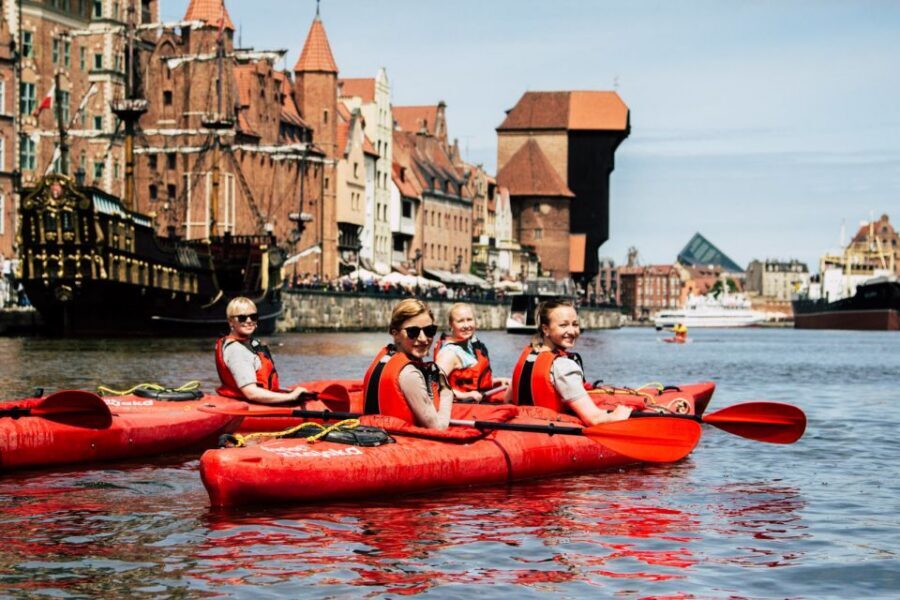
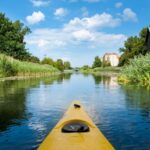
If you’ve seen Gdańsk from the street, you already know the classic postcard angles. This tour adds a second layer. Kayaking on the Motława River changes how you read the city. Buildings look taller or slimmer, bridges feel like gates, and the islands feel like separate worlds instead of just names on a map.
I also like that this experience is built around “water perspective” rather than performance. You’re not expected to race. The flow is guided, with time for technique and for looking at what’s around you. That matters for first-timers. A lot of people arrive thinking kayaking will be mostly about balance. In reality, it becomes mostly about rhythm: paddle, glance up, adjust, then glide again.
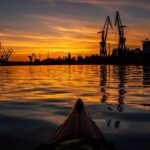
You’ll paddle past major islands tied to the city’s waterfront story. Granary Island gives you that port-imagery feeling right away, and Ołowianka Island adds another pocket of character as you move along the canals. And then the tour shifts from island scenery to working-port artifacts, including the Soldek ship and an old crane. From the water, these objects don’t feel like distant monuments. They feel like part of the working shoreline.
The vibe is intimate because it’s a private group setup. That typically means you get more individual attention on paddling and safety. It’s also easier to keep a steady pace when the group is small, especially if you’re figuring out basic strokes.
Other kayak tours in Gdansk
Meeting at Dokowa 1 and the Safety Briefing That Actually Helps
The meeting point is Dokowa 1 in Gdańsk. It’s the kind of location that makes sense for a water tour: you’re close to the starting stretch, and you’re not fighting city traffic or guessing where the boats are.
Before you head out, there’s a 20-minute safety briefing. This is not filler time. It’s the part that makes the rest of the tour feel manageable, even if you’re new to kayaking. You learn how the boat should sit in the water, how to handle the paddle, and what behavior keeps everyone moving smoothly.
You’ll also get the equipment needed to stay comfortable and safe. Included are the kayak itself (single or double depending on your skills), paddles, a PFD lifejacket, and spray skirts, plus a waterproof bag. That combo is useful because water tours in this area can mean mist, splashes, and sudden damp air. The waterproof bag is a big practical win because you can stash your phone and essentials without treating the whole tour like a glass-of-water test.
A tour like this also comes with rules you should take seriously from the start. Smoking isn’t allowed, and alcohol and drugs are strictly prohibited. And the tour has clear physical requirements: everyone needs to be able to swim, and there are limits if you have heart problems, back problems, mobility impairments, or you use a wheelchair. There’s also a maximum weight limit listed at 243 lbs / 110 kg.
The takeaway: the safety briefing helps you enjoy the paddle, not just survive it.
Choosing a Single or Double Kayak: What It Means for Your Comfort
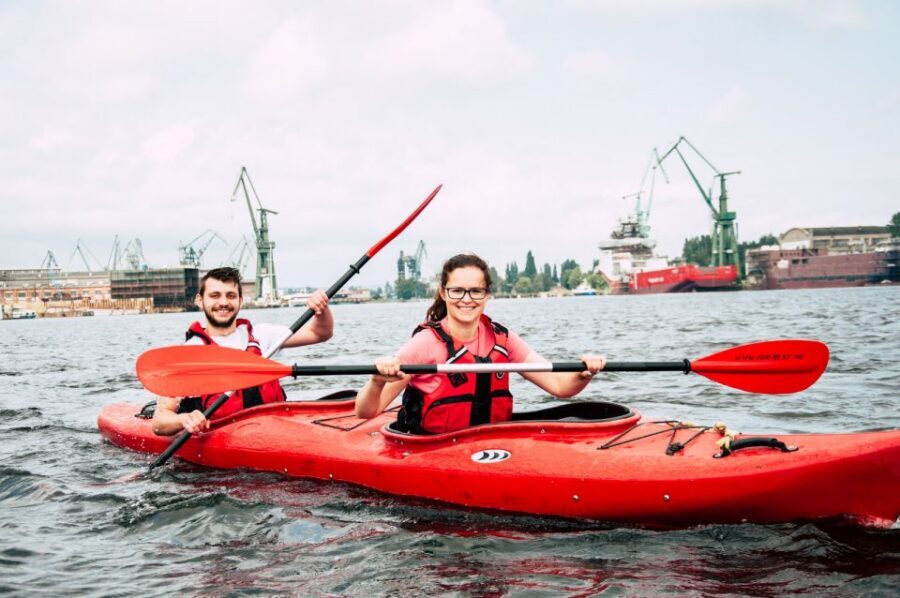
You’ll paddle in either a single or a double kayak. The deciding factor is your skills and experience. That’s one of the smartest parts of the setup because it prevents the most common beginner problem: trying to steer a boat that fights your level.
If you’re new, a double kayak can feel more forgiving. You still learn technique, but you also get steadiness from the shared platform. If you’re more confident, a single gives you more direct control, and you’ll likely feel like you can “read” the water faster.
Either way, you’ll have spray skirts and a lifejacket. Spray skirts help keep the cockpit area drier and reduce the constant worry about small splashes. The lifejacket is a comfort issue for some people at first, but it’s also what lets the guide keep you relaxed rather than constantly checking you from a distance.
One practical tip: wear comfortable clothes that you don’t mind getting damp. Bring a change of clothes, because even a light rain can leave you feeling chilly. You’ll be outside during the full 150 minutes, and the tour runs in rain or shine, so “maybe it won’t happen” is not a good strategy.
Also note that this tour requires communication in English for all participants. The guide provides English and Polish, but you should assume you’ll need to follow instructions in English.
Paddling the Motława: From Canal Flow to Island Vistas
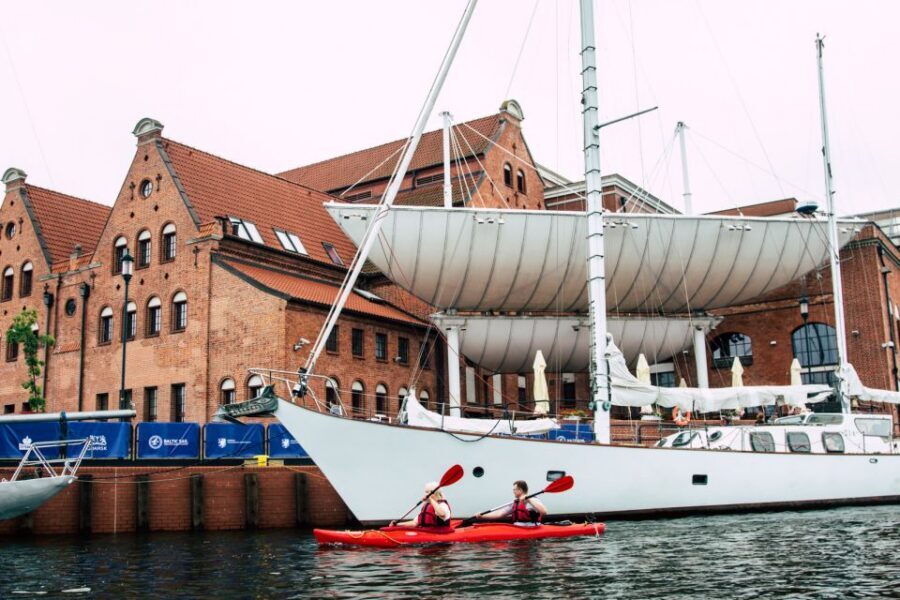
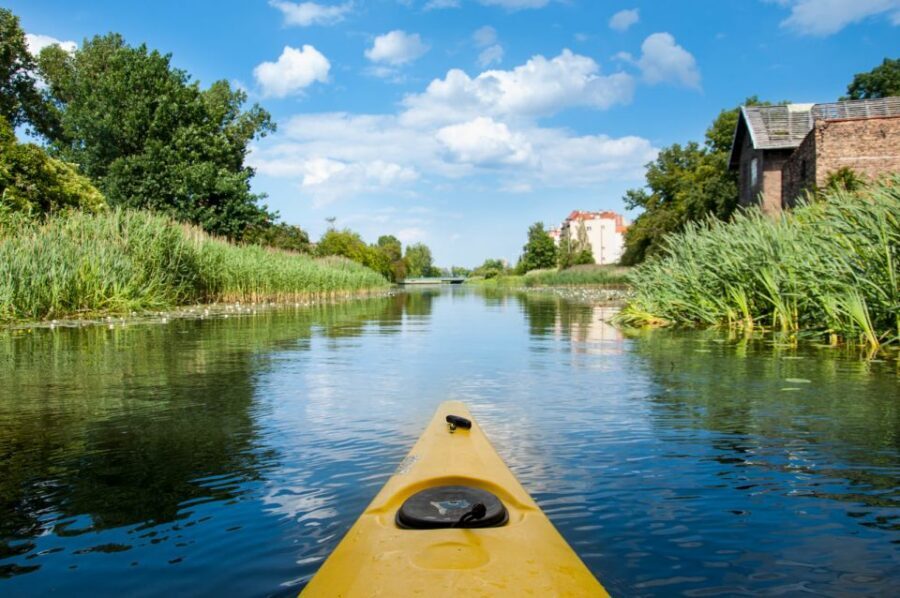
Once you’re underway, the tour focuses on the Motława River and the canal connections that let you see Gdańsk at water level. The pacing is guided, and it’s designed to keep beginners from getting overwhelmed. You’re gliding, not grinding. The key is staying relaxed while you learn the paddle rhythm.
The route leads you past Granary Island. This is where you get your first real “wow” angle. From the water, the island feels like a working piece of the port—less like an item on a sightseeing list, more like a location with a purpose. You’ll also start noticing how the river shapes the city: the waterline frames views, and it also controls how close you can get to certain structures.
As you paddle along, you’ll have time at stops to look and learn. The tour isn’t just about movement. You’ll get guided sightseeing explanations that give context for what you’re seeing. In practical terms, this helps you watch more than you worry. When you know why something matters, the scenery becomes easier to follow.
Another thing I like is the structure of the experience. You’re not handed a kayak and sent off. The guide keeps the group together and makes small adjustments as needed. In one example, the coaching style included clear technique talk and rule reminders. That kind of guidance is exactly what first-timers need: you understand what to do, you do it, and then the city becomes the focus again.
Granary Island to Ołowianka Island: Two Stops, Two Different Moods
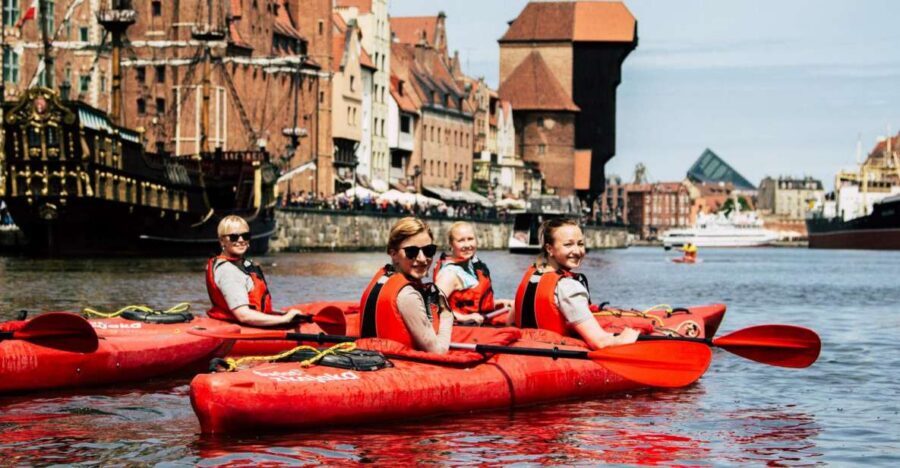
After Granary Island, the tour continues toward Ołowianka Island. This segment matters because it shows how the same waterway can feel completely different from one bend to the next. One stretch feels like the port edge. Another feels more like a quiet corridor where you can hear the water settle.
Ołowianka Island is another highlight because it reinforces the “not like the land route” feeling. On streets, you might never notice the exact canal geometry or the way the island cuts off certain sightlines. From the kayak, your view lines become your navigation tool.
This is also where the guide’s pacing pays off. You’ll have short pauses along the way, which gives you a chance to rest your arms and take in what’s around you without the pressure of paddling the entire time without breaks. If you’re doing this for the first time, those small pauses can be the difference between a fun challenge and an arms-only workout.
From here, the tour also transitions into port-related structures. This is where you start spotting objects that feel like they belong to old maritime work rather than a modern sightseeing crowd.
Other private tours in Gdansk


Soldek and the Former Port Crane: When Industrial Gdańsk Gets Personal
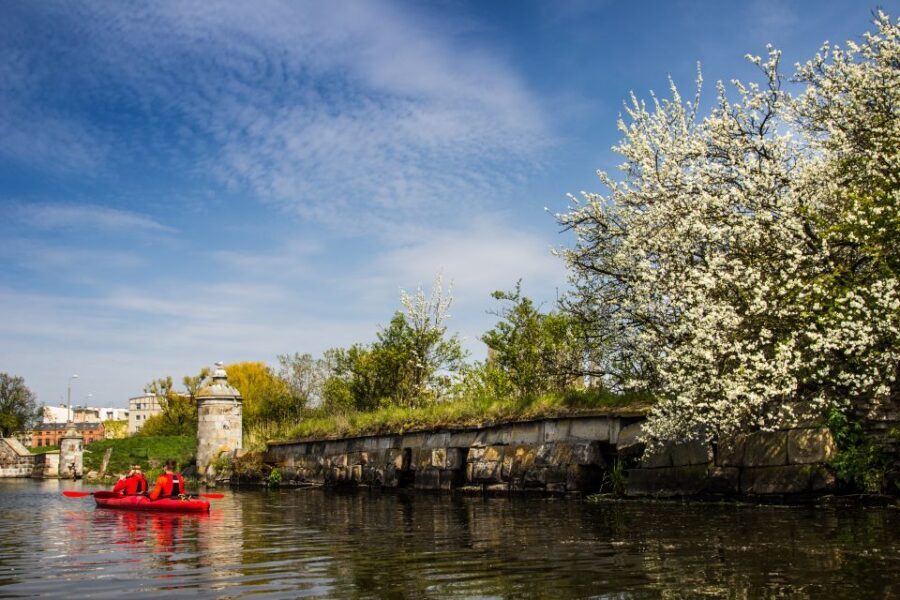
By the time you reach the area around the Soldek ship and the crane (a former port crane), the tour shifts tone. You stop seeing Gdańsk only as architecture and start seeing it as industry and infrastructure.
From the water, Soldek and the crane feel much closer than if you were standing back on land. That closeness changes the way you understand the city. You can look at angles and details you’d normally miss—how the crane positions itself over the port area, and how a ship-like structure sits into the river’s edge.
This part of the tour is valuable because it gives you contrast. Most visitors gravitate toward one kind of Gdańsk experience: historic buildings, streets, and squares. This kayak route adds the “how the city worked” perspective—how shipping, loading, and the port shoreline shaped daily life.
It’s also a reminder that water tours are about viewpoint. You’re not just getting exercise. You’re getting access to a layer of Gdańsk that isn’t designed for walking crowds.
Pacing, Skill Level, and How Beginners Stay in Control
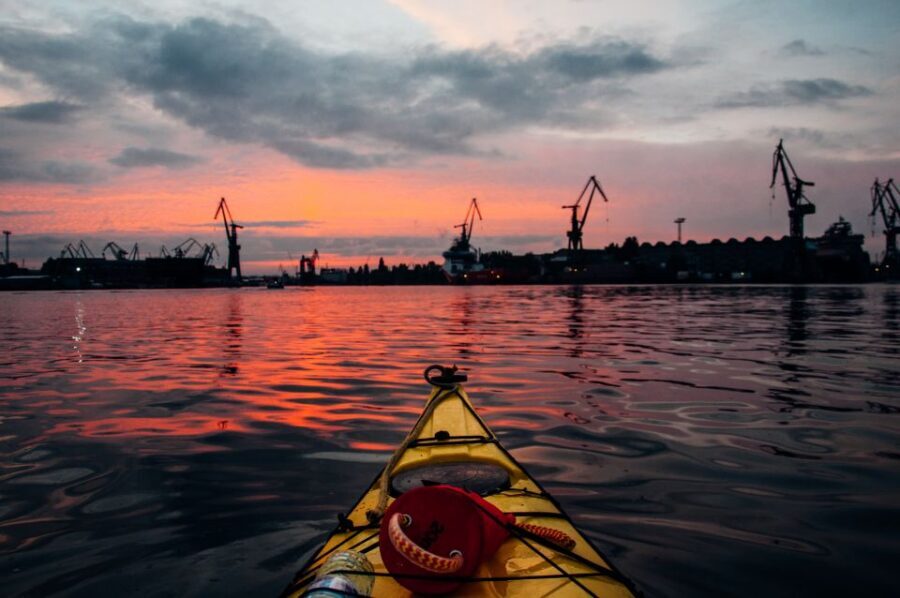
Even if you’re brand new, the tour is set up to feel beginner-friendly. The coaching you receive during the briefing and on the water helps you understand how to steer, how to keep your paddling smooth, and how to follow guide instructions without chaos.
The kayaking route is also practical for different levels because you’re not tackling open-water conditions described in your info. You’re staying on guided waterways of the port city. That means the challenge comes from technique and endurance, not from unpredictable ocean behavior.
In the reviews, I saw consistent praise for guides who explained technique clearly and stayed patient with first-timers. For example, a guide named Nick was specifically called out for teaching technique and rules and for making small pauses during the trip. Another guide named Eric was praised for bringing the city’s stories to life while keeping everyone safe.
If you’re worried about feeling left behind, this is exactly why the tour uses small groups and stop-based guidance. You’ll still do real paddling, but you’re not doing it alone.
A practical expectation check: your arms will feel it. Even a relaxed paddle involves repeating strokes for about two hours on the water. That’s part of the fun. Just be honest about your physical comfort before you book.
Rain or Shine: What Weather Means for Your Body and Photos
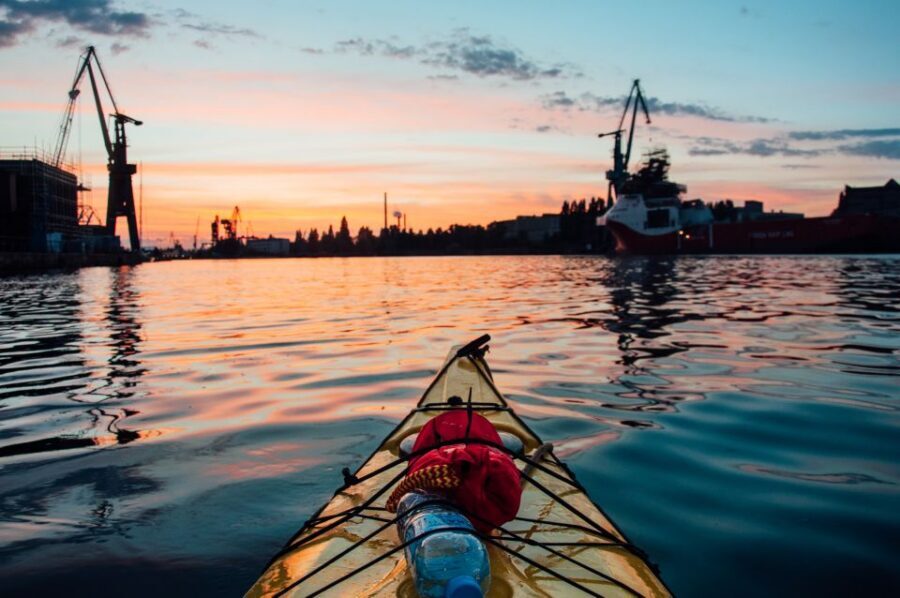
This tour happens in rain or shine. That’s not a minor detail. It affects comfort, clothing choices, and even how you perceive the water.
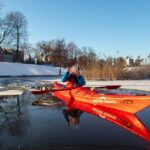
In light rain, the canal surfaces can look extra dramatic, and the city feels even more atmospheric. But the tradeoff is that you’ll get damp. That’s why you should bring a change of clothes and wear comfortable layers that you can tolerate getting wet.
The waterproof bag helps with essentials, but it doesn’t make you waterproof. Think of it as protection for your phone and small items, not a guarantee you’ll stay dry.
If it’s cold out, plan to keep moving and follow the guide’s pacing. In one review, a guide even provided hot chocolate to help warm people up during the tour. You can’t count on a hot drink every time, but it’s a good sign that the guides think about comfort, especially when conditions are less than ideal.
Also, because you’re in a private group setting, the guide can manage the experience so you’re not standing around too long. That helps when the weather changes suddenly.
Price and Value at Around $47 for 150 Minutes
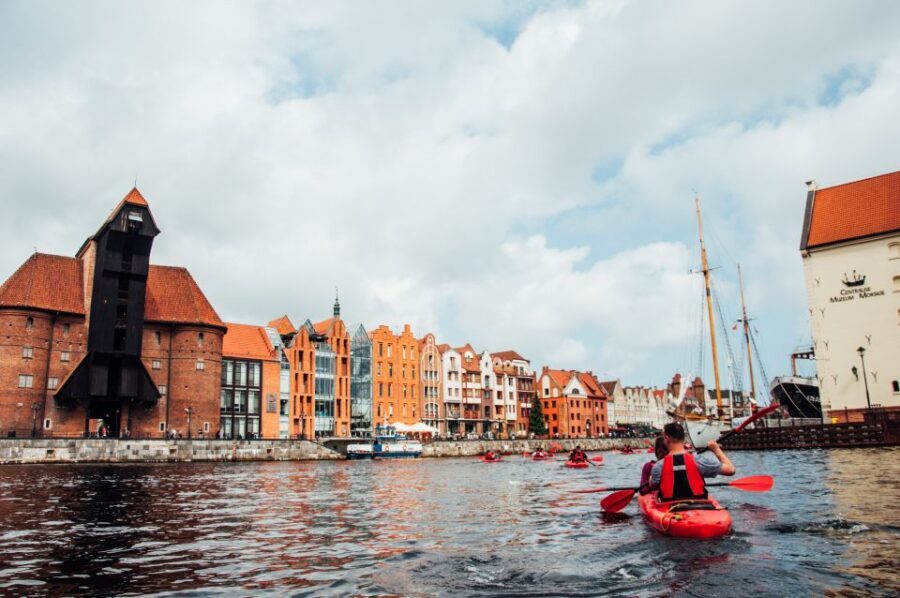
At $47 per person, you’re paying for an experience that includes more than just “a kayak rental.” You get the kayak, paddles, a PFD lifejacket, spray skirts, a waterproof bag, and a guide. That’s a solid value bundle because these items are exactly what make the difference between a safe first-time paddle and an uncomfortable one.
The time also matters. You’re out there for about 150 minutes total, with a 20-minute safety briefing and around two hours on the Motława water route. That’s long enough to actually feel like you explored, not just tried out a sport for a few minutes.
Could you do a cheaper rental? Maybe, if you were already comfortable kayaking and knew the route. But if you’re new and want guidance plus stop-based city context, paying for the guide makes sense. You’re effectively buying both safety support and a local interpretation of what you’re passing.
One thing to keep in mind: snacks are not included. So if you tend to get hungry during activities, you’ll likely want to eat beforehand. Hotel pickup and drop-off also aren’t included, so you should plan to get to the meeting point yourself.
Who Should Book This Tour (and Who Should Skip It)
This is a great choice if you want a different side of Gdańsk and you’re comfortable following instructions on the water. You’ll enjoy it most if you like active sightseeing and you’re curious about how the port city works from the canal level.
Book it if:
- you’re a first-time paddler who wants technique and structure
- you want time on the water past Granary Island and Ołowianka Island
- you like maritime details, including Soldek and old port machinery
- you prefer an intimate, private-group atmosphere
Skip it if:
- you can’t swim or you’d struggle in open-water conditions (swim ability is required)
- you have heart problems, back problems, or mobility impairments listed as not suitable
- you use a wheelchair
- you exceed 243 lbs / 110 kg weight limit
Also, if English communication is difficult for you, this may not work well, since all participants need to be able to communicate in English.
Should You Book Islands and Canals in Gdańsk?
I’d book this tour if your goal is to see Gdańsk from the Motława the way few people do. The combination of a small private group, proper equipment, and stop-based guidance makes it feel friendly and focused rather than random or chaotic.
The decision comes down to two things. First, you need to be comfortable swimming and following safety rules. Second, you should dress like it might rain, because it will be out there regardless of the forecast.
If you want a straightforward way to turn Gdańsk into something you truly experience instead of just look at, this kayaking route is a strong choice.
FAQ
How long is the kayaking tour?
The tour is listed at 150 minutes total, including a 20-minute safety briefing and about two hours of guided paddling on the Motława River.
Where does the tour start?
The meeting point is Dokowa 1, 80-863 Gdańsk, Poland.
What’s included in the price?
Included are the kayak (single or double) with paddles, a PFD lifejacket, spray skirts, a guide, and a waterproof bag.
What should I bring?
Bring change of clothes and wear comfortable clothes.
Is the tour offered in bad weather?
Yes. The tour takes place in rain or shine.
Is it okay if I’m a beginner?
Yes. It’s described as beginner-friendly, with guidance and the option of using a single or double kayak based on your experience.
Do I need to speak English?
Yes. All participants have to be able to communicate in English, and the guide is available in English and Polish.