Gdańsk teaches fast when you walk. This 2.5-hour Old Town stroll strings together the city’s water-gate world, churches, and merchant-era landmarks with an entertaining guide.
What I like most is that it covers the big sights in a smart route—and it keeps you engaged with stories, humor, and practical context.
One possible drawback: you’ll be outside for the full walk, and the experience needs good weather, so plan for cold or rain when you book.
In This Review
- Key highlights to look for
- Why This 2.5-Hour Old Town Walk in Gdańsk Works
- Meet at Stągiewna 1 and Start with the Long Embankment Views
- Crossing Gdańsk’s Water-Gate World: Green Gate to the Crane
- St. Mary’s Church: Where the Exterior Is Only Half the Story
- Mariacka Street: The Medieval Street You’ll Want to Walk Twice
- Langgasser Tor (Goldenes Tor) and the Feeling of Entering Main Town
- Main Town Hall, Muzeum Gdanska, and Neptune’s Fountain Moments
- Great Armoury and the Final Sweep Through Gdańsk’s Stonework
- What the Guide Brings: Stories, Humor, and Practical Tips
- Price and Value: Why $6.05 Can Feel Like a Steal
- What to Expect On the Ground: Pace, Walking, and Timing
- When to Go and How to Dress for Weather That Can Change Fast
- Who This Tour Fits Best
- Should You Book Discover Gdansk Walking Tour?
- FAQ
- FAQ
- How long is the Discover Gdansk Walking Tour?
- Where does the tour start?
- Is the tour offered in English?
- How much does it cost?
- Do I need a ticket, or is it mobile?
- Is the admission free for the stops?
- What group size should I expect?
- What if the weather is bad?
- Can I get a refund if I cancel?
Key highlights to look for
- Old Town orientation in 2.5 hours so you know where things are before you branch out on your own
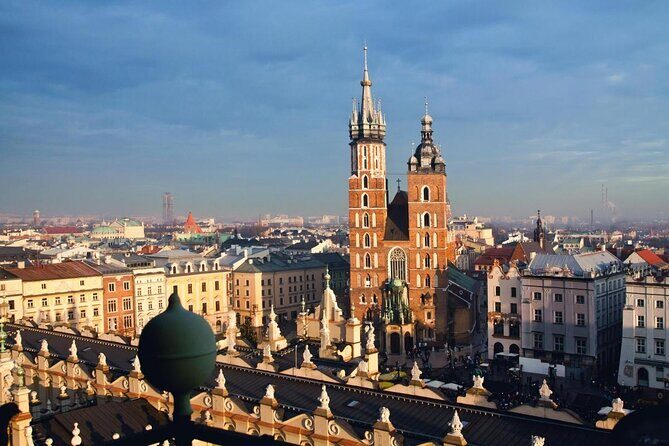
- St. Mary’s Church stop with a note about the figures show held inside the transept
- Water-gate chain from the Long Embankment view to the Green Gate and the Crane’s treadwheel mechanism
- Renaissance gate entry through Langgasser Tor (Goldenes Tor) into the Main Town
- Merchant and power landmarks like the Main Town Hall museum area, Muzeum Gdanska, and Neptune’s Fountain
Why This 2.5-Hour Old Town Walk in Gdańsk Works
This tour is built for getting your bearings without feeling like homework. At about 2 hours 30 minutes, you cover a tight loop of Gdańsk’s “you’re-here” highlights, plus enough lore to make the buildings mean something.
I like that the focus stays on the core historic core. You’re not hunting across the city or waiting around for long transitions. It’s also priced very low at $6.05 per person, and that matters because you still get a guided route through major sights instead of just doing a self-guided checklist.
One more thing: the group stays small, with a maximum of 20 travelers. That size keeps the walk lively, and it also helps the guide keep the energy up when people ask questions on the move. And yes, it runs in English, so you won’t be stuck guessing.
Other walking tours we've reviewed in Gdansk


Meet at Stągiewna 1 and Start with the Long Embankment Views
You’ll start at Stągiewna 1, 80-750 Gdańsk, Poland, and the tour ends back at the same place. That back-to-base setup is handy if you’re trying to connect with dinner, a tram, or a museum visit afterward.
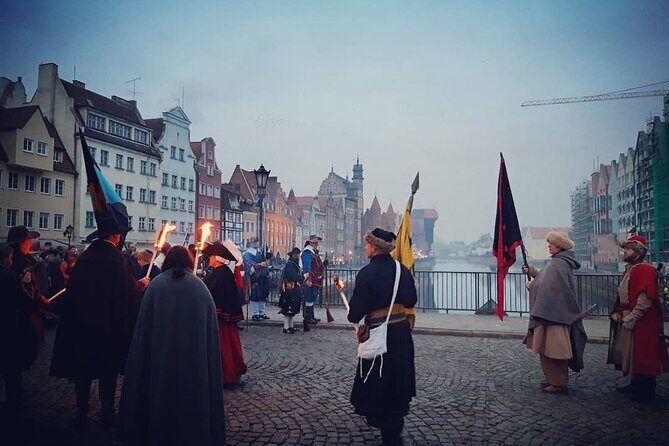
The first stop is at Zielony Most (Green Bridge). Expect a look at the Main Town’s Long Embankment—the kind of viewpoint that helps you understand how the waterfront and city layout fit together. If you’re the kind of traveler who likes to picture where ships, streets, and city power intersect, this opening gives you that mental map fast.
Then you’ll shift to the Green Gate (Brama Zielona), described as a water gate with a town-hall look like you’d see in Flanders. Even if that comparison doesn’t fully click until you see it, it’s a fun way to train your eye: don’t just look at the gate—look at what kind of civic role it played.
Crossing Gdańsk’s Water-Gate World: Green Gate to the Crane
A walking tour that focuses on gates is already doing something smart. Gates are about control and movement. They’re also about the city’s relationship with water—how trade and defense shaped daily life.
Next comes the Crane. You’ll see it from a distance at first, then you’ll get the chance to walk under its treadwheel mechanism. That detail is more than a photo moment. It’s a reminder that this city didn’t just look historic; it was also engineering-driven. You’ll feel the weight of a place built to move goods.
From there, you move into the church part of the story, but the water-gate theme sticks. In Gdańsk, a lot of the city’s identity sits at that overlap of commerce, waterways, and stone architecture.
St. Mary’s Church: Where the Exterior Is Only Half the Story
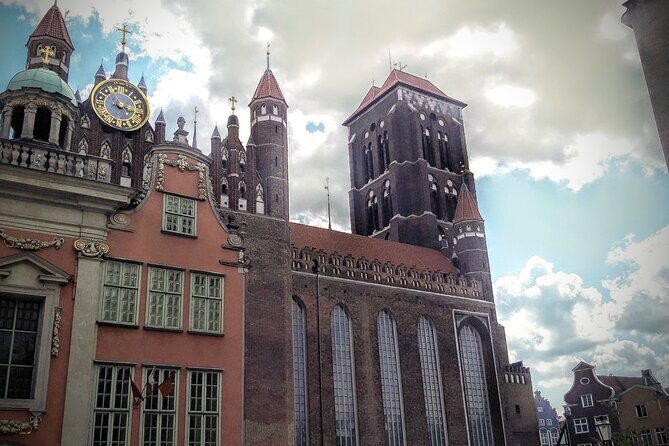
St. Mary’s Church is a must-stop in Gdańsk for a reason, and this tour handles it well. You’ll walk around the church area, and you’ll get a sense of its presence before the focus turns inside.
The big note here is the theater of figures show held inside, specifically mentioned in the transept. Even if you’re just walking by on a schedule that doesn’t let you catch every moment, the way the tour frames the church helps you know what you’re looking for. You’re not treating it as just another big facade.
This is also a good moment to slow down. Church visits reward attention—details, shapes, and the sense of how long this place has drawn people in.
Mariacka Street: The Medieval Street You’ll Want to Walk Twice
Once you’re past the church, you hit Mariacka Street (Ulica Mariacka). The tour describes it as a medieval street and calls it a local favorite. That’s exactly the type of stop that helps you move from landmark tourism into actual city texture.
Here’s what I’d watch for: side views between buildings, the feel of the street under your feet, and how the shops and traffic sit against older stone. Even if you don’t plan to buy anything, this is where you start to feel how a historic core lives in the present.
If you’re short on time, a stop like this is valuable because it doesn’t just show architecture. It shows how people still use these old lanes.





Langgasser Tor (Goldenes Tor) and the Feeling of Entering Main Town
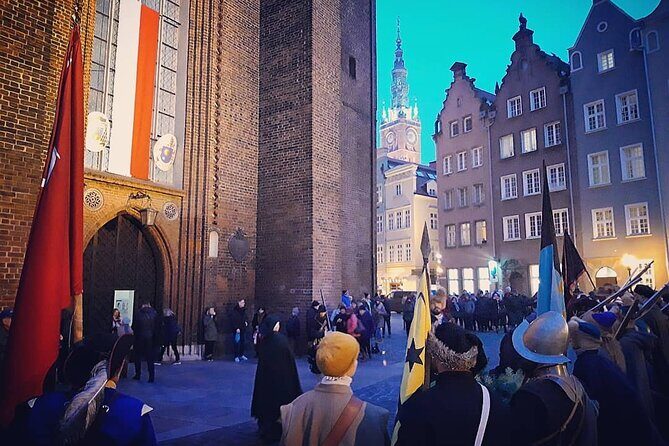
Next is Langgasser Tor, also known as Goldenes Tor. The fun detail is that you’ll meet in the area and then cross into the Main Town through this Renaissance landmark gate.
Crossing through a gate changes the mental mode. It’s like the city becomes “inside” versus “outside.” You’ll probably notice that shift in your photos: the streets and buildings look more like a unified historic plan once you pass that threshold.
This is also a great checkpoint for your senses. If you’ve been looking at buildings for two hours already, you’ll still get a fresh perspective here because the gate acts like a framing device for the area ahead.
Main Town Hall, Muzeum Gdanska, and Neptune’s Fountain Moments
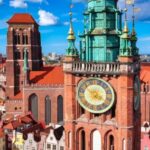
At the Main Town Hall – Museum of Gdańsk, you’ll appreciate the landmark from three angles. That’s a small thing that makes a big difference. Instead of seeing one flat view, you get multiple reads of shape and scale, and it’s easier to understand why the hall stands where it does.
There’s also a mention that you might hear carillon bells from its tower. Even if you don’t catch them, the tour sets you up to listen. That shift—from looking only to also listening—makes the whole Old Town experience feel less like sightseeing and more like being in a living place.
Then you’ll step into the Muzeum Gdanska area, with the question: where did the wealthiest merchants go to unwind? That framing matters because it connects architecture to people. When you start thinking about the merchants behind the wealth, you’ll notice how the city’s grandeur isn’t random. It’s tied to trade, prosperity, and civic identity.
From there it’s on to Neptune’s Fountain (Fontanna Neptuna), called another landmark in the most representative part of Gdańsk. This is one of those stops that works even if you’re tired. You get a quick reset, plus a clean “center point” for understanding the city’s most photographed area.
Great Armoury and the Final Sweep Through Gdańsk’s Stonework
The last stretch brings you to the Great Armoury (Wielka Zbrojownia). You’ll see the facade described as late Renaissance. This is a good counterbalance to the church and the water-gate engineering theme. It adds a different kind of city power: civic wealth expressed through stone grandeur.
After that, you return toward the Green Gate again, noted as the most spacious residential water gate in Gdańsk. That repetition isn’t redundant. It’s the tour nudging you to compare how the same structure can feel different when you’ve learned the city logic in between.
The route ends back at Stągiewna 1, which is convenient. You can keep walking on your own right away, grab food nearby, or hop on public transportation without needing to guess how far you are from your start point.
What the Guide Brings: Stories, Humor, and Practical Tips
A low price only matters if the guide quality is high enough to justify your time. This tour is backed by tons of praise for guide delivery—especially for being fun, friendly, and well structured.
Names you might hear include Martin (showing up repeatedly in strong reviews), plus Mark and Mateo appearing as other guides. You’ll feel the difference in how the tour talks about Gdańsk. Instead of listing dates, the guide connects places to themes: water control, civic power, and merchant influence.
One practical detail I like is the guide’s habit of adding tips beyond pure history. For example, reviews mention that the guide told people what’s free on Mondays, and that the guide shared restaurant ideas plus where to find amber jewelry. Those are the kind of add-ons that can save you time and help you spend money where it actually counts.
And yes, the humor comes up a lot. Even on very cold days, the tour is described as staying enjoyable. That tells me the guide knows how to keep the group comfortable mentally, even when the weather doesn’t cooperate.
Price and Value: Why $6.05 Can Feel Like a Steal
Let’s be honest: $6.05 is shockingly affordable for an organized 2.5-hour walking experience with a live guide. That price makes it easier to say yes even if you’re on a tight budget or you’re still deciding what else to do in Gdańsk.
The value isn’t just the cost. The tour hits multiple key points in a single loop: water-gate landmarks, St. Mary’s Church, a historic street, a Renaissance entry gate, major civic/museum areas, and a central landmark fountain. Many of the stops list admission as ticket free, which keeps the experience from turning into a series of paid add-ons.
Also, the tour is booked on average 18 days in advance. That doesn’t mean you can’t book last minute, but it does suggest the tour is in demand. If you’re visiting in peak season, booking earlier is still a smart move.
What to Expect On the Ground: Pace, Walking, and Timing
This is a walking tour, so you should plan for steady walking. The time is short enough to stay manageable, but long enough that comfortable shoes matter. The route is also compact, which helps you avoid long gaps without points of interest.
Since the tour is offered in English and capped at 20 people, I’d expect a guide who keeps moving at a pace that works for the group. Reviews often mention the duration feeling right—about 2.5 hours—and that the time flew by.
Weather is the big variable. The experience requires good weather, and you’ll see in reviews that people still went even in conditions like heavy cold and rain. That’s a reminder to pack for discomfort. A hat, gloves, and a rain layer can be the difference between a good day and a grumpy day.
When to Go and How to Dress for Weather That Can Change Fast
Gdańsk can be cold and gray. The tour is designed for good weather, so if it’s wet or stormy, expect adjustments like a different date offer or a refund.
For planning your day, think about the seasons. If you go in winter, dress like you’re out for longer than 2.5 hours—because you are. If you go in shoulder season, bring layers you can peel off when you’re warmed up by walking.
A practical trick: wear shoes you can trust on sidewalks and uneven areas around historic buildings. You’ll get plenty of photo stops, and you don’t want to rush them because your feet hurt.
Who This Tour Fits Best
This tour fits you if you want an efficient Old Town orientation. It’s also great if you like mixing architecture with everyday city logic—how water gates, merchant wealth, and major civic buildings shaped the place.
It also suits travelers who want low-cost structure. With a small group and free-feeling stop choices, you get a guided route without turning it into a high-priced day of separate admissions.
The tour says most travelers can participate, and service animals are allowed, which is useful to know if you travel with an assistance animal. If you’re traveling with kids, it may work well because the route includes both story and visual variety, but you’ll want to keep an eye on patience if your child has a short attention span.
Should You Book Discover Gdansk Walking Tour?
If you want a budget-friendly way to understand Gdańsk quickly, I’d book it. The price-to-time ratio is excellent, the route hits real anchors like St. Mary’s Church and Neptune’s Fountain, and the guide quality is consistently praised—especially in terms of energy and storytelling from guides such as Martin.
I’d think twice only if you hate walking outdoors or you’re visiting during a period when weather is usually rough. If the day looks cold or rainy, plan clothing that makes you comfortable, not just stylish.
FAQ
FAQ
How long is the Discover Gdansk Walking Tour?
It lasts about 2 hours 30 minutes.
Where does the tour start?
The meeting point is Stągiewna 1, 80-750 Gdańsk, Poland.
Is the tour offered in English?
Yes, it is offered in English.
How much does it cost?
The price is $6.05 per person.
Do I need a ticket, or is it mobile?
You’ll use a mobile ticket.
Is the admission free for the stops?
The tour notes admission ticket free at the listed stops.
What group size should I expect?
The tour has a maximum of 20 travelers.
What if the weather is bad?
It requires good weather. If it’s canceled due to poor weather, you’ll be offered a different date or a full refund.
Can I get a refund if I cancel?
Yes. Free cancellation is available up to 24 hours in advance for a full refund.