REVIEW · GDANSK
Gdansk: City Sightseeing Tour Eco Electric Buggy Golf Cart !
Book on GetYourGuide →Operated by GLUZINSKI CITY TOUR KRAKOW SP. Z.O.O · Bookable on GetYourGuide
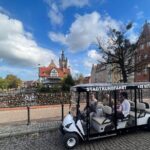
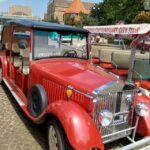
Gdansk on a cart makes time feel generous. This eco electric golf cart tour is built for moving through Old Town with a guide, then landing you at (and passing by) the big-name sights tied to the city’s story, including its connection to the Second World War.
I like the straightforward format: you cover a lot of ground without turning your day into a walking contest. I also like that you get both live guiding (driver in English or Polish) and an audio guide in Polish and English (plus German), which helps you keep up even when your brain is busy taking photos. One possible drawback: the tour is only 1 hour, so if you want to linger at any single church, gate, or square, plan to add extra time later.
In This Review
- Key highlights worth caring about
- Electric buggy touring in Gdansk: why this format works
- Your one-hour route: how to make it feel less rushed
- Highland Gate and Golden Gate: gliding through the Old Town feel
- Torture House and Prison Tower: why you should be ready for a heavier stop
- Churches, chapels, and a monument stop you can place later
- The Crane, Ship Soldek, and Amber Sky: the shipyard area focus
- Culture and civic landmarks: Philharmonic, Post Office, and Market Hall
- Railway Station and the “beyond the core” feeling
- Guide-led storytelling: live narration plus audio support
- Price and value: is $29 fair for this tour?
- Who should book this electric cart tour?
- Should you book this tour?
- FAQ
- How long is the Gdansk electric golf cart city tour?
- How much does it cost?
- Where do pick up and drop off happen?
- What languages are offered during the tour?
- Is the tour wheelchair accessible?
- Are pets or alcohol allowed?
- Is there free cancellation?
- Can I reserve without paying right away?
Key highlights worth caring about
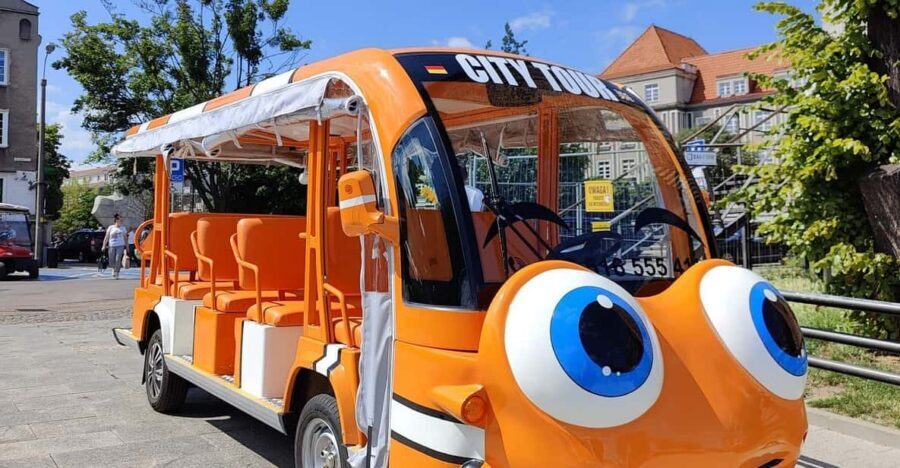
- Old Town sights with zero mileage stress: you glide between major landmarks instead of hoofing it between each stop.
- A guide who can help you see the city clearly: people like Jakob have been praised for strong explanations and lots of photo tips.
- Audio support in multiple languages: Polish, English, and German options mean you’re never stuck guessing what you’re looking at.
- World War connection built into the route: the shipyard area and historical stops are part of the story, not random decoration.
- Well-paced “orientation” for a first day: it’s a fast way to get your bearings before you explore on your own.
Electric buggy touring in Gdansk: why this format works
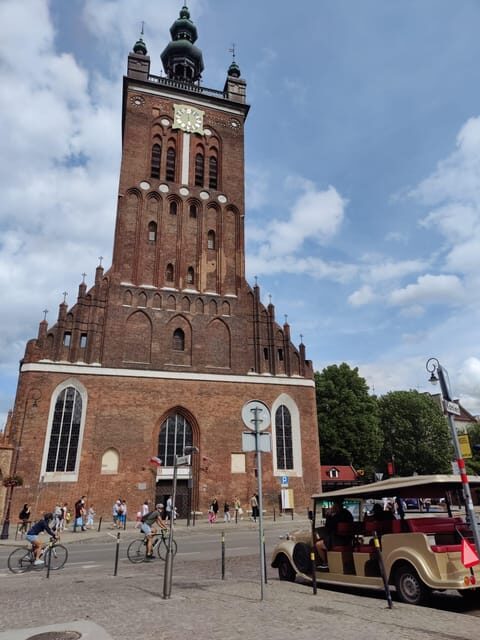
Gdansk is a city where the details matter—gates, churches, monuments, squares, and the waterfront shipyard story all sit close together. Walking everything can be fun, but it also turns your day into a chain of “How far is it from here?” questions. An electric golf cart tour cuts that friction and keeps your focus on what’s outside the window.
What makes this one practical is that it’s not built like a long sightseeing lecture. It’s a one-hour loop with a guide, plus an audio layer so you can follow along in your language. That combo is especially helpful when you’re bouncing between viewpoints where your attention shifts quickly.
And yes, it’s also a good value play. For the price, you’re buying time-saving transportation plus narration. The only thing you’re not buying is time to linger—because the schedule is tight by design.
Other golf cart and buggy tours in Gdansk


Your one-hour route: how to make it feel less rushed
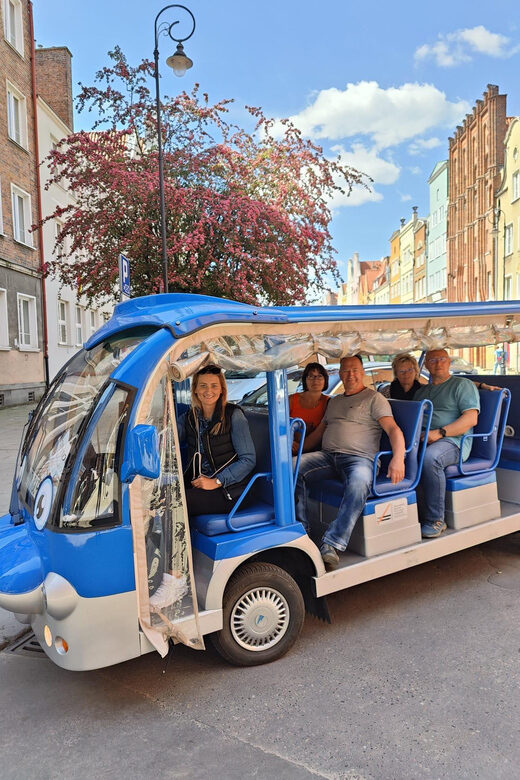
This tour runs for 1 hour. That’s long enough to see a serious chunk of the city core, and short enough that you don’t burn your entire day on wheels. The result is an experience that’s great for orientation and for building a mental map you can use later.
The tour includes pick up and drop off at the meeting point, with no hotel pick up listed. So if you’re basing yourself outside easy reach of the center, your first decision is simply whether the meeting point is convenient for you. If it is, you’ll likely appreciate the simplicity: show up, hop in, listen, look, return.
Also, the route includes “skip the ticket line.” That’s the kind of small advantage that matters on busy days. Even though the tour is cart-based, it’s still reassuring to know you’re not waiting around for entry where timing could otherwise stretch your hour.
Highland Gate and Golden Gate: gliding through the Old Town feel
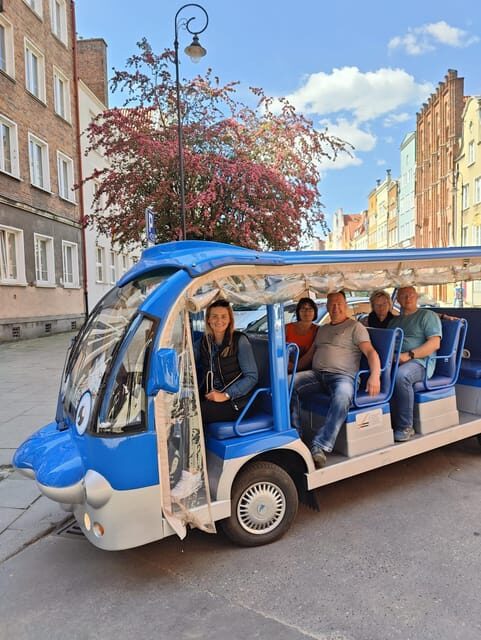
The ride gives you a sequence of classic Old Town landmarks that are easy to recognize and easy to place later on your map. You start with gates that signal you’re in the historic core: the Highland Gate and the Golden Gate are both on the list of what you’ll see.
Why this matters: gates and entry points are useful mental anchors. When you later wander the streets on your own, you’ll remember where the “story starts,” not just that you saw a lot of buildings. And on a cart, those anchors come fast—so your first-day impressions don’t scatter.
You’ll also pass by other stops that keep the route feeling like a real walk through neighborhoods, not just a highlight slideshow. The tour is designed so you don’t only look at one tight area; you keep moving through the city’s historic rhythm while still staying in a tight schedule.
Torture House and Prison Tower: why you should be ready for a heavier stop
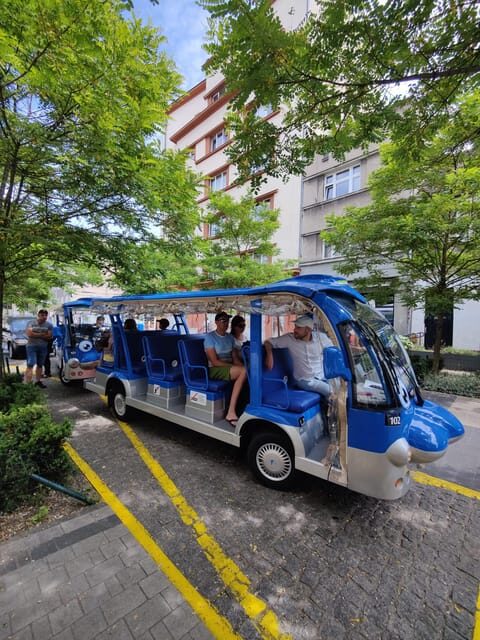
One of the listed highlights is the Torture House and Prison Tower. That alone tells you this is not a purely postcard-style route. It’s part of the historical narrative of Gdansk, and it fits with the tour’s broader emphasis on the city’s past and its connection to the Second World War.
The practical way to handle this stop is to give it your attention like you would a museum moment. Even though you’re in a golf cart, treat the guide’s explanation as the main event. If you’re traveling with kids or you’re sensitive to darker topics, it’s still manageable within an hour—but you might want to emotionally pace yourself.
This is also where having an audio guide can help. When a topic gets dense, audio support gives you a chance to re-check what you missed while you’re still in the area.
Churches, chapels, and a monument stop you can place later
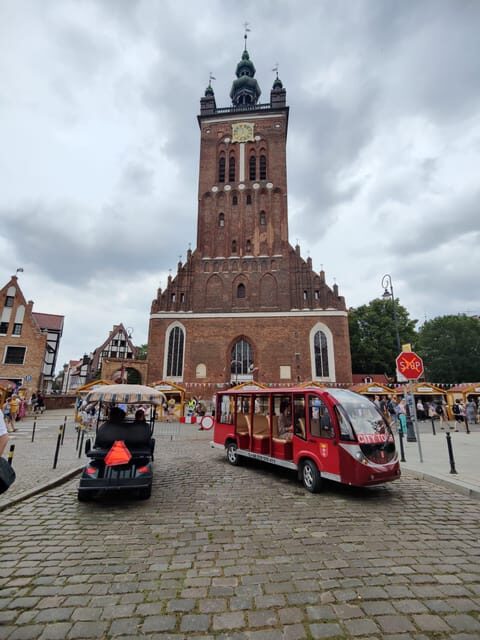
The tour includes several major religious and civic buildings, including St. Nicolas Church, St. Mary’s Church, the Royal Chapel, and additional church stops later on: St. John’s Church, St. Bridget’s Church, and St. Catherine’s Church.
In an hour, you’re unlikely to absorb every architectural nuance, especially from a moving vehicle. But you can still do something valuable: you can identify the names and the locations. Later, when you choose which churches to return to, you’ll know exactly what you’re walking toward.
You also see the Monument of John III Sobieski. Monuments are great “later reference points.” They help you orient yourself around key squares and corridors even when the streets start to feel similar.
The Court of the Society os St. George is also listed. Places like this give texture to the route, showing you that the city isn’t only gates and churches—it’s also civic and cultural space.
Other city tours we've reviewed in Gdansk


The Crane, Ship Soldek, and Amber Sky: the shipyard area focus
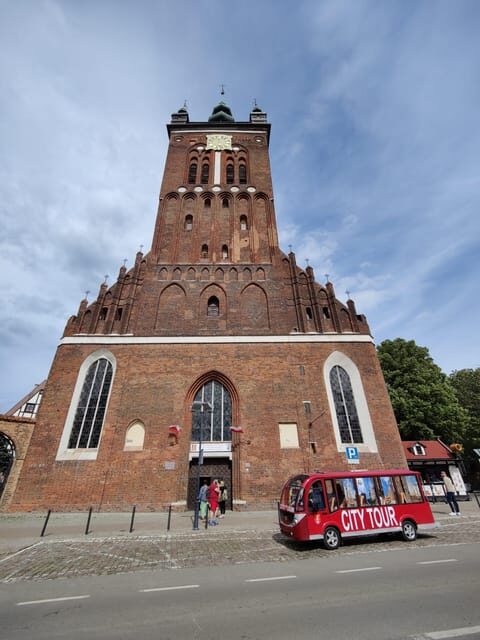
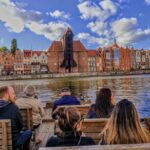
A big selling point here is the city connection with the Second World War, and the tour explicitly connects that theme with the shipyard. You’ll pass by and see waterfront-related shipyard landmarks such as The Crane, Ship Soldek, and Amber Sky.
Even if you’re not a shipyard expert, these named stops help you build a clear chain in your head: historic port space, industrial symbolism, and the modern memory of the city. It’s also a good area to watch for the kind of “big picture” storytelling guides are able to do when landmarks are close together.
If you’re the type who likes to understand why a city looks the way it does, this section is where that instinct pays off. You’re not only seeing individual structures; you’re seeing a geographic storyline that ties into Gdansk’s wider historic role.
Culture and civic landmarks: Philharmonic, Post Office, and Market Hall

Midway through the route, you shift from gates and churches to buildings that feel more like the everyday pulse of the city. The list includes the Philharmonic and the Post Office in the Free City, plus The Great Mill and the Market Hall.
Why I like this mix for a first visit: it shows Gdansk as more than one theme park of old streets. A city has culture spaces, trade spaces, and communication hubs—and those are part of how you’ll experience the place later, whether you’re eating nearby or walking between neighborhoods.
You also see Solidarity Square. Even without extra time on foot, it gives you a named square to look up again later. Squares like this are often central to how locals organize their movements, even if you mostly pass through by cart today.
Railway Station and the “beyond the core” feeling
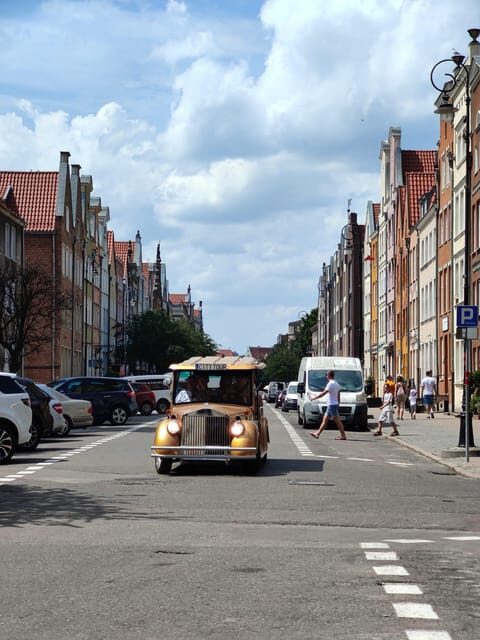
The route doesn’t only stay in the tightest historic area. It also includes The Railway Station and other stops that broaden the feel of the city. You’ll see St. Bridget’s Church and St. Catherine’s Church as part of that wider coverage, which helps the tour feel like a real route through the city rather than a short loop of identical streets.
This matters because Gdansk can feel compact until you try to connect districts on foot. With a cart route that moves you between key points, you’re more likely to understand how different areas connect.
Think of this section as your “map-builder.” Even if you don’t fall in love with every stop during the ride, you’ll know where you want to return—especially if you’re staying for more than a day.
Guide-led storytelling: live narration plus audio support
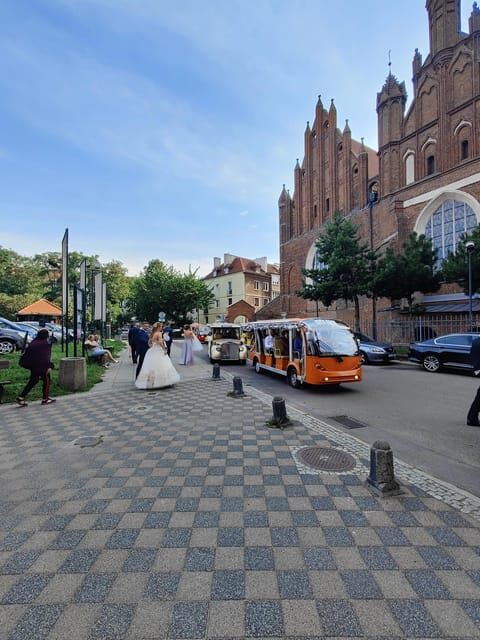
The driver guides the tour in English or Polish, and you also get an audio guide in Polish, English, and German. That’s a strong setup because it gives you two layers of context. If the live explanation runs fast, your audio helps you catch up without asking questions every time.
The guide quality can make a noticeable difference in how much you actually get out of the hour. In the guide feedback you can find names like Jakob, who was praised for taking lots of photographs and explaining things well. You can also see mention of Evalina, described as amazing and humble—exactly the kind of approach that keeps people comfortable when the route is hitting heavier topics.
Practical tip: during a cart tour, you’ll naturally look ahead. Use that moment to listen, and when the cart slows for a stop, focus on the name and what the guide says connects it to the broader story.
Price and value: is $29 fair for this tour?
At $29 per person for 1 hour, this tour is in the “worth it for convenience” category rather than “only if you love history” pricing. You’re paying for transportation (electric golf cart), a guided layer, and audio support. You’re also getting a lot of named stops packed into a short window.
What you’re not getting is hotel pick up and drop off; pick up and drop off happen at the meeting point. That’s the main value equation to check before you book. If you can get to the meeting point easily, the pricing feels more justified because you’re not adding hidden transit costs and time.
Also, the tour is wheelchair accessible. If mobility is part of your planning, this is useful information when you’re comparing alternatives.
And don’t forget the behavior rules: pets and alcohol/drugs aren’t allowed. That usually translates into a calmer experience and fewer distractions while you’re listening and looking.
Who should book this electric cart tour?
I’d book this tour if you want a smooth first day in Gdansk. It’s especially useful when you have limited time and you want to hit a wide set of sights—gates, churches, shipyard landmarks, and squares—without burning your energy.
It also suits solo travelers who want direction. Having both live guiding and an audio guide means you’re not dependent on one stream of information.
Families can do it too, but if your group is sensitive to difficult historical topics, treat the Torture House and Prison Tower stop with care. It’s still one hour total, so the exposure is brief—but it’s real.
Should you book this tour?
Book it if you want a fast orientation that connects Gdansk’s Old Town landmarks with the shipyard story and the Second World War context. The combination of electric carts, live guidance in English or Polish, and audio in English/Polish/German makes it easier to absorb what you’re seeing without constantly asking for clarification.
Skip it if you’re the type who hates short tours and wants to linger at fewer places. With this schedule, you’ll likely appreciate the ride for what it is: a moving overview, not a slow, deep visit.
If your goal is to choose what to explore next, this tour is a strong starting point. You’ll come away with names in your head—Highland Gate, Golden Gate, Torture House and Prison Tower, The Crane, Ship Soldek, Amber Sky, Solidarity Square, Market Hall—and that makes your follow-up walking much easier.
FAQ
How long is the Gdansk electric golf cart city tour?
The tour duration is 1 hour.
How much does it cost?
The price is listed as $29 per person.
Where do pick up and drop off happen?
Pick up and drop off are both at the meeting point. Hotel pick up and drop off are not included.
What languages are offered during the tour?
The driver speaks English and Polish. An audio guide is included in Polish, English, and German.
Is the tour wheelchair accessible?
Yes, the tour is wheelchair accessible.
Are pets or alcohol allowed?
No. Pets are not allowed, and alcohol and drugs are not allowed.
Is there free cancellation?
Yes. Free cancellation is available up to 24 hours in advance for a full refund.
Can I reserve without paying right away?
Yes. You can reserve now & pay later.