REVIEW · GDANSK
Gdansk Private Traditional Polish Food Tour
Book on Viator →Operated by Rosotravel Tours Gdansk · Bookable on Viator
Gdansk food and sights, timed perfectly. This private traditional Polish food tour links Old Town highlights with worry-free menu translation, so you can focus on what you’re eating instead of decoding Polish. The route is built around big sights plus local tasting stops, and the guide keeps you moving (and smiling) while explaining what matters—right down to why certain streets and buildings feel so Hanseatic.
I like that the tour has a clear payoff: you visit multiple traditional places and end up with a lineup that’s more than just one snack—think Polish dumplings, meat dishes, soup, and dessert like cheesecake. I also like the pacing for a short visit: you’re walking through famous spots such as St. Mary’s Basilica and Neptune’s Fountain while still getting full meals worth of tastings. The one thing to consider is that this is heavy on food. There’s a reason the tour advice is to eat breakfast and skip lunch—if you don’t, you’ll run out of room fast.
In This Review
- Key things that make this tour work
- Why Gdansk Old Town is perfect for a food-first walk
- Price and what you actually get for $187.23
- The timing: 2 to 5 hours, and how not to waste it
- Getting started at ibis Gdańsk Stare Miasto
- Stop-by-stop: Old Town highlights paired with real Polish flavors
- Old Town intro: Old Town area, Amber Museum, and Golden Gate
- Długa Street: merchant grandeur in a walkable ribbon
- Uphagen’s House and St. Mary’s Basilica: merchant homes meet big church power
- Piwna Street and the Great Armoury: beer history and Renaissance stone
- Main Town Hall, Artus Court, and Neptune’s Fountain: power, then sea symbolism
- Golden House, Mariacka Street, and the Motława embankment: detail lovers will grin
- The Crane: the city’s port muscle memory
- Churches at the edges: optional interiors and what to look for
- Food tastings: what you’ll actually eat and how to plan your appetite
- The guides: the difference between seeing and understanding
- Who this tour suits best
- Should you book the Gdansk Private Traditional Polish Food Tour?
- FAQ
- How long is the Gdansk Private Traditional Polish Food Tour?
- Is this tour private or shared with other groups?
- What food and drinks are included?
- Does the guide handle menu translation?
- Are museum or church admissions included?
- What should I do if I have allergies or I’m vegetarian?
Key things that make this tour work
- Menu translation so you don’t guess what you’re ordering
- Food stops built into a walk through Gdansk Old Town highlights
- A drink lineup included: beer, coffee/tea, and a vodka shot (choice on premium)
- You’ll cover major photo stops like Golden Gate, Neptune’s Fountain, and the Crane
- Optional museum/church interiors on the longer versions, when possible
- A licensed guide with city context, plus time-saving route planning
Why Gdansk Old Town is perfect for a food-first walk
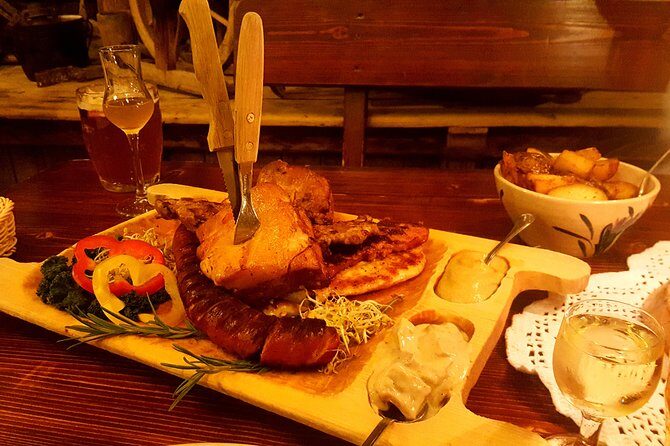
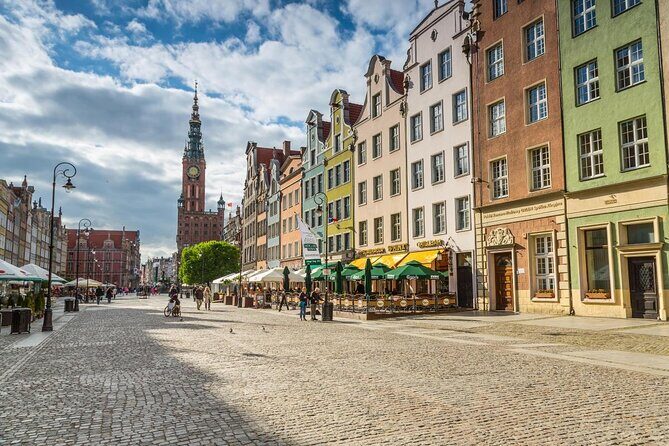
Gdansk’s Old Town is compact enough to do on foot, but it’s also dense with meaning. You’ll see brick churches, merchant houses, and port architecture that explain how this city made its money. The best part of this tour style is that your food stops aren’t random. They’re woven into streets like Długa Street and the area around the Motława River embankment, so every bite comes with a bit of context.
The menu translation is the practical magic trick here. If you’ve ever stared at a menu and felt stuck, you’ll appreciate how the guide takes that pressure off. You don’t need to know Polish flavors by name—you just get guided into the right traditional dishes.
And because this is private (only your group), you get a little more room to ask questions and move at a pace that fits your time. That matters in Gdansk, where the highlights are popular and lines can form around major churches and interiors.
Other Polish food tours in Gdansk


Price and what you actually get for $187.23
At $187.23 per person, this isn’t a cheap casual snack walk. It’s priced like a guide-led experience with real structure: tastings at multiple traditional venues plus a curated Old Town route.
Here’s what helps justify the price in plain terms:
- You’re paying for time saved: the guide handles route flow and menu translation.
- You’re paying for the amount of food: the tour includes enough tastings that the advice is to skip lunch.
- You’re paying for included drinks: you get a soft drink, a Polish beer, coffee or tea, and a shot of Polish vodka.
You’ll still see major sights even if you don’t pay for any museum entry separately, because many stops have free viewing. Still, some attractions have admission fees that aren’t included, so it helps to go in knowing you might spend extra if you want interiors on the optional stops.
The timing: 2 to 5 hours, and how not to waste it
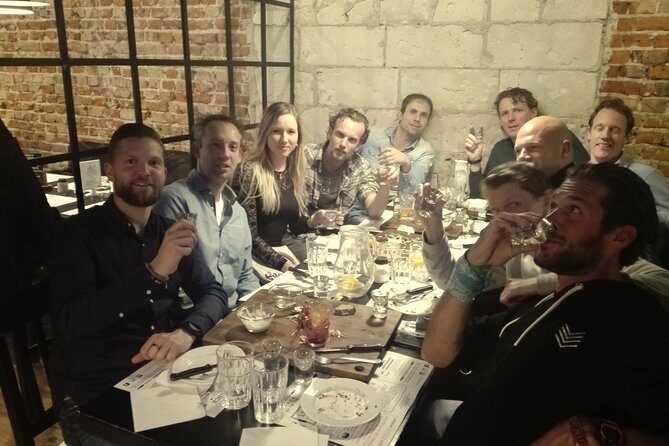
The tour runs about 2 to 5 hours, depending on the option you choose. That range isn’t just about time—it changes what you’re likely to be able to see inside, since several stops list optional interior access “on request,” plus some attractions have admissions not included.
If you only have a couple hours, I’d treat this as your fast-track. You’ll get a mix of Old Town landmarks and multiple tasting venues, which is the best way to cover ground without turning your day into a logistics puzzle.
If you choose the premium 5-hour version, pay attention to the drink choice requirement: you need to decide in advance between Beer Tasting and Vodka Tasting. That’s a small planning step that affects what you’ll experience.
Getting started at ibis Gdańsk Stare Miasto
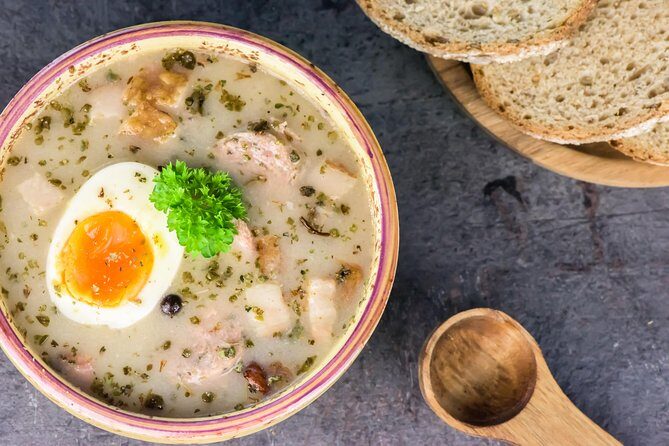
You meet at ibis Gdańsk Stare Miasto, Jana Heweliusza 24. It’s a practical starting point because it’s near public transportation. You’ll also want to show up on time. The guide waits up to 30 minutes if you’re delayed.
One more comfort factor: the tour takes place regardless of weather. In a city where weather can swing, that matters. Wear shoes you can handle on uneven Old Town paving, and bring a layer—your legs will do most of the work, and you’ll want to focus on the food and sights, not on discomfort.
Stop-by-stop: Old Town highlights paired with real Polish flavors
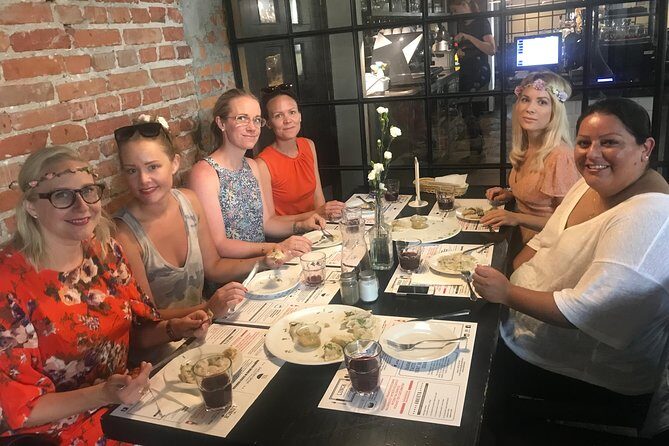
This tour moves through the heart of Gdansk. Think of it as two threads running together: (1) you see the city’s famous visuals, and (2) you reset at traditional tasting stops for appetizers, dumplings, meat dishes, soup, and dessert.
Other food & drink experiences in Gdansk



Old Town intro: Old Town area, Amber Museum, and Golden Gate
You start in the Old Town area, where the guided portion focuses on key sights right near where you’ll be walking anyway. From there, the route touches the Museum of Amber area and the Upland Gate, tied to the city’s amber history and old city access.
Next comes Golden Gate (Złota Brama), one of the standout monuments in Gdansk. The big detail here is what’s inside: wartime-era images showing what the city looked like after World War II. It’s the kind of stop that gives you a stronger lens for the rest of the walk, especially as you see how carefully the city rebuilt and preserved its identity.
Długa Street: merchant grandeur in a walkable ribbon
On Długa Street, you’ll get that classic Gdansk feel: tenement houses, historic storefront-fronts, and major Old Town landmarks all along a single main artery. This is one of the places where your guide’s city knowledge pays off—because the street isn’t just pretty. It’s a timeline of architecture and commerce.
This is also a good moment to remember why the food-tour approach matters. You’re walking a lot of the day anyway, so it’s smarter to use the route to make your tastings feel earned. The guide keeps the pacing so you’re not rushing past everything.
Uphagen’s House and St. Mary’s Basilica: merchant homes meet big church power
You’ll also pass Uphagen’s House, an 18th-century merchant home that became a museum later. If you’re interested in how Gdansk merchants lived and displayed status, this interior stop is worth considering—just note admission isn’t included for this one.
Then comes St. Mary’s Church (St. Mary’s Basilica), one of the most visible landmarks in the city. The interior facts that make it special are the scale and the systems: it’s believed to be the largest brick church in the world, with vaults supported by a structure that includes 37 windows, plus a huge number of tombstones and chapels. Even if you only get the short viewing time, it leaves an impression.
Piwna Street and the Great Armoury: beer history and Renaissance stone
You’ll hit Piwna Street (Ulica Piwna), tied to beer-making tradition—its name points to brewing history. The street also connects to darker modern history, since a Nazi politician and war criminal lived in a house here. Your guide should provide context so you understand how the city’s story isn’t only about charm.
Next is the Great Armoury (Wielka Zbrojownia), built in the early 1600s and associated with a long period as a working arsenal. Architecturally, it’s a strong Renaissance example, and it sits right along the city’s medieval defensive line.
This is where I like that the tour blends civic history with everyday life. Food in Gdansk isn’t just comfort; it’s part of how the city functioned—trade, workers, merchants, and the port all shaped the culture.
Main Town Hall, Artus Court, and Neptune’s Fountain: power, then sea symbolism
The walk continues past the Main Town Hall, the seat of city authorities. Interior access is listed as possible on request, with admission not included.
Then there’s Artus Court (Artus Court / Muzeum Gdańska). This stop is especially fun if you like symbolism and old meeting places. The hall includes a centerpiece renaissance tiled stove dating to 1546, built from more than 500 individual tiles. It also features large paintings tied to Bible and mythology, so it’s not just a room—it’s an identity statement from a merchant city.
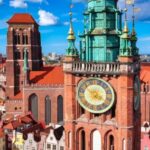
After that, you reach Neptune’s Fountain—a 17th-century fountain that represents classical antiquity in Gdansk art. It’s also the symbol of the city and its sea connections. It’s a quick stop, but it works as a visual reset before you head deeper into the port-flavored parts of town.
Golden House, Mariacka Street, and the Motława embankment: detail lovers will grin
Golden House is known for an especially rich façade. The highlight is the sculpted decoration: carved scenes between storeys and statues at the top. If you like facades, this is a good place to slow down for photos—because the details aren’t just ornamental; they signal status and education.
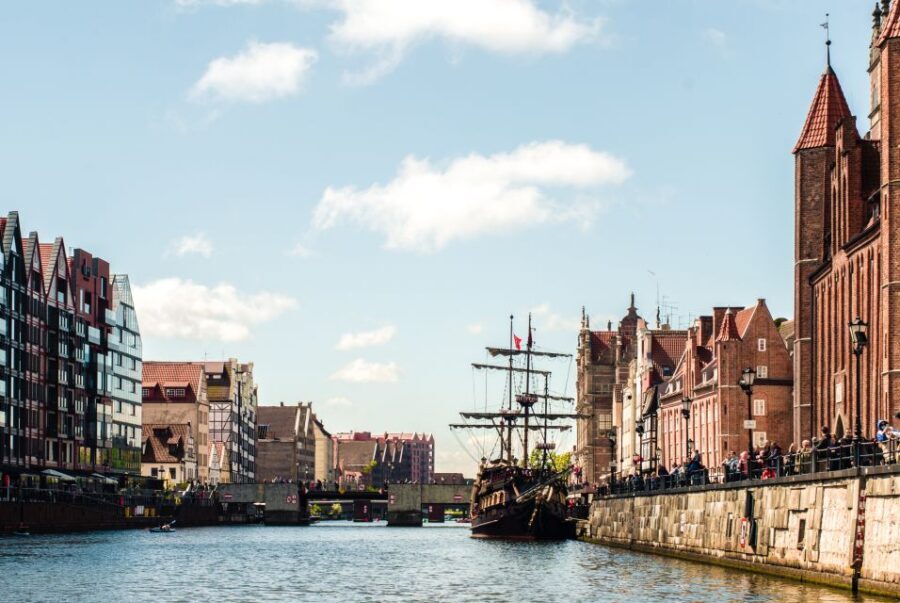
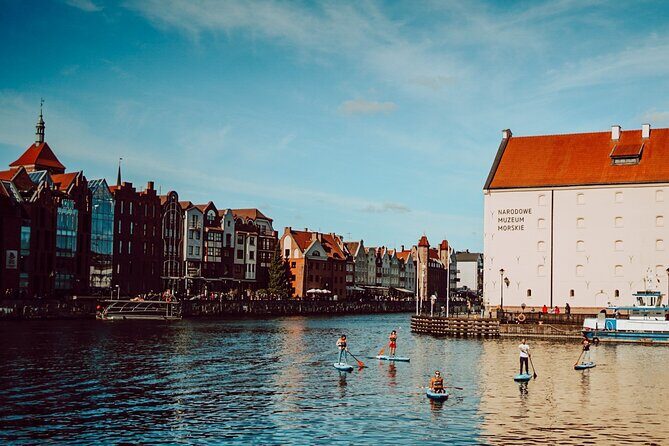
You’ll also see the Mariacka Street area, known for ornate merchant facades and perrons with famous gargoyles. Then you move to the Motława River embankment (Długie Pobrzeże). This is where you feel the old Hanseatic League atmosphere. The architecture reflecting in the water is the practical reason this stop is worth timing well—take your photo early, because later your legs will want to keep moving.
The Crane: the city’s port muscle memory
The Crane (Żuraw) is one of the most photogenic stops in Gdansk. It’s a medieval port crane, unique in scale on the European level, and it’s the only surviving twin-tower gate in the city. It’s also become a world-famous symbol of Gdansk and its seaport. If you only remember one “port” image from this tour, make it this one.
Churches at the edges: optional interiors and what to look for
Depending on the option you choose, the tour includes chances to explore older churches, sometimes on request. Several of these are listed as not having included admission, so consider this your menu of bonus stops rather than guaranteed “everything inside” access.
You may be able to explore St. Catherine’s Church, described as the oldest existing church in the Old Town and in all of Gdańsk. It’s under the patronage of St. Catherine of Alexandria and includes the grave of astronomer Johannes Hevelius in the undergrounds.
You may also visit St. Bridget’s Church, which was nearly destroyed during World War II and rebuilt based on original designs from the late 14th to early 15th centuries. The notable interior detail is an amber altar, listed as a reason worth visiting.
Finally, there’s St. Nicholas Church, built near the end of the 12th century and described as the only one that didn’t suffer damage during World War II and the city’s liberation. If you’re short on time, I’d focus on the exterior and the meaning your guide explains—then decide on an interior based on how your group feels.
Food tastings: what you’ll actually eat and how to plan your appetite
The tour includes food tastings at carefully chosen venues, with variety that goes beyond one single dish. You’ll visit five food stores and restaurants and try traditional items that include Polish dumplings and cheesecake (plus soup, appetizers, meat specialties, and dessert).
The best planning tip is the blunt Polish rule: the city serves enough food to make a table collapse. The tour even warns you to eat breakfast and skip lunch. I’d follow that advice closely. This isn’t a light sampler—it’s structured like a real meal spread across multiple stops.
Beverages are also part of the package. You’ll receive:
- 1 soft drink
- 1 Polish beer
- coffee or tea
- and a shot of Polish vodka
On the premium version, you’ll choose between Beer Tasting or Vodka Tasting in advance, so your guide can set the experience accordingly.
If you have allergies or you’re vegetarian, tell the operator ahead of time. The tour also notes that if a dish isn’t available, it will be replaced with another traditional one—so you’re not left empty-handed.
The guides: the difference between seeing and understanding
What makes this tour feel good is the human factor. In feedback tied to the program, guides like Małgorzata, Karina, and Kaja are described as doing more than point and talk. They connect food choices to city life, and they also explain major landmarks in a way that makes them stick.
You’ll feel that most in moments like Golden Gate’s wartime imagery, or when St. Mary’s Basilica scale is explained. Those aren’t just trivia stops—they’re anchors that help you understand why Gdansk looks the way it does now.
Who this tour suits best
This is a strong fit if:
- you want a lot of tastings plus major sights in a short window
- you prefer a private guide who can answer questions and translate menus
- you like walking tours but don’t want to plan each stop yourself
It’s also a good choice for groups that include different ages or nationalities, because the tour format keeps everyone moving and fed.
Should you book the Gdansk Private Traditional Polish Food Tour?
If you’re serious about Polish food and you want it paired with the best of Gdansk Old Town, I’d book it. The combination of menu translation, five tasting stops, and a route that hits big visual anchors like St. Mary’s Basilica, Neptune’s Fountain, and the Crane is exactly the kind of value that works when time is limited.
I’d hesitate only if you hate heavy portions or you’re looking for a lighter “snack and stroll.” This tour is designed so you eat a lot, and the tour advice to skip lunch tells you that upfront.
FAQ
How long is the Gdansk Private Traditional Polish Food Tour?
The tour runs about 2 to 5 hours, depending on the option you choose.
Is this tour private or shared with other groups?
It’s a private tour. Only your group will participate.
What food and drinks are included?
The tour includes food tastings of traditional dishes such as appetizers, dumplings, meat specialties, soup, main courses, and dessert, plus beverages: 1 soft drink, 1 Polish beer, coffee or tea, and a shot of Polish vodka.
Does the guide handle menu translation?
Yes. You won’t need to translate menus yourself because the guide will translate.
Are museum or church admissions included?
Some are not included. Admission tickets are listed as not included for places such as the Museum of Amber and several museum/church interiors like Uphagen’s House, the Main Town Hall, and Artus Court.
What should I do if I have allergies or I’m vegetarian?
Advise the tour operator in advance about food allergies or if you’re vegetarian. If a dish isn’t available, it will be replaced with another traditional option.