REVIEW · GDANSK
Bike Tour Gdansk – Standard
Book on Viator →Operated by Tourist Point Gdansk · Bookable on Viator
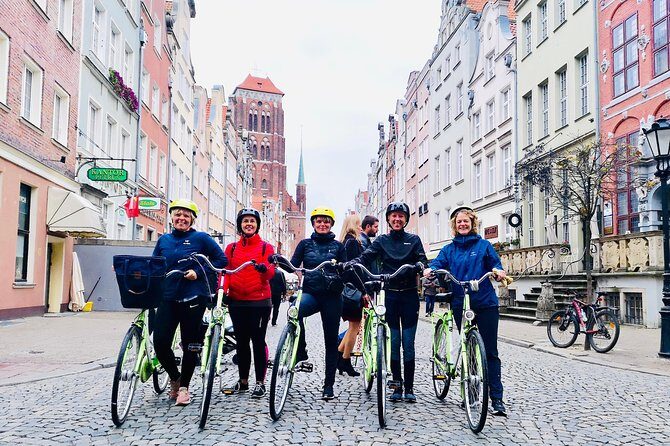
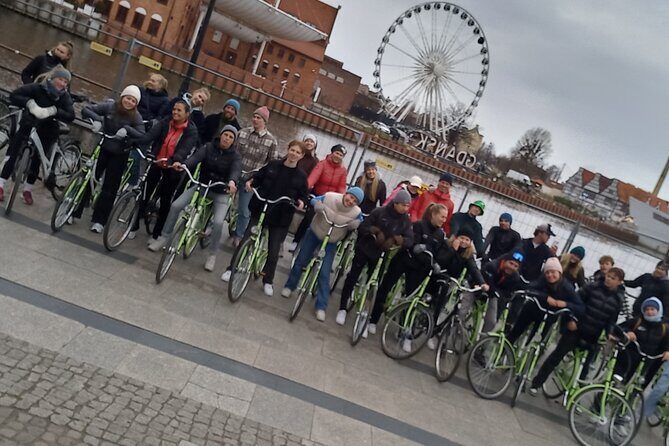
Gdańsk feels quicker on two wheels. This short bike tour stacks the biggest landmarks into one smooth, low-effort day plan, with a local guide who connects what you see to the stories behind it. You’ll get real context fast, while still enjoying the city at an easy pace.
I love that the experience is customizable to your interests, so you can steer the focus toward history, architecture, or whatever you’re most curious about. I also love the way the tour gives extra attention to Solidarność, linking the European Solidarity Centre and Gdańsk Shipyard to why this city mattered.
One thing to weigh: the timing is tight. Many stops are brief, some entrances are included and some are not, and the Kladka over Motława on Ołowianka is only visited if it’s open.
In This Review
- Key highlights worth pedaling for
- Why this two-hour bike tour is a smart first-day plan
- The $43 price tag: what you’re actually getting
- Where you start near Kołodziejska 7 (and how to picture the route)
- Długi Street first: Neptune’s Fountain and the Town Hall vibe
- St. Mary’s Church: Memling’s Last Judgment and the astronomical clock
- Europejskie Centrum Solidarności: learning the meaning, not just the facts
- Gdańsk Shipyard: the Solidarity link you can actually see
- Museum of the Second World War: worth it, but plan your access
- Golden Gate and the green gates: symbols that explain the city’s values
- Wyspa Spichrzów and the damage of war you can’t ignore
- Kladka over Motława on Ołowianka: a quick bonus when conditions allow
- The Crane and the waterfront signs of who built Gdańsk
- Tips to get the most from a bike overview in Gdańsk
- Is this the right tour for you?
- FAQ
- How long is the bike tour?
- Is this a private tour?
- Are entrance tickets included?
- Where does the tour start?
- What happens if the weather is bad?
- Can the tour be tailored to my interests?
Key highlights worth pedaling for
- Solidarność storytelling at the European Solidarity Centre and Gdańsk Shipyard
- St. Mary’s Church with Memling’s Last Judgment and the famous astronomical clock
- Top photo-and-walk icons like the Crane and Golden Gate
- Quick, low-energy format: see more with less standing
- Short, focused stops that help you build a smart first-day route
Why this two-hour bike tour is a smart first-day plan
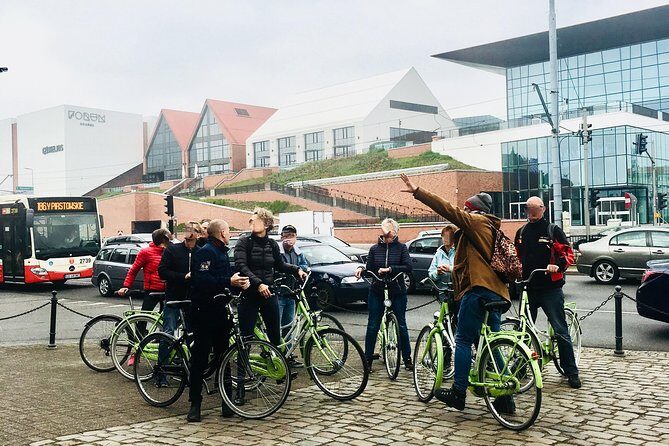
If you only have a day in Gdańsk, two wheels are a shortcut to confidence. You get bearings fast—where the main sights sit, how the neighborhoods flow, and what you might want to return to later with more time. The whole point is a “taster course” done at a relaxing speed, not a forced march.
At about two hours, it’s also an easier fit than long guided days. You can do this early, then spend the rest of your visit wandering on your own with a better sense of direction. That’s where value really shows up: not just in the sights, but in how it helps you plan the rest of your trip.
It’s also a private tour/activity. That matters because you’re not stuck listening to a one-size-fits-all explanation. If your group wants more time on churches or more time on memorial sites, the tour is described as customizable to interests and preferences.
Other bike tours in Gdansk
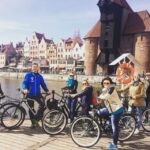
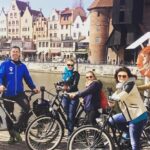
The $43 price tag: what you’re actually getting
The price is listed at $43.05 per person, which is modest for a guided route covering a cluster of major landmarks. The tour also includes group discounts, plus a mobile ticket. In plain terms: you’re paying for transportation-by-bike, a local guide-led route, and built-in structure so you’re not guessing which stops are worth it.
But it’s not a “everything included” deal. Some entrances are included and some aren’t. That’s not a deal-breaker—just don’t assume every stop has tickets covered. If you know you’ll want to go inside museums and major churches, budget for a little extra on top for the parts marked as ticketed but not included.
Another value factor: the tour is built around high-meaning stops, not only pretty facades. Solidarity-era sites aren’t treated like a quick checkbox. The tour frames why these places matter to Polish people—especially at Europejskie Centrum Solidarności.
Where you start near Kołodziejska 7 (and how to picture the route)
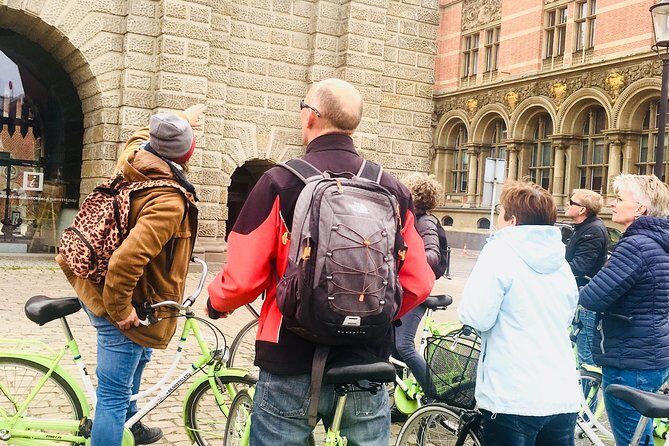
You meet at Kołodziejska 7, 80-836 Gdańsk, Poland, and the activity ends back at that meeting point. That round-trip structure is underrated: you don’t have to worry about ending up in the wrong part of town with a long ride or awkward taxi plan.
The tour is designed as a city loop through central sights. Expect a “see it, learn it, move on” rhythm. With an average of around 10 minutes per stop (and a few five-minute hits), the guide’s job is to orient you and explain the key details without drowning you in facts you can’t use.
Good weather is required. If rain shows up, the tour can be canceled and you’ll be offered another date or a full refund. So on travel days, check conditions before you get your hopes up for a perfect ride.
Długi Street first: Neptune’s Fountain and the Town Hall vibe
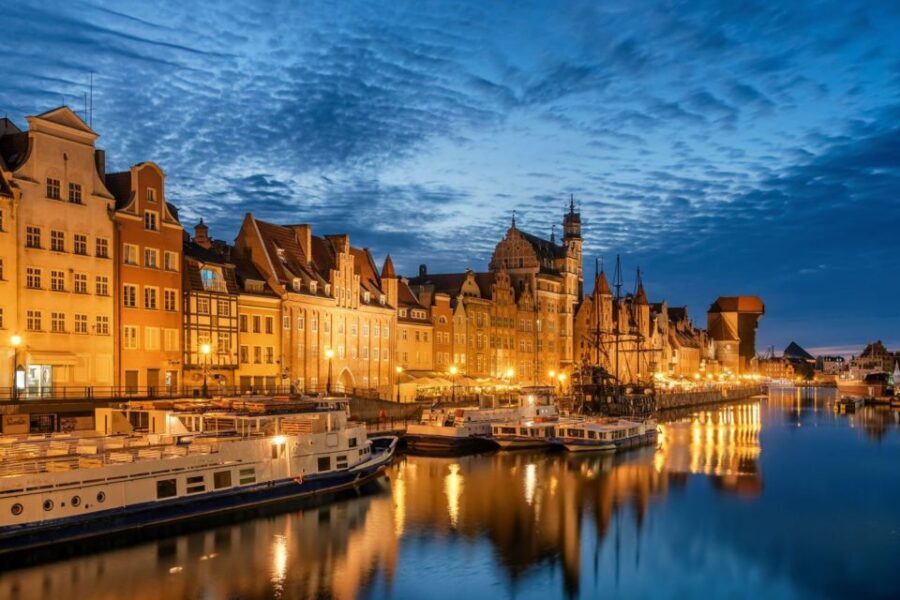
Your ride begins on Długi Street, where you quickly land in the historic center. This is where Gdańsk looks like a postcard but still feels like a real city you can walk through. The tour stop is built around Neptune’s Fountain and the Town Hall area, plus nearby sights.
Neptune’s Fountain is the kind of landmark that’s easy to recognize from photos, which is useful on a first day. It also helps you orient to the main pedestrian pull of the city center. The Town Hall area brings you into the civic heart of Gdańsk, not just the tourist zone.
This stop is about 10 minutes, and the key point is simple: you’re using it to get your bearings and start a timeline. Tickets aren’t included here (per the tour details), so it’s more of a “look, point, understand” moment than an all-access entry.
St. Mary’s Church: Memling’s Last Judgment and the astronomical clock
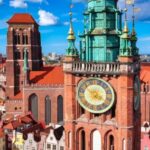
Next you head to St. Mary’s Church, one of the city’s major stars. This is the stop I’d treat as non-negotiable, because the list of highlights is specific and impressive: Memling’s triptych The Last Judgment, the Beautiful Madonna sculpture, a basket chandelier from the year 1490, and the famous astronomical clock.
What makes this stop valuable is the mix of art and engineering. A triptych like Memling’s work gives you a big emotional anchor. Then you get the astronomical clock, which turns the church from “beautiful building” into “smart historic technology.” It’s the kind of place where you can look at one thing and then suddenly notice another detail you’d never think to seek out on your own.
Admission ticket is included for this stop, which helps you avoid the small friction that can slow down a tight itinerary. The tour time here is about 10 minutes, so arrive ready to focus. If you’re the type who reads every label, you might want to return later on your own for more time inside.
Other cycling tours in Gdansk

Europejskie Centrum Solidarności: learning the meaning, not just the facts
After the church, you shift into deeper twentieth-century history at the Europejskie Centrum Solidarności. The tour frames why this place is important for Polish people, which is exactly what you want from a guide: not just dates, but meaning.
This is a step away from sightseeing and into context. When you understand why Solidarność mattered, lots of other things in Gdańsk start clicking—the tension, the identity, and why the city’s story carries weight beyond its architecture.
Admission is included here, and the stop is around 10 minutes. That’s short, but it’s enough time to grasp the core message if you’re paying attention. If you’re a history lover, you’ll likely want a longer visit later, but this bike tour gives you the foundation.
Gdańsk Shipyard: the Solidarity link you can actually see
From the Solidarity center, you head to the Gdańsk Shipyard, described as gaining international fame through the Solidarity movement and the collapse of the communist system. That connection is crucial: you’re not just touring a memorial or a museum—you’re seeing a place tied to real-world change.
The shipyard also helps you understand why Gdańsk isn’t only a pretty waterfront town. It’s a city of work, industry, and political history. A guide-led visit makes the site easier to interpret, since industrial spaces can feel generic until someone explains what to notice.
Admission is included for this stop, and the time is about 10 minutes. It’s brief enough that you won’t get lost in details, which is good for a two-hour overview tour. Just know you’re scratching the surface—enough to guide you toward what to explore more later.
Museum of the Second World War: worth it, but plan your access
You also stop at the Museum of the Second World War, with the tour marking it as a necessary visit. Tickets aren’t included for this stop, so you may need to arrange entry separately depending on how the tour runs on the day you book.
Time here is about 5 minutes, so think of it as a “standing outside the next chapter” stop. You’re getting a pointer to a major destination, not doing a full museum session. If you’re serious about the museum, treat this tour as the primer that helps you choose your entry time later.
Why include it at all? Because it gives you a second lens on the city. After learning about Solidarność and civic identity, the museum frames twentieth-century conflict from another angle—useful for turning your trip into a coherent story.
Golden Gate and the green gates: symbols that explain the city’s values
Then you move into the city’s iconic gates, starting with Golden Gate (Zlota Brama). This one has a built-in explanation: allegorical statues depict virtues of Peace, Freedom, Wealth, Fame, Piety, Justice, and Concord. That’s not decoration for decoration’s sake—it’s civic messaging in stone.
The stop is about 5 minutes, and tickets aren’t included. That makes sense: this is a quick “read the symbolism” moment. If you like iconography, you’ll appreciate having a guide point out what the statues represent so you don’t walk past without noticing the meaning.
You later reach the Green Gate (Brama Zielona), which leads to the Green Bridge. Again, it’s a short stop (about 5 minutes) with tickets not included. If you’re building a day itinerary around walking later, knowing the gate-to-bridge connection is handy.
Wyspa Spichrzów and the damage of war you can’t ignore
One of the more emotionally heavy parts of the route is Wyspa Spichrzów. The tour calls it the historical heart of Gdańsk, and notes it was destroyed during World War II. That statement changes how you look at what remains.
Spichrzów is the kind of place where you can feel the layers: what was lost, what survived, and what got rebuilt. With only about 5 minutes here, you won’t absorb everything in one pass, but you’ll come away with a clearer idea of why the waterfront area has such weight.
Admission is included for this stop, which is helpful. It also suggests the tour isn’t only “walk-by sightseeing.” You’re being given access to at least part of what makes this area historically important.
Kladka over Motława on Ołowianka: a quick bonus when conditions allow
There’s also a stop at Kladka nad Motławą na Ołowiance—but only if it’s open. This is one of those details that can matter for your experience. If the bridge is accessible, you get an added viewpoint and another link in the city’s waterfront story.
If it’s closed, you’ll still keep moving through the core landmarks. Either way, the tour stays efficient. This is also why you shouldn’t stress if everything doesn’t happen exactly in the order you imagine—urban spaces have their own schedules.
Admission is included for this stop, and it’s about 5 minutes. Treat it as a bonus add-on, not a “must reach or the tour fails” element.
The Crane and the waterfront signs of who built Gdańsk
The Crane is one of the city’s defining symbols, and it gets a short stop (about 5 minutes). Tickets aren’t included here, so you’re mostly taking in the exterior and letting the guide explain why it’s a signature image of Gdańsk.
This is a good example of why a guided overview helps. If you see the Crane on your own, you might understand it as an industrial landmark. With a guide, it becomes part of the city’s identity—tied to how Gdańsk made things and moved goods.
From here, the tour keeps pulling you back toward the central historic fabric: gates, edges of the waterfront, and the way the city tells stories through shapes.
Tips to get the most from a bike overview in Gdańsk
This is a “short stops, big learning” style of tour, so small choices can make a difference.
Bring comfortable shoes even though you’ll be on a bike. You’ll still have quick transfers and short walks at each point. Also, plan to ask your guide one simple question when you’re standing somewhere important—something like what to see if you come back for a full day on your own. That way you turn a two-hour overview into a trip plan.
If art and symbolism matter to you, prioritize time inside the big-ticket sites. St. Mary’s Church is the standout for major artworks and the astronomical clock. If you’re more into twentieth-century history, lean into the European Solidarity Centre and the shipyard. The route is designed to cover both lanes, but your attention can decide what stays with you.
Finally, keep weather in mind. The tour requires good weather, and if it’s canceled, you’ll be offered a different date or a full refund. That’s good protection—just don’t schedule a “must-do” museum day right after without flexibility.
Is this the right tour for you?
Book this bike tour if you want a fast, guided orientation that connects Gdańsk’s highlights to real historical meaning. It’s especially strong for people who like stories about Solidarność and want that context without having to research every stop ahead of time. The included access at major points like St. Mary’s Church and the European Solidarity Centre also keeps the day feeling easy.
I’d pass on it if you need long, unhurried interior time. The stops are short by design, so this is more of a launchpad than a deep dive into any single site. If you already know exactly what museum you want to spend hours in, you might still take this for orientation—but plan extra time afterward elsewhere.
This tour has an average rating of 3.8 based on 8 reviews, with at least one glowing comment calling out very interesting explanations, especially on Solidarność in the 1980s. That lines up with what the route is trying to do: teach you the why behind the city’s most memorable places.
FAQ
How long is the bike tour?
It runs for about 2 hours.
Is this a private tour?
Yes. It’s listed as private, so only your group participates.
Are entrance tickets included?
Some are included and some aren’t. Admission is included for St. Mary’s Church, Europejskie Centrum Solidarności, Gdańsk Shipyard, Wyspa Spichrzów, Kladka nad Motława na Ołowiance. Tickets are not included for stops like Neptune’s fountain area, the Museum of the Second World War, Golden Gate, the Crane, and Green Gate.
Where does the tour start?
The meeting point is Kołodziejska 7, 80-836 Gdańsk, Poland, and the tour ends back at the meeting point.
What happens if the weather is bad?
This experience requires good weather. If it’s canceled due to poor weather, you’ll be offered a different date or a full refund.
Can the tour be tailored to my interests?
Yes. The tour notes that it’s customizable to your interests and preferences.
If you want, tell me your travel month and what you care about most—art, WWII history, or Solidarność—and I’ll help you decide which stops to come back to on your own after this ride.