REVIEW · GDANSK
Private Walking Tour of Old Gdańsk with an architect-guide
Book on Viator →Bookable on Viator
One street can change how you see a whole city. This private walking tour of Old Gdańsk, led by an architect-guide, turns brick, towers, and gates into a clear story you can actually picture. I love the way it connects architecture to daily life and big historical forces, from the Teutonic Order to maritime trade.
Two things I really like are the photo-based perspective at key stops and the focus on real-world function, not just pretty facades. The schedule is flexible (about 1 hour 30 minutes to 4 hours), but one potential drawback is that a couple of clock-related museum areas involve climbing, so if your legs tire fast, you’ll want to plan accordingly.
The guide for many departures is Agnieszka, and she brings energy, humor, and a knack for explaining in a way that sticks. It’s offered in English (and the guide’s French is excellent too, based on how groups have reported the experience), and you’ll get a true private format for your group of up to 7.
In This Review
- Key Things You’ll Notice on This Old Gdańsk Walk
- Starting at Ratusz Staromiejski: you begin with power and trade
- Clock towers and the climb: Museum of Turrets Clocks highlights
- Fortifications to Renaissance power: Great Armoury and the city’s skyline
- St. Mary’s Church and the noon clock moment
- Mariacka Street and Brama Mariacka: the old town mood in motion
- Green Gate and Great Market: where merchants met
- Uphagen’s House peek and ending at the Prison Tower
- How long it really takes (and how to choose your timing)
- Price and value: $264.35 per group up to 7
- Who this tour is best for (and who should skip it)
- Should you book this Old Gdańsk private architect-guided tour?
- FAQ
- Is this a private tour or a group tour?
- How long does the walking tour take?
- What language is the tour offered in?
- Is pickup included?
- Where do we meet and where does the tour end?
- Is admission included for all stops?
- Do I need a mobile ticket?
- When will I receive confirmation after booking?
- What is the cancellation policy?
Key Things You’ll Notice on This Old Gdańsk Walk
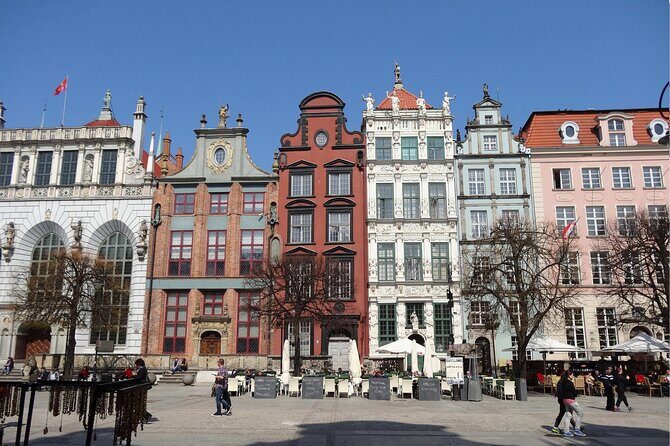
- Architect-guide explanations that connect buildings to how people lived, worked, and defended the city
- Ratusz Starego Miasta by the Radunia Canal, with a Teutonic Order introduction
- Clock-tower storytelling built around the Museum of Turrets Clocks and its famous timekeeping devices
- St. Mary’s Church at noon, where the huge astronomical clock chimes daily
- Maritime trade as a walking theme, tied to Brama Mariacka and the Long Seashore
- A darker ending at the Prison Tower, where lives ended
Starting at Ratusz Staromiejski: you begin with power and trade
The meeting point is Ratusz Staromiejski, Korzenna 33/35. From there, you start in a part of Old Gdańsk where politics and business were never far apart. You’ll walk alongside the Radunia Canal area and get oriented quickly, which matters in a city where streets can look similar until someone gives you the map in words.
At the first major stop, you’ll look at the Old Town City Hall (Ratusz Starego Miasta) next to the canal. The guide doesn’t treat it like a postcard building. Instead, you’ll learn how this was a civic center and how the city’s position involved wider forces, including an introduction to the Teutonic Order.
Admission is listed as free at this stop, and the time you spend here is short. That’s a good thing. It keeps the pace moving while still giving you enough context to understand what you’re seeing later.
Other Old Town walking tours we've reviewed in Gdansk


Clock towers and the climb: Museum of Turrets Clocks highlights
After the first civic stop, the tour shifts from “who ran the city” to “how people measured time.” Next up, you head toward the Great Mill, a key historical location for understanding how Gdańsk functioned before modern wars rewrote much of the city.
One of the clever details is that you’ll be shown pictures of what the area looked like before the Second World War. That instantly makes the architecture feel less fixed and more human. Buildings become evidence.
The Great Mill stop itself is about history and atmosphere, and you’re pointed to a practical add-on: the Amber Museum, located in that same building. It’s strongly advised, but it’s not part of the tour’s included admissions. If you want it, you can do it either before the walk starts or during the gap the guide suggests. This is one of the best ways to get extra value without stretching the whole itinerary.
Then the route includes a church that is still operating and houses the Museum of Turrets Clocks inside the tower. This is the part where I’d pay attention to your energy levels. The museum is in the tower, and you’ll want strong legs if you plan to go up.
What makes this stop memorable is the specific timekeeping set of claims you’ll hear tied to the museum: centuries-old time-keeping devices, the biggest concert carillon in Poland, and the world’s first pulsar clock. Even if you don’t go inside, the guide’s explanation helps you see the tower as a tool for public life, not just a viewpoint.
Admission here isn’t included, and the tower aspect means you might choose the “look and listen” version instead of climbing. That flexibility is smart. You’re not forced into an all-or-nothing decision.
Fortifications to Renaissance power: Great Armoury and the city’s skyline
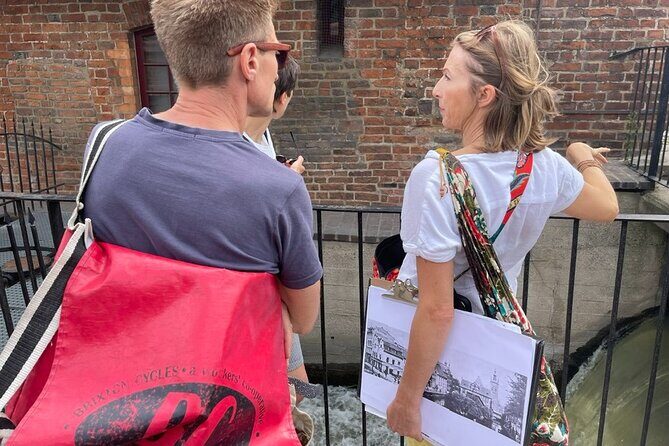
As the tour continues, you reach the highest tower of the medieval fortifications of the Main Town of Gdańsk. Even without extra museum time, this stop matters because it changes your view of the city. You leave Old Town for Main Town and feel the scale of what the fortifications were trying to protect.
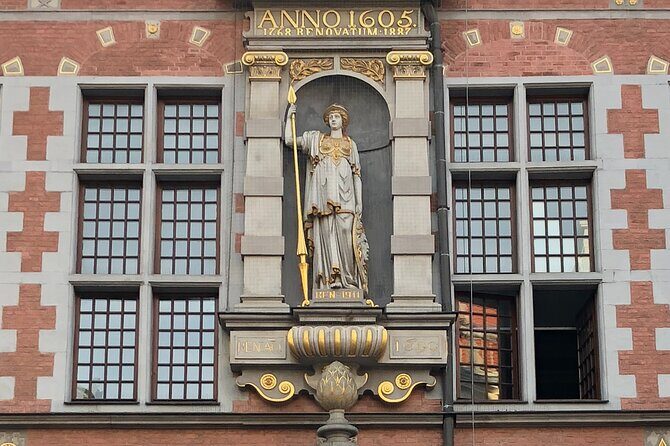
Then you move to a very different kind of statement: the Great Armoury (Wielka Zbrojownia). This is one of those buildings where the architecture helps you understand the purpose. You’ll spend a short stretch here learning why it looks the way it does and what it was meant to do. The tour frames it as a strong indicator of the city’s wealth in the Renaissance ages.
Here’s a practical detail: the armoury now houses the Academy of Fine Art. Sometimes it’s open to the public, especially during students’ exhibitions. That means the experience can vary a bit depending on timing. Still, admission is listed as free, so even if the space is limited, the guide’s architectural explanation helps you read the building like a document.
St. Mary’s Church and the noon clock moment
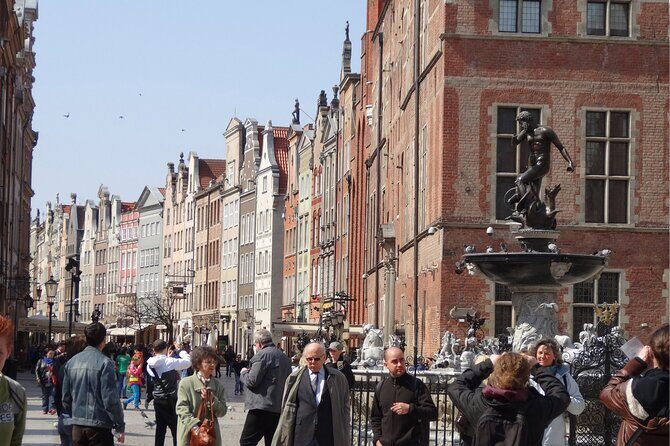
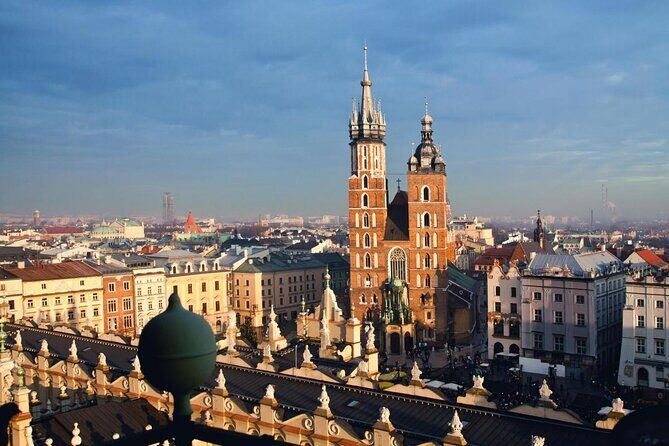
St. Mary’s Church is where the tour really earns its “time-and-place” feel. You’ll visit a huge brick church and learn why it’s special: it’s described as the biggest bricks church in the world, and it contains a massive astronomical clock from the 15th century.
What you’ll remember is the daily rhythm. The clock chimes every day at noon. If your tour lines up near that time, you’ll get a strong sensory payoff. If not, you’ll still get the story behind a clock that was built to be used and seen.
The admission is free at this stop, and it’s allocated enough time (about 15 minutes) to look closely without turning into a long detour. This is the kind of stop that works well on a walking tour because the guide can point out what matters fast: the clock’s role, the building’s scale, and the reason it’s still part of the city’s daily routine.
Mariacka Street and Brama Mariacka: the old town mood in motion
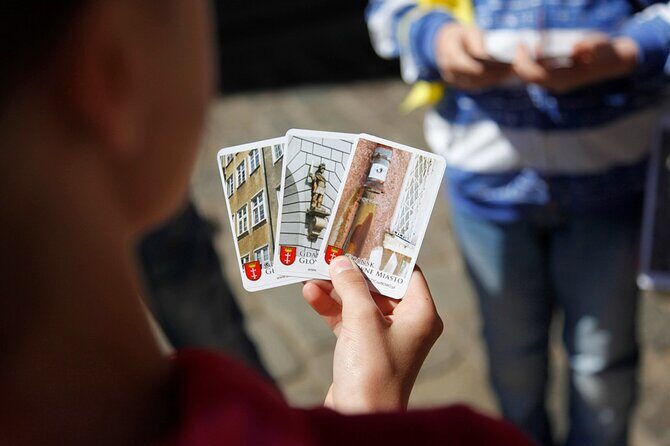
From St. Mary’s, you walk into Mariacka Street (Ulica Mariacka), where the experience becomes more street-level and less monumental. The guide uses this stretch to help you feel the old-town ambiance, which is important because Gdańsk isn’t only big buildings. It’s also the way people moved through narrow spaces tied to commerce and worship.
This section gets about 20 minutes, and that’s enough to slow down. You can look up, notice details, and stop long enough for the guide’s explanations to land.
Then you pass through Brama Mariacka, a gateway that matters for one reason: it connects you to the Long Seashore and the conversation about maritime trade. In other words, the tour doesn’t let you stay stuck in medieval brick symbolism. It keeps pulling you back to the Baltic trade story—who needed ships, who got rich, and how the city grew because goods moved.
Admission is free at this point, and the stop is short. Still, the theme shift is valuable. It helps you understand why Gdańsk looked the way it did and why architecture clustered where it did.
Other walking tours we've reviewed in Gdansk





Green Gate and Great Market: where merchants met
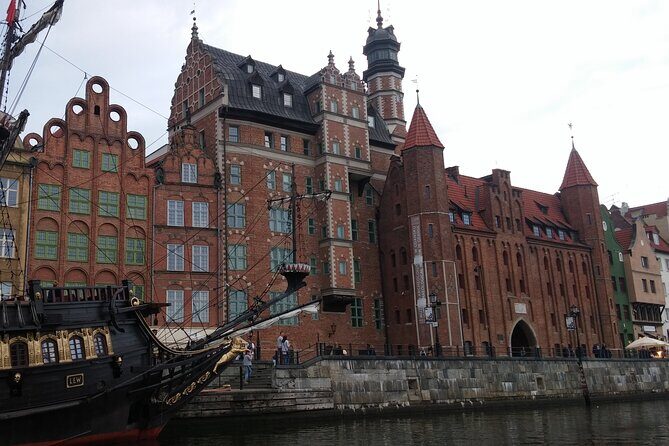
Next comes the Green Gate (Brama Zielona). This is described as the entrance to the Great Market, the place that was, in the guide’s framing, the place to be for economic life. Even if you’ve visited markets elsewhere, the guide’s context makes this one feel specific to Gdańsk.
From there, you’re directed to a corner area with major interiors you can explore depending on time: the Artus Court and the Main Town Hall. The Artus Court is described as a former meeting place for merchants, and today it’s seen as a museum of history and art. The Main Town Hall also has interesting interiors worth noticing when you can slip in for a quick look.
One reason I like this segment is that it gives you a choice. If you’re into museums and interiors, you can spend more time here. If you want to keep the pace, you still get the key idea: commerce wasn’t just in docks and warehouses. It was also in social spaces where deals and networks formed.
Uphagen’s House peek and ending at the Prison Tower
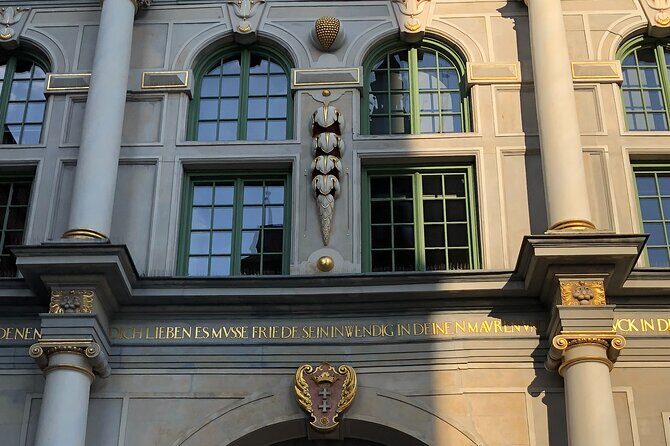
The tour includes a quick look at Uphagen’s House (Museum of Gdansk). You’re not promised a full museum experience; instead, you get a peek that can help you decide if it’s worth stepping in for more. Since admission here isn’t included, this is really about fit. If the vibe appeals to you, plan a separate visit later.
Then you finish with the Prison Tower, where the tour ends at a set of gates tied to where Gdańsk’s wealth came from along the Baltic coast. Ending with the Prison Tower is a smart contrast. After markets, towers, and churches, you end where the consequences got real: this is where lives ended.
The final segment is about 10 minutes, and admission isn’t included. Even so, the guide’s framing helps you read the last structure as part of the city’s machinery—defense, governance, trade, and punishment all in one walk.
How long it really takes (and how to choose your timing)
The tour is listed as 1 hour 30 minutes to 4 hours. That’s a wide range, and it’s mostly about how often you’ll stop for optional add-ons and how long you’ll spend at the places that can turn into mini-museums.
If you want the maximum storytelling and don’t plan to go inside every tower or house, 1.5 to 2.5 hours often feels right. If you like clocks, interiors, and the idea of adding the Amber Museum or stepping into the places that may be open, then plan closer to the upper end.
It’s also worth noticing that the tour works best when you’re willing to walk at a normal city pace. Most people can participate, and service animals are allowed, but the tower clock museum is the one clear “watch your legs” point.
Price and value: $264.35 per group up to 7
The price is $264.35 per group (up to 7). For me, the value comes down to how many people you travel with.
- If you fill the group cap (7 people), you’re roughly thinking about about $38 per person for a private architect-guided walk with multiple major stops and interpretive context.
- If it’s just two of you, the per-person cost climbs fast, and you’re paying mainly for privacy plus an expert who can tailor pacing.
Either way, you’re paying once for one guide, and the tour includes several free-entry moments along the route. The key is that not every museum admission is included, so you may still pay a bit for the add-ons you choose, like the Amber Museum or the Museum of Turrets Clocks inside the tower.
Pickup is offered, which can also improve value if your hotel is close enough to make it convenient. And since it’s private—only your group—you don’t get stuck waiting for the slowest pace in the world.
Who this tour is best for (and who should skip it)
This is a great fit if you enjoy architecture that comes with a job description: what a building did, what it signaled, and how it connected to trade and power. It’s also ideal if you like details like clock mechanisms and historical timelines that you can connect to specific locations.
It’s less ideal if you want a “quick highlights only” walk and hate optional climbs. The timekeeping tower section is the one part that may feel physically demanding if you’re not up for stairs.
Language-wise, it’s offered in English, and the guide has delivered in French as well, so if you’re trying to match comfort in language, you’re likely in good shape.
Should you book this Old Gdańsk private architect-guided tour?
I’d book it if you want more than “this is a famous building.” You want to understand why Gdańsk grew, how its civic and merchant life worked, and why the city’s clocks and towers matter in the real rhythm of daily life. The best reasons to book are the mix of big landmarks—city hall, St. Mary’s, city gates—and the more focused themes: maritime trade, timekeeping, and the city’s changing fortunes.
I wouldn’t rush into booking if you’re only interested in one museum or one church. In that case, you might get more bang for your time by building a shorter self-guided plan. But if you like walking with an architect-guide who can connect the dots, this is a strong way to see Old Gdańsk with clarity.
FAQ
Is this a private tour or a group tour?
This is a private tour/activity. Only your group will participate, with a maximum group size of up to 7.
How long does the walking tour take?
The duration is approximately 1 hour 30 minutes to 4 hours.
What language is the tour offered in?
The tour is offered in English.
Is pickup included?
Pickup is offered.
Where do we meet and where does the tour end?
The tour starts at Ratusz Staromiejski, Korzenna 33/35, 80-001 Gdańsk, Poland. It ends at Katownia Targ Węglowy 26, 80-836 Gdańsk, Poland.
Is admission included for all stops?
No. Some stops are free (like the city hall, Great Armoury, St. Mary’s Church, Mariacka Street, Brama Mariacka, and Green Gate), while other areas are not included (such as the Amber Museum in the Great Mill building, the Museum of Turrets Clocks, the Artus Court and Main Town Hall interiors, Uphagen’s House, and the Prison Tower).
Do I need a mobile ticket?
Yes, a mobile ticket is provided.
When will I receive confirmation after booking?
Confirmation is received within 48 hours of booking, subject to availability.
What is the cancellation policy?
You can cancel for a full refund up to 24 hours in advance of the experience’s start time. If you cancel less than 24 hours before, the amount paid is not refunded.