REVIEW · GDANSK
Private Walking Tour of Gdansk Old Town
Book on Viator →Operated by Tours in Gdansk Local Tour Operator · Bookable on Viator
Gdansk makes sense when you walk it. This private Old Town tour is about 2 hours of outdoor strolling with an English-speaking guide, built around streets you can’t really reach by car. I like that it’s focused on the city’s big ideas, not just photos, and I really like how the walk follows the Royal Way so the architecture and history click into place.
The main trade-off is effort. It’s a moderate walk, so if you’re not comfortable with 2 hours on your feet, you’ll feel it; plan for weather and wear good shoes.
In This Review
- Key highlights to know before you go
- Why this private Old Town format works in Gdansk
- The start at Highland Gate: a smart way to orient yourself
- Golden Gate (Langgasser Tor): architecture with an ideological message
- Great Armoury and Dutch Renaissance details on Piwna Street
- Walking the Royal Way: kings on parade, now tourists on foot
- St. Mary’s Church (St. Mary’s Basilica): size, craft, and real survival history
- Long Market and Neptune’s Fountain: the postcard icon with dates behind it
- Main Town Hall (Museum of Gdansk): Hanseatic links you can actually see
- Crane and the Motława embankment: finishing with the port story
- How long is it, really, and how to pace yourself
- English guide and small-group dynamics: getting answers on the spot
- Price and value for a group up to 15
- Who should book this private Old Town walk
- Should you book this private Gdansk Old Town tour?
- FAQ
- How long does the Gdansk Old Town private walking tour take?
- Is this tour private, or do I join other people?
- What’s the maximum group size?
- Is the tour offered in English?
- Do I need to buy separate tickets for the main sights?
- Where do I meet the guide?
- Does the tour end at the meeting point?
- Do I need a particular fitness level?
- Are children allowed on the tour?
- Is free cancellation available?
Key highlights to know before you go
- A private group experience: up to 15 people, so you’re not stuck listening over other groups.
- Royal Way route: you follow the parade route Polish kings used during visits, not random backstreets.
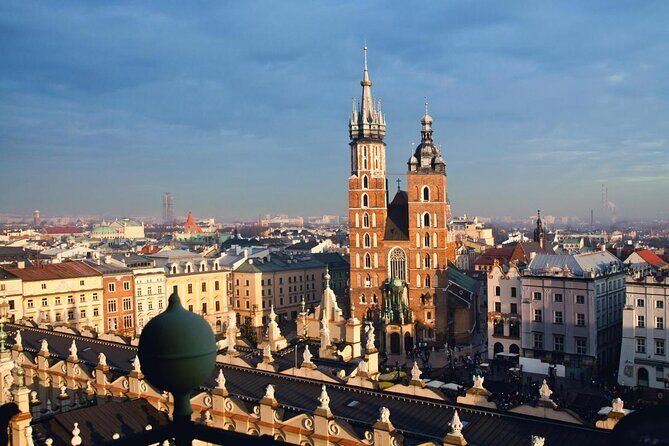
- St. Mary’s Basilica context: learn why this massive brick church mattered during the Solidarity period of martial law in 1981–1983.
- Long Market icons on foot: Neptune’s Fountain sits right on the Long Market by Artus Manor.
- Port history in plain sight: finish at the Crane and the Motława embankment, built for the city’s maritime story.
- Guides who bring it to life: English tours can include guides such as Martin, Olga Libura, Michael Maj, Agnieszka Syroka, and Basia Lasota, noted for clear explanations and, in some cases, humor.
Why this private Old Town format works in Gdansk
Gdansk’s Old Town is packed. The streets are narrow, the corners surprise you, and a lot of the best details are on the façades—easy to miss if you’re moving fast or staring at a phone screen.
A private walking tour solves the main problem: control. With only your group, you can ask questions, slow down at a building that catches your eye, and get practical context while you’re standing right there. It’s also intentionally built around walking routes where cars and buses are pointless. You’re not just passing landmarks—you’re learning how they connect.
Other Old Town walking tours we've reviewed in Gdansk


The start at Highland Gate: a smart way to orient yourself
You meet at Highland Gate (Wały Jagiellońskie 2A). That matters more than it sounds. Starting here gives you an immediate sense of direction and helps you understand how the city’s defenses, gates, and main routes fed into the Old Town core.
From the first minutes, the walk is set up like a guided stroll through a story. You’re not juggling transit. You’re outside, moving at a human pace, and the guide can point out why specific buildings matter in the city’s identity.
Golden Gate (Langgasser Tor): architecture with an ideological message
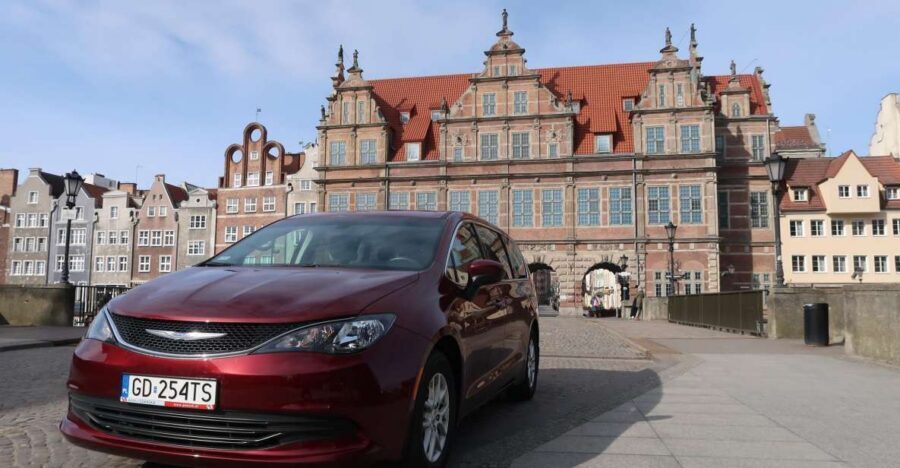
Your early stop is Langgasser Tor, also called the Golden Gate. It’s not just pretty. This is a building with real architectural clout, designed by Abraham van den Block and built by entrepreneur Hans Strakowski.
Here’s what I like about this kind of stop: the guide can explain how a gate works as more than a doorway. The Golden Gate carries inscriptions and allegorical sculptures meant to broadcast the city’s aspirations and the attitudes expected from its citizens. So when you look up, you’re not only seeing detail—you’re reading intent.
Practical note: this is an early stop with a short time window, so if you want photos, aim for a steady pace and don’t get stuck one street too long.
Great Armoury and Dutch Renaissance details on Piwna Street
Next comes the Great Armoury (Wielka Zbrojownia), described as one of the most spectacular Dutch Renaissance examples in Poland. It anchors the Coal Market area and finishes the feel of Piwna Street—meaning the building helps tie together the visual rhythm of the old quarter.
This stop is great if you enjoy architecture that feels grounded in trade and power. An armoury isn’t a museum piece that floats away from real life; it’s tied to the city’s militarized past and its strategic role in the region. A good guide will connect the style to the era and help you spot what makes Dutch Renaissance look Dutch without turning it into an art-lecture you can’t use.
Walking the Royal Way: kings on parade, now tourists on foot
This is the “wait, I get it now” moment. The Royal Way was the route Polish kings used during periodic parades and visits. Walking it turns the Old Town from a list of buildings into a route with logic.
Why it’s valuable: it changes how you look at everything you see next. Instead of thinking, There’s a nice church and a fountain, you start noticing sightlines, the flow of movement, and how public spaces signaled authority. It’s also one of the easiest ways to get context fast when you have limited time.
Other walking tours we've reviewed in Gdansk





St. Mary’s Church (St. Mary’s Basilica): size, craft, and real survival history
St. Mary’s Basilica is believed to be the largest brick church in the world. That alone is the headline, but the details are where the stop gets powerful.
Inside, the vault supports 37 windows, and there are over 300 tombstones and 31 chapels. The church can hold up to 25,000 people. If you’ve ever wondered why monumental churches were built at this scale, this is one clear answer: crowd capacity wasn’t just about ceremony—it was practical.
The guide also connects it to a specific moment in history. During martial law between 1981 and 1983, members of Solidarity sought refuge in the church. That shifts the building from impressive to emotionally meaningful. You’re not just seeing medieval brickwork. You’re seeing a place that mattered under pressure.
Tip: if you like quiet details, take a minute to look at the interior layout before the group moves on. It’s easy to rush when you’re excited, but St. Mary’s rewards slow looking.
Long Market and Neptune’s Fountain: the postcard icon with dates behind it
On the Long Market, right in front of Artus Manor, you find Neptune’s Fountain. It’s one of Gdansk’s most representative spots, and it has a clear origin story: creation was initiated in 1633 by Mayor Bartłomiej Schachmann and the city council.
This matters because it gives the fountain a civic context. It’s not just decorative. It reflects how city leadership shaped the visual identity of the center of town.
If you’re a photo person, this stop is worth planning for. You’ll likely want at least a couple of angles: one from the open square, and one closer up to catch the fountain’s details.
Main Town Hall (Museum of Gdansk): Hanseatic links you can actually see
The Main Town Hall building is the seat of city authorities and a major landmark on the route. What makes it especially interesting is the multicultural feel described for the architecture.
The form and key decorative elements resemble the Hanseatic House (Osterlinghaus) in Bruges. That’s a useful takeaway. Gdansk wasn’t isolated; it was part of larger trade networks where styles and ideas crossed borders.
This stop works well for first-time visitors because it gives you a framework for understanding what you’ve been seeing. After Town Hall, a lot of Gdansk starts to feel connected—architecture, civic power, and the Hanseatic-era influence all moving together.
Crane and the Motława embankment: finishing with the port story
Now you pivot from governance and religion to maritime power.
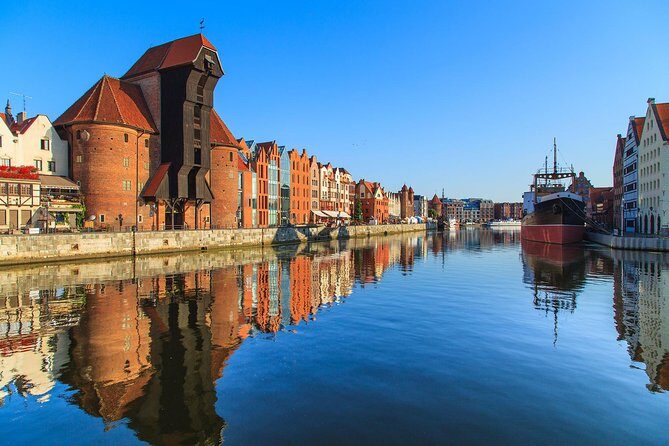
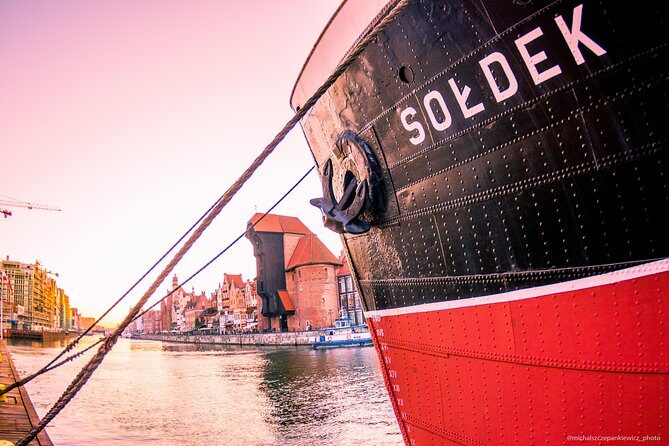
The Crane is one of Gdansk’s famous symbols, tied directly to the city’s port and maritime past. It’s a former port crane and a perfect place to learn how the harbor shaped daily life and the city’s fortunes. It’s also tied to exhibitions devoted to former port activities, so the guide can connect the physical structure to what happened here.
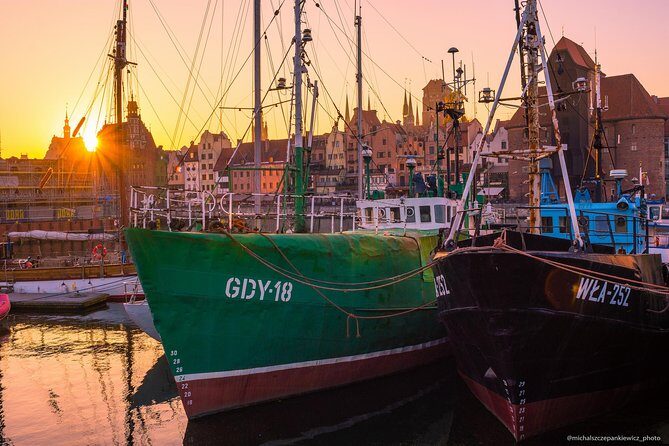
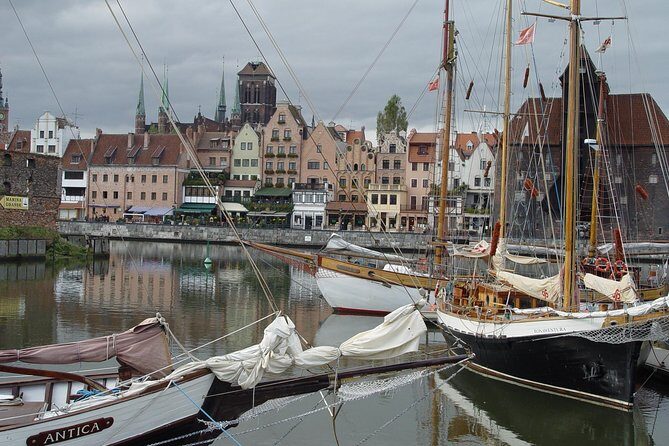
Then you reach the Motława River embankment (Długie Pobrzeże), the historical harbor. The tour notes that in the 7th century even 300 ships could moor there every day. That kind of scale makes the river feel different. It stops being scenery and turns into infrastructure—trade, movement, and money.
This ending is strong because it answers an underlying question: why Gdansk looks the way it does. The city’s wealth and status were tied to ships and shipping, and you can feel that thread as you finish.
How long is it, really, and how to pace yourself
The tour runs about 2 hours. The stops are timed in a way that keeps things moving, but the private format gives the guide flexibility if your group wants extra time for photos or questions.
A practical approach:
- Start with comfy shoes, because Gdansk cobblestones can add up fast.
- If you need a break, take it early rather than waiting until you’re exhausted.
- If you’re traveling with kids, keep an eye on energy. The tour requires children be accompanied by an adult, and the outdoor time is the main factor.
English guide and small-group dynamics: getting answers on the spot
This tour is offered in English. That’s the big baseline.
One of the most praised parts of this kind of walk is the guide’s ability to connect dates and building facts to what you can see in front of you. Based on the named guides associated with this experience, expect explanations that stay practical and often include a bit of personality—some guides have been noted for clear humor and for handling tough historical topics in an understandable way.
If you like asking questions, this private setup is where you’ll benefit most. You can steer the conversation toward what you care about most: Solidarity-era context, architecture, or the maritime story.
Price and value for a group up to 15
The price is $159.70 per group, up to 15 people. That’s not cheap if you’re solo, but it becomes a bargain fast as your group grows.
Here’s the math at the extremes:
- Full group of 15: about $10.65 per person
- Small group of 5: about $31.94 per person
- Couple (2 people): about $79.85 per person
So I’d treat this as a good deal for families, small friend groups, or anyone traveling with multiple people who wants a private guide. You’re paying for time, not just facts—and the time is concentrated on the best Old Town highlights.
Who should book this private Old Town walk
This tour is a strong match if:
- You want Old Town highlights without the stress of joining a big group.
- You care about history that’s tied to specific places, not just general stories.
- You’re short on time but still want a connected route: gate, church, market icons, civic power, and port.
- You’ll appreciate the Solidarity-era context inside St. Mary’s.
It’s less ideal if:
- You have limited mobility or aren’t comfortable with a moderate amount of walking.
- You want to spend most of the day drifting independently with zero structure. This tour is built to guide and explain.
Should you book this private Gdansk Old Town tour?
If you’re the type who wants to understand what you’re seeing while you’re seeing it, I think it’s worth booking. The combination of iconic landmarks—Golden Gate, St. Mary’s Basilica, Neptune’s Fountain, Town Hall, Crane, and the Motława port area—adds up to a route that makes Gdansk feel like one connected city, not scattered attractions.
If you’re traveling as a group (especially 5+ people), the price becomes genuinely sensible for a private, English-led experience. Just go in wearing comfortable shoes and expect a couple of hours outdoors.
FAQ
How long does the Gdansk Old Town private walking tour take?
It lasts about 2 hours.
Is this tour private, or do I join other people?
It’s private. Only your group participates.
What’s the maximum group size?
The tour is priced per group for up to 15 people.
Is the tour offered in English?
Yes, it’s offered in English.
Do I need to buy separate tickets for the main sights?
The stops listed for the tour are free to enter, with tickets noted as free.
Where do I meet the guide?
The meeting point is Highland Gate, Wały Jagiellońskie 2A, 80-887 Gdańsk, Poland.
Does the tour end at the meeting point?
Yes, the activity ends back at the meeting point.
Do I need a particular fitness level?
Moderate physical fitness is recommended.
Are children allowed on the tour?
Children must be accompanied by an adult.
Is free cancellation available?
Yes, you can cancel for a full refund up to 24 hours in advance of the experience start time.