An escape game inside a real apartment. Room of Plenty in Gdańsk turns that idea into a private museum visit that feeds directly into a live, story-driven escape game about Ludwig Plenty. It’s one of those setups that feels less like a “room” and more like you’re stepping into someone’s world.
I especially like the hands-on puzzles with an engaging narrative. The atmosphere is repeatedly described as fun and unusual, and the host’s involvement is a big part of what keeps the hour moving at a good pace.
One thing to consider: the experience starts in a residential-style address, so you’ll want to treat the meeting instructions as important, not casual. A small number of people report trouble with check-in when nobody seemed to be there, so come prepared with your booking confirmation and allow a little buffer time.
In This Review
- Key highlights to know before you go
- Room of Plenty in Gdańsk: the apartment-museum escape game setup
- What happens during the ~1 hour: pace, teamwork, and a real narrative arc
- Where you start: Stolarska 6A and the reality of a residential check-in
- Price and value: $70.81 per group for up to 5 people
- The story of Ludwig Plenty: why narrative matters for puzzle flow
- Atmosphere, safety, and the host you actually need
- Who this suits best in Gdańsk (and who might want to think twice)
- The main risk factor: check-in confusion at a residential address
- Should you book Room of Plenty?
- FAQ
- How long is Room of Plenty in Gdańsk?
- What language is the experience offered in?
- How much is the ticket?
- Where do we meet?
- Where does the activity end?
- Is it a private activity?
- Do I need a printed ticket?
- Is public transportation nearby?
- Is free cancellation available?
Key highlights to know before you go
- Private apartment setting: The game is built around an authentic apartment you visit, not a generic themed room.
- Ludwig Plenty story: You’re solving puzzles in a narrative tied to Ludwig Plenty.
- English gameplay: The experience is offered in English, which makes it easier for mixed groups.
- Host-led and safe: Many comments point to an excellent host and a setup that feels professionally handled and safe.
- Great for group bonding: Friends and families both seem to enjoy the teamwork angle of a one-hour challenge.
- Short and focused: You get an hour, which is ideal if you want something active without eating half a day.
Room of Plenty in Gdańsk: the apartment-museum escape game setup
Room of Plenty is built on a simple, clever formula: you visit an apartment as a kind of private museum, then you play a live escape game that ties into the story of Ludwig Plenty. That matters because it changes what you’re expecting.
If you’ve done escape rooms before, you might be used to walking into a sealed space and working your way through clues. Here, the start feels more like being guided through a real dwelling with a storyline attached. You’re not just solving codes; you’re learning and then applying that information to move forward.
I like that approach because it gives you context. Even if puzzles aren’t your usual thing, the apartment setting helps you feel oriented fast. And when you hit a tricky moment, the story frame makes it easier to keep going instead of feeling stuck in random trial-and-error.
Also, the overall pitch is that this is one of the best live escape games in Poland. That claim is marketing, sure. But the stronger proof is that people consistently call out the host, the atmosphere, and the puzzle quality.
If you're still narrowing it down, here are other tours in Gdansk we've reviewed.



What happens during the ~1 hour: pace, teamwork, and a real narrative arc
The duration is about 1 hour, so the game is designed to be tight. You shouldn’t plan to squeeze it between two things that are already running late. Think of it as a focused block where you’re using teamwork to solve tasks in sequence.
Your group plays together, and the setup is built for up to 5 people per group. That size is key. It’s big enough for real collaboration, but small enough that you’re not standing around while others do all the work.
The host plays an important role. A recurring theme in people’s feedback is that the host is excellent and that the experience feels professionally prepared. In practice, that usually means you’re not left alone hoping the room will make sense on its own. You get the kind of guidance that keeps the game fun instead of frustrating.
The puzzle style is described as clever, with interesting solutions and an unusual decoration style. Decorations aren’t just for looks here; they help you notice details and connect physical elements to the tasks. That combination is part of why people say it feels safe and well handled.
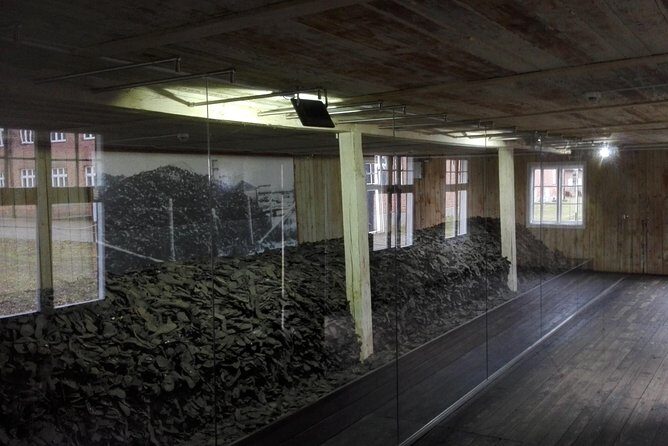
One more point: the game ties back to historical facts. You don’t need to be a history buff to enjoy it, but if you like learning through play, this format rewards that instinct.
Where you start: Stolarska 6A and the reality of a residential check-in
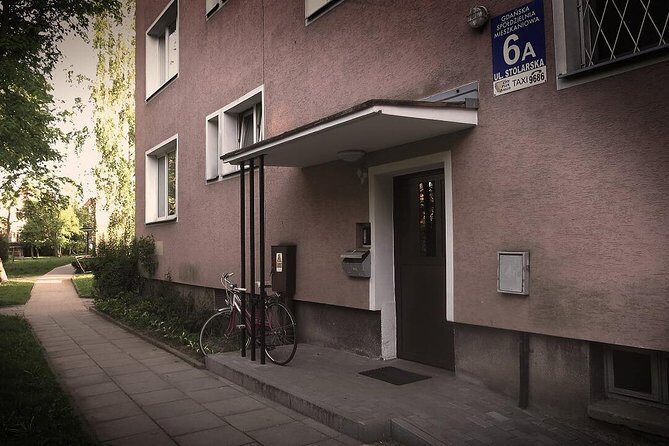
The meeting point is Stolarska 6A, 80-883 Gdańsk, Poland, and the activity ends back at the same spot. That simplifies your day plan—no long walk across town after you’re done.
Still, this is where you should be a bit alert. The address is described as being in a residential area, and a few unhappy experiences revolve around people arriving at an apartment block with no clear entry method. Some mention no code to get in and difficulty contacting the provider.
I can’t say that’s the norm or that your check-in will be a mess. But I do think it’s smart to assume the setting looks like a normal building from the outside. Don’t arrive the way you might for a big, obvious tourist attraction.
My practical advice:
- Arrive a little early so you have time to get sorted.
- Keep your booking confirmation accessible on your phone.
- Use the mobile ticket information provided to you at booking, so you’re not trying to piece things together last minute.
- If something feels off, act quickly instead of waiting until you’re out of time.
If you follow that approach, the residential setup becomes an advantage. It’s part of what makes the experience feel authentic and off the usual tourist path.
Price and value: $70.81 per group for up to 5 people
The price is $70.81 per group (up to 5). Since it’s per group, the value depends on whether you show up with at least a couple of people.
With 2 people, you’re paying about $35 each for a one-hour interactive activity. With 5 people, that drops to about $14 per person. For a live, host-led game that uses an authentic apartment setting, that pricing can be fair—especially in a city where entertainment often costs more once you factor in “per person” tickets.
Where it really becomes good value is when you treat it like a shared experience, not an “I’ll do it solo” stop. The design is clearly meant for groups: friends, small families, and teams.
Also, you’re getting the apartment visit plus the live escape game in one hour. That dual experience is what helps justify the cost versus a standard, single-room escape setup.
If your group is mostly “watch and wait” types, you may not feel the same value. But if you want an hour of active problem-solving and story, the price matches the format well.
The story of Ludwig Plenty: why narrative matters for puzzle flow
The core theme is Ludwig Plenty, and the experience is presented as a story you uncover through the apartment setting and the game itself. That’s more than a name on a poster. A strong story does two practical things during an escape game.
First, it reduces decision fatigue. Instead of staring at a wall of clues with no idea where you are in the timeline, you understand what the game is trying to get you to do next.
Second, the story makes it easier to recover when you hit a snag. People are more willing to try again if they feel the clue is part of something meaningful.
The historical angle also helps. Some feedback specifically notes that you’re playing in the authentic place and experiencing the game based on true historical facts. That may not mean the apartment looks like a museum hallway with labels. It more likely means the storyline has grounding, which can make the experience feel more satisfying than generic fantasy-only games.
And the atmosphere is repeatedly called out as great, with unusual decoration. When decoration is tied into the narrative, it helps you spot details you might otherwise miss.



Atmosphere, safety, and the host you actually need
A lot of escape games live or die on the host. Too much control and it stops being fun. Too little control and people feel lost.
Here, the host gets praised for being excellent. People also mention that the room is safe, and that the experience is professionally prepared. That combination tends to show up in small ways: clear rules, good pacing, and an environment where you’re not constantly worrying about bumping into something or taking a wrong step.
The atmosphere is described as fun and kid-like in the best way, with a return to feeling playful. If you’re traveling with family or mixing ages, that kind of energy can matter. A one-hour activity with a strong host can keep everyone engaged without dragging.
Decoration also seems to be a highlight: unusual and setting-forward. You should expect the space to be part of the game experience. If you prefer totally minimalist activities, this might feel busy. If you enjoy environments that give you visual cues and character, you’ll likely like it.
Who this suits best in Gdańsk (and who might want to think twice)
This experience is offered in English, and most people can participate. That makes it a strong choice when you have mixed-language friends and you don’t want to gamble on whether the instructions will be understandable.
It also fits well if you want:
- A group activity that gets everyone doing something
- A short, active break from walking-heavy sightseeing
- A story-based challenge instead of pure puzzle math
Based on the kinds of comments people made, it seems to work for friends and family groups. The “one hour” format makes it easier for people who get restless or tired.
The main people who might want to think twice are those who need very clear, extremely visible tourist-style signage at the entrance. Since the start point is in a residential-style address, you’ll want to be comfortable following the instructions you receive and arriving with a plan.
If you strongly dislike anything that feels like an apartment building check-in, you can still do it, but you should go in with eyes open.
The main risk factor: check-in confusion at a residential address
A few accounts describe an experience that did not seem to exist, with people waiting at the instructed address, no code to enter, and trouble contacting the provider (including a disconnected number and a website that led elsewhere). That’s alarming.
I can’t confirm what’s happened over time. It’s possible these were isolated issues, or that the location details were mismatched for certain time slots. But the pattern is about check-in clarity, not puzzle quality.
So here’s the move: treat this like a scheduled appointment. Don’t wing it, don’t assume the address will behave like a standard attraction, and don’t show up with only vague expectations.
If you arrive and something feels wrong, use the contact route you have through your booking confirmation right away. Give the provider time to respond, but don’t lose your whole hour waiting in limbo.
If you do those things, you’re giving yourself the best shot at enjoying what the experience is clearly good at: the story, the host, and the clever, well-prepared puzzles.
Should you book Room of Plenty?
I’d book Room of Plenty if you want an hour of active fun in Gdańsk that mixes an apartment setting with a real, host-led escape game about Ludwig Plenty. The strongest positives are the narrative feel, clever puzzle design, and the sense that the experience is professionally handled and safe.
I’d be cautious if you hate ambiguous check-in situations or you’re the type who needs the venue to be easy to spot from the street. In that case, you’ll want to double-check your details in advance and give yourself extra time on arrival.
If your group is 2 to 5 people and English is okay for everyone, this is likely a good use of time. It’s short, social, and different from the usual “ticket + museum + gift shop” rhythm.
FAQ
How long is Room of Plenty in Gdańsk?
It’s about 1 hour.
What language is the experience offered in?
The experience is offered in English.
How much is the ticket?
It’s priced at $70.81 per group, up to 5 people.
Where do we meet?
You start at Stolarska 6A, 80-883 Gdańsk, Poland.
Where does the activity end?
It ends back at the meeting point.
Is it a private activity?
Yes. It’s listed as private, so only your group participates.
Do I need a printed ticket?
No. It uses a mobile ticket.
Is public transportation nearby?
Yes, it’s near public transportation.
Is free cancellation available?
Yes. You can cancel up to 24 hours in advance for a full refund.