REVIEW · GDANSK
Museum of the Second World War Gdansk Private Tour & Tickets
Book on Viator →Operated by Rosotravel Tours Gdansk · Bookable on Viator
WWII in Gdansk hits harder with context. This private tour links the Museum of the Second World War with nearby memory sites, so you’re not just looking at facts. I especially like the skip-the-line ticket setup for the Museum of the Second World War, plus the licensed guide’s full attention on a private format. One thing to consider: the skip-the-line is for the ticket office, and you still need to arrive on your booked time since entry is tied to that schedule.
You’ll start at Plac Władysława Bartoszewskiego 1 near the Museum area, then move through the story of Poland in WWII and the years right after. In the longer option, you’ll connect WWII resistance to the later Communist era and Poland’s road to independence, including the European Solidarity Centre. A practical drawback: the extended walking is described as moderate with some uneven ground or steps, so comfortable shoes matter.
In This Review
- Key Highlights Worth Planning For
- WWII Storytelling That Actually Helps You Find Your Way in Gdansk
- Picking the Right Option: 2 Hours or the Full Post-War Route
- Start Point Check: Where You Meet and Why It Matters
- Museum of the Second World War: Skip the Line, Then Use the Guide
- WWII Resistance and Early Battles: Defenders of the Polish Post Office Stop
- European Solidarity Centre and BHP Hall: From Wartime to the Road to Independence
- Timing, Walking, and Comfort: The Stuff That Can Make or Break the Day
- Guide Quality: What You Get From a Licensed Private Tour
- Price and Value: What $153.49 Buys You in Real Terms
- Who This Tour Fits Best
- Should You Book the Museum of the Second World War Private Tour?
- FAQ
- How long is the tour?
- Is this tour private?
- What language is the guide?
- Does the skip-the-line ticket save time at entry?
- Which parts are included in the 2-hour option?
- Is pickup available from my hotel?
- What happens after I book?
Key Highlights Worth Planning For
- Skip-the-line at the ticket office for your pre-booked Museum time, saving time right away
- Licensed private guide who can answer questions in English at your pace
- Museum of the Second World War with skip-the-line admission to the permanent exhibition
- Defenders of the Polish Post Office + nearby memorials, focused and close together
- European Solidarity Centre stop, including the BHP Hall and the August Agreements context
- Moderate walking on the 4-hour option, with uneven surfaces or steps
WWII Storytelling That Actually Helps You Find Your Way in Gdansk
If you land in Gdansk ready to see the big WWII sites, the first problem is simple: there’s a lot to see, and it’s not all in one museum box. This private tour solves that by chaining together the Museum of the Second World War with key nearby memorial stops. Instead of wandering and guessing, you get a path with explanations that stick.
I like that the tour is built for clarity. You get a guide who stays with you for the whole experience, so you can ask why certain events mattered locally, not just globally. And because it’s private, the pace can match your questions. I also like that the Museum portion is protected by skip-the-line ticketing, which matters in a museum that can draw steady crowds.
The other big win is that the longer option doesn’t treat WWII as an isolated chapter. You connect wartime resistance to post-war Communist history and then forward into Poland’s independence story. That makes the city feel like one continuous narrative, not a set of disconnected stops.
Other WWII history tours in Gdansk


Picking the Right Option: 2 Hours or the Full Post-War Route
This experience comes in at least two timing options, and the difference is meaningful.
For the shorter version, you’re mainly focused on the Museum of the Second World War. You’ll meet at Plac Władysława Bartoszewskiego 1 near the monument area, then spend about 2 hours with a private guide inside the museum, using skip-the-line tickets for a pre-booked date and time. You’ll leave with a strong museum foundation.
For the longer version (about 4 hours), you add a walking sequence tied to WWII memories and the post-war Communist era. That includes the memorial for the Defenders of the Polish Post Office, plus stops such as the Church of St. James and the Monument to the Fallen Shipyard Workers. Then you continue to the European Solidarity Centre, including time at the historic BHP Hall, plus the August Agreements context, and a preserved WWII air raid shelter. You end back at the meeting point.
If you’re the type who wants the full storyline, pick the longer route. If you’re tight on time, the museum-first option is still strong because the Museum portion is the centerpiece.
Start Point Check: Where You Meet and Why It Matters
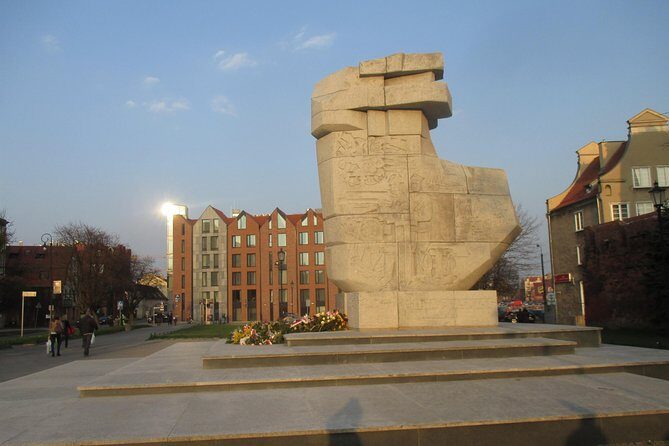
You meet at Plac Władysława Bartoszewskiego 1, by the Pomnik Rotmistrza Witolda Pileckiego, in front of the Museum of the Second World War. Starting there is smart: it gets you oriented before you walk into the museum complex.
The tour also states that pickup is possible only from accommodations in Gdansk Old Town, and only in the extended version. Pickup is available within about 1.5 km of the designated meeting point, and the itinerary adjusts if you’re within that range. If you’re staying farther out, you’ll want to plan your own way to the meeting point, especially since the base start location is near a public transport area.
One more practical note: you should check your email the day before the tour for important instructions from the operator. That kind of heads-up can matter more than you’d think with timed tickets.
Museum of the Second World War: Skip the Line, Then Use the Guide
The Museum is the core of the day. The tour includes skip-the-line tickets for the Museum of the Second World War for your selected date and time. The key detail: you bypass the long queue at the ticket office, but you still need to enter through the regular entrance process. In other words, arriving late can still throw off your timing.
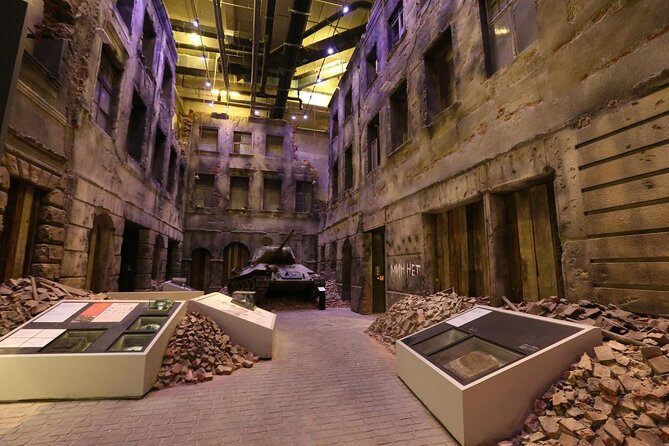
Inside, you’re led by a 5-star licensed guide in English. The museum experience is ticketed for the permanent exhibition, and the guide’s job is to help you connect documents, photographs, artifacts, and interactive elements into a coherent story. Since the tour is private, you can spend more time on what grabs you and less on what doesn’t.
I like how the tour description frames the museum as both global and local. You’re shown the worldwide impact of WWII, but the guide is there to keep the spotlight on Poland’s experiences and the tragic and heroic sides of the story. That balance tends to be exactly what visitors want: context without getting lost in chaos.
Also, the museum visit is set at about 2 hours. That’s a good slot for most people. It gives you enough time to see more than just a handful of rooms, while still leaving energy for the walking stops afterward.
WWII Resistance and Early Battles: Defenders of the Polish Post Office Stop
After the museum, the longer option moves into a walking section that focuses on WWII and post-war Communism history. One of the biggest highlights is the stop at the Defenders of the Polish Post Office memorial.
This memorial links to one of the first battles of WWII in the region, and it’s the kind of site where a guide can really change the experience. Without context, you might read plaques. With context, you understand what that resistance meant and how it was remembered afterward.
The walk also includes nearby historical anchors:
- Church of St. James
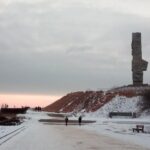
- Monument to the Fallen Shipyard Workers
This is where Gdansk’s “layers of conflict” show up. You’re not only looking backward at WWII. You’re learning how resistance and public memory continued later, including the later fight against Communism. The tour is timed at around 50 minutes for this segment, which keeps it moving but not rushed.
If you’re sensitive to heavy topics, expect the tone to be serious. The museum and the memorials are somber, but the goal here is understanding, not shock.
Other Museum of the Second World War tours

European Solidarity Centre and BHP Hall: From Wartime to the Road to Independence
If WWII is the gravity, Solidarity-era sites are the direction.
The tour’s European Solidarity Centre stop is built for people who want more than a single museum day. You’ll visit the European Solidarity Centre and the historic BHP Hall, where the August Agreements were signed. That’s a major turning point in Poland’s modern political story, and having a guide beside you helps translate what those agreements meant and why they mattered.
You’ll also see the Obrońca mural, a tribute connected to those who defended Poland. Plus, you’ll have a chance to visit a preserved WWII air raid shelter. That detail is especially useful because it connects a political turning point to the lived reality of wartime fear and survival.
The tour segment here runs about 1 hour. That’s long enough to take it in, but short enough that you don’t feel trapped in lectures.
And when the tour ends at the Imperial Shipyard area, it quietly brings the thread back to industry and labor—part of what shaped both the wartime experience and the later Solidarity movement.
Timing, Walking, and Comfort: The Stuff That Can Make or Break the Day
This tour runs rain or shine, so plan for weather. The extended option includes a moderate walking route with uneven surfaces or steps. That’s not a deal-breaker for most people, but it does change what you should wear.
I strongly recommend:
- comfortable shoes
- a layer for temperature swings
- a small bag that lets you move hands-free inside the museum
The good news: the operator notes that most travelers can participate. And because it’s private, the guide can adapt the pace to your group.
Guide Quality: What You Get From a Licensed Private Tour
A big reason this tour earns top marks is the way the guide connects the dots. Licensed guides in this setting are fluent in English, which matters because WWII details can get confusing fast. Having someone who can explain clearly and answer follow-up questions makes the experience much more usable, especially if you didn’t grow up with Polish WWII history.
One standout example is a guide named Małgorzata, who’s noted for being punctual, professional, and highly educated about Polish history. The same theme shows up again and again: guides who use the full time you paid for, stay responsive, and explain what’s in front of you instead of racing onward.
That’s the real value of private here. You’re paying for time with a specialist who can help you understand what you’re seeing before your brain starts filing it under museum facts only.
Price and Value: What $153.49 Buys You in Real Terms
At about $153.49 per person, you’re not just buying museum entry. You’re paying for:
- a private licensed guide in English
- skip-the-line tickets for the Museum of the Second World War on a booked time
- guided walking time at multiple memorial and history sites in the longer option
- hotel pickup only in limited cases (Old Town, extended version, within about 1.5 km)
That pricing can feel steep if you’re comparing it to self-guided tickets. But the comparison is off. The value is in speed (skip-the-line at the ticket office), structure (you won’t wander randomly), and explanation (you won’t just read placards and hope it all adds up).
If your goal is a focused history day where you can ask questions and keep momentum, this price makes sense. If you just want to stroll at your own pace, you could do it independently. But you’ll likely spend extra time figuring out how to connect everything.
Who This Tour Fits Best
This private tour is a great fit if you:
- want a guided explanation rather than just signage
- care about the WWII story tied to specific sites in Gdansk
- are curious about how WWII memories connect to later Communism and Solidarity-era independence
- prefer a smaller, question-friendly pace
It’s less ideal if you:
- hate walking or stairs and can’t manage uneven surfaces in the longer route
- prefer a totally self-paced museum visit with no scheduled time constraints
Should You Book the Museum of the Second World War Private Tour?
I’d book it if you want your Gdansk WWII day to feel organized and meaningful. The Museum visit is the backbone, and the private guide helps turn the exhibition into something you can actually remember. The longer option is especially worth it if you’re interested in how post-war history shaped Poland’s path to independence.
Skip it only if your schedule is too tight for the walking pieces or you strongly prefer an unguided day. In most cases, the guided route is the smarter use of limited time, and the skip-the-line ticketing helps you start the museum experience without losing your whole morning to queues.
FAQ
How long is the tour?
The experience runs about 2 to 4 hours, depending on the option you select.
Is this tour private?
Yes. It is a private tour/activity, and only your group participates.
What language is the guide?
The tour is offered in English.
Does the skip-the-line ticket save time at entry?
The skip-the-line is described as bypassing the queue at the ticket office, but it does not mean you skip the regular entrance process. Your ticket is valid for the pre-booked date and time, so arrive on time.
Which parts are included in the 2-hour option?
The extended walking tour covering post-war Communist history is included in the 4-hour option only. The 2-hour option is focused on the Museum experience.
Is pickup available from my hotel?
Pickup is available only from accommodations in Gdansk Old Town, and only in the extended version. It’s also limited to places within about 1.5 km of the meeting point.
What happens after I book?
You’ll receive confirmation at booking. Also, check your email the day before the tour for important information from the operator.
If you want, tell me whether you’re choosing the 2-hour museum-only option or the full 4-hour route, and I’ll help you plan what to do with the rest of your day in Gdansk.