REVIEW · GDANSK
Gdansk: Museum of World War II – True Story of a Living Hell
Book on Viator →Operated by Rosotravel Tours Gdansk · Bookable on Viator
This place takes WWII and turns it into something you can follow, room by room. I like the museum’s clear setup—20 exhibition rooms arranged along a long corridor axis—because you always know where you are in the story.
Two things I really value here: the guided commentary connects the big picture (politics and military events) to what people experienced day to day, and the exhibits use tangible artifacts—like an Enigma machine, a Sherman tank, and even something as personal as Stalin’s pipe—to make history feel real. One consideration: it is heavy and detailed, and some parts can feel packed or repetitive, so plan on going at your own pace when you need a breather.
In This Review
- Key highlights you’ll feel fast
- Meeting at the museum and what happens in the first 10 minutes
- Entering the Museum of World War II: 20 rooms and a corridor axis story
- Danzig/Gdańsk context: why WWII’s story hits differently here
- Objects that make the war feel physical: Enigma, tanks, and personal artifacts
- What the guided portion adds (and what to do if you prefer to read)
- Lifts, down-level access, and real pacing advice for 3 hours
- When tickets feel pricey: why $217.08 can still be good value
- Who should book this WWII tour in Gdańsk
- Should you book this tour?
- FAQ
- Where does the tour start?
- How long is the Museum of World War II tour?
- Is museum admission included in the tour price?
- Is this a private tour?
- What language is the tour offered in?
- Is hotel pickup included?
- Are there audio/headphone options inside the museum?
- Does the museum have lifts?
- Is the tour near public transportation?
Key highlights you’ll feel fast

- A route built for understanding: a corridor that links “everyday life” displays with the wider war story.
- Artifacts that anchor the facts: items like Enigma, tanks, and other wartime objects help the narrative stick.
- Daily life scenes, not just battles: streets, shops, and personal fates appear alongside geopolitical decisions.
- Headphones for translation: audio gear is available at the desk if you want help reading and listening.
- Design choices that help access: lifts are available, and the entrance at street level may require going down to reach lower levels.
Meeting at the museum and what happens in the first 10 minutes
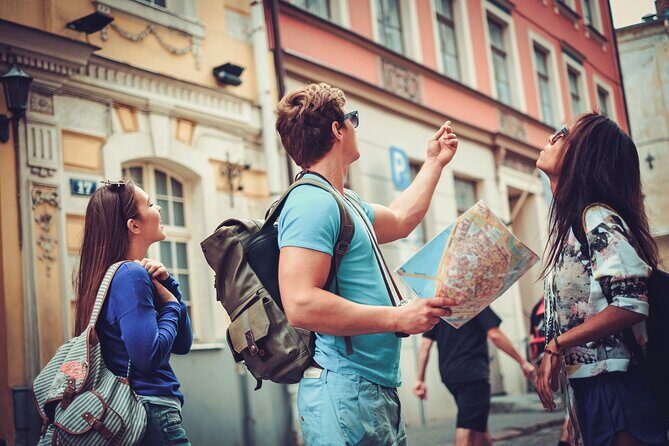
Your tour starts at the Museum of the Second World War, at Plac Władysława Bartoszewskiego 1, 80-862 Gdańsk. You meet your licensed guide right in front of the museum, then you handle entry as a group.
That short start matters. In a museum this emotionally intense, you want to avoid the fuss of figuring out where to go first. Once you’re inside, your guide can start placing the exhibits in context immediately, so you’re not wandering through rooms wondering what you’re supposed to notice.
Other WWII history tours in Gdansk


Entering the Museum of World War II: 20 rooms and a corridor axis story
The museum is laid out like a guided walk through the war’s causes and consequences, not a scatter of unrelated displays. The main exhibition spreads across 20 rooms, positioned on both sides of a long central corridor. The corridor itself includes displays of day-to-day life during the war, which helps you avoid the common museum trap of only thinking in dates and uniforms.
You typically start with the origins. One early room uses a semi-circular screen that shows the rise of totalitarian regimes across Europe. It’s a strong opening because it frames WWII as something that didn’t appear out of nowhere. You get the political atmosphere first, then the story moves into how those forces collided with real lives.
From there, the museum tells WWII at multiple levels at once:
- geopolitical and military developments
- what the war meant for people in Poland and the wider region
- personal fates that make the story human
The arrangement helps you follow cause and effect. Even when the content turns dark, the structure keeps your footing.
Danzig/Gdańsk context: why WWII’s story hits differently here
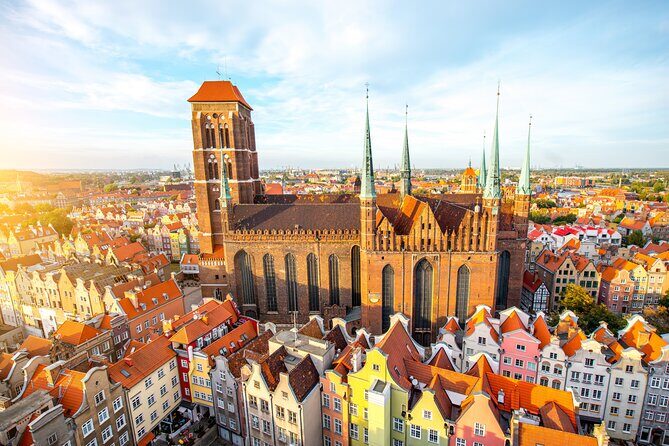
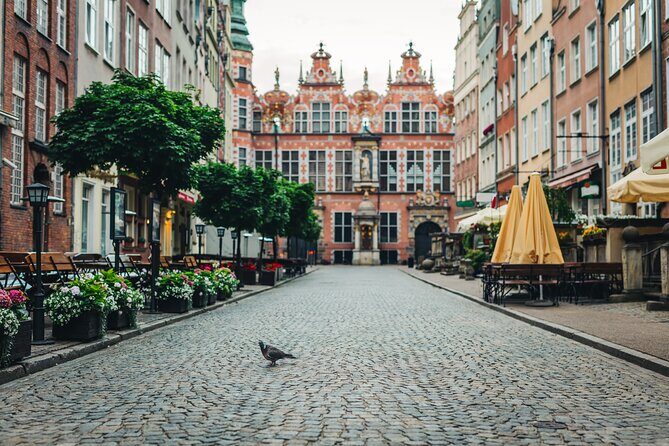
What makes this museum feel especially relevant in Gdańsk is the way it ties WWII back to the aftermath of World War I. Danzig (now Gdańsk) sits at a political crossroads created by the Treaty of Versailles, which left the city in a kind of limbo—governed neither by the newly recreated state of Poland nor by Germany, which had governed the region for 146 years after the partitions.
That detail is more than background. It explains why this location matters. When you see the war story through this lens, you understand that decisions made long before 1939 shaped the stress, conflict, and vulnerability that followed.
If you like history that connects local to global, this is exactly the tone you want. You’re not just learning about a distant war—you’re seeing how the war’s machinery was set in motion in places like this.
Objects that make the war feel physical: Enigma, tanks, and personal artifacts

One of the museum’s smartest choices is how it uses objects to support the narrative. You’ll encounter a mix that sounds almost impossible to place in the same building: something like Stalin’s pipe on one side of the story, a Sherman tank on another, plus an Enigma machine that represents the war’s intelligence and code-breaking world.
This matters because WWII can become abstract fast—alliances, invasions, treaties, shifting borders. Objects pull you back into material reality. They also help with memory. After a guided visit, the facts don’t float away as easily because you’ve linked them to real items.
The exhibit also moves between major events and individual destinies. Instead of only marching from one campaign to the next, you see how the war worked inside communities. That balance is one of the strongest reasons this visit lands for people who like both big-picture history and lived experience.
What the guided portion adds (and what to do if you prefer to read)
You’re in a private format—only your group—with a licensed guide fluent in the selected language (English on this tour). That setup changes how you experience the museum. A good guide can slow down when you need it, and they can speed up when you’re already comfortable with the framework.
The tour also includes expert commentary focused on WWII events in Poland. In practice, that means you’re not only looking at artifacts—you’re hearing the “why this matters” layer as you go.
That said, the museum has a lot to read and watch. You may want to alternate between:
- listening while standing near key displays
- pausing to read labels and take in the objects
- stepping into video sections when the visuals help you reset
If you find yourself wanting extra translation, there are headphones available at the desk. You can use the audio while still reading displays, and it’s a big help if you want the story in a more hands-on way.
Other Museum of the Second World War tours

Lifts, down-level access, and real pacing advice for 3 hours

The museum is designed for visitors to move through lots of levels, so plan for walking. One practical note from experience with this site: the entrance is at street level, and you may need to go down to reach the lower levels. The good news is there are lifts, which helps if stairs are not your friend.
About time: give it at least three hours. The museum can feel endless in a good way, but not everyone finishes everything in one go. That’s normal here. If you try to do it fast, you’ll skim past the connections that make it worth it.
Pacing is the main downside to watch for. Some sections repeat ideas or revisit themes in different forms. If you’re sensitive to that style, don’t force it. Take short breaks before you feel overloaded. Also keep your energy for the parts that hit the hardest—those are usually the scenes of daily life and the personal fates.
Finally, plan to use the on-site extras. There’s a manned cloakroom and a café, which makes it easier to recover between intense rooms.
When tickets feel pricey: why $217.08 can still be good value
The tour price is $217.08 per person for about 3 hours, and it includes more than just entry. Your package covers:
- a private guided visit with a 5-star licensed guide
- museum tickets
- expert commentary on WWII events in Poland
- an experience tailored to your needs and interests
So you’re not just paying for the building. You’re paying for someone to help you connect the rooms into a story you can actually keep. In a museum like this, that guidance can be the difference between leaving with a few striking artifacts versus leaving with an organized understanding of how the war unfolded and why.
If you’re traveling with a group that includes people who learn best from explanations (or if you want the local Poland focus), a private guide often feels more efficient than doing it solo at random.
If you’re a very independent museum-goer who enjoys reading everything without interruption, you might wonder if the guide is worth it. In that case, consider whether you’ll spend your time reading labels and audio, or whether you’ll benefit from someone steering your attention.
Who should book this WWII tour in Gdańsk
This is a strong fit if you:
- want WWII explained with clear structure, not guesswork
- care about how Poland and this region experienced the war
- like museums that show the link between big events and everyday life
- want artifacts and video sections tied to a guided narrative
It’s also a good match if you like a museum that doesn’t shy away from naming horrors. Expect detailed scenes and strong visuals. If you know you want gentler content, you may find the intensity challenging.
It’s less ideal if:
- you get overwhelmed by long stretches of dark subject matter
- you dislike museums with heavy text/video density
- you hate any repetition in themes
Should you book this tour?
If you’re heading to Gdańsk and you want WWII in a form you can follow, I’d book it. The combination of a private English guide, included museum tickets, and a guided route through a 20-room story makes it one of the more effective ways to spend your limited time.
My decision rule: if you want clarity plus human stakes, go for it. If you’re more interested in wandering at your own pace with only casual context, you could still visit the museum independently—but you’d likely spend longer figuring out how the rooms connect.
FAQ
Where does the tour start?
The meeting point is in front of the Museum of the Second World War at Plac Władysława Bartoszewskiego 1, 80-862 Gdańsk, Poland.
How long is the Museum of World War II tour?
It runs for about 3 hours (approx.), with most of the time spent inside the main exhibition.
Is museum admission included in the tour price?
Yes. Tickets to the Museum of World War II are included.
Is this a private tour?
Yes. It’s a private tour/activity, and only your group participates.
What language is the tour offered in?
The tour is offered in English.
Is hotel pickup included?
No. Hotel pickup and drop-off are not included, but transportation can be arranged upon request for an additional 20 Euro.
Are there audio/headphone options inside the museum?
Yes. Headphones are available at the desk to translate.
Does the museum have lifts?
Yes. Lifts are available, and access may involve going down from the street-level entrance to reach lower levels.
Is the tour near public transportation?
Yes. The meeting area is near public transportation.