REVIEW · GDANSK
TriCity Tour (Gdansk, Gdynia, Sopot) – PRIVATE (8h)
Book on Viator →Operated by PT Team · Bookable on Viator
Baltic charm, squeezed into one day. This private TriCity tour links three very different places—medieval Gdańsk, modern-port Gdynia, and seaside Sopot—using an air-conditioned vehicle plus hotel pickup and drop-off. You also get a professional local guide and an English option, so you’re not stuck piecing things together on your own.
What I like most is how the day is structured for walking highlights without turning into a sprint. I’m especially a fan of the Royal Route stroll in Gdańsk—Długa and Długi Targ—and the mix of photo-worthy landmarks like Neptune’s Fountain and St. Mary’s Basilica. Another big plus: guides can keep the story strong but not overwhelming, and some past guides for this tour (like Andrzej Falkowski and Peter) were praised for being both friendly and very good at pacing the information.
One caution: it’s a full 8 hours, so if you want extra museum time or you’re slow-moving, you may feel lightly rushed between cities. Also, the Crane stop is listed as not included for admission, so you may decide to pay there (or just enjoy the exterior and keep rolling).
In This Review
- Key things to know before you go
- TriCity in one day: why this route makes sense
- Price and what you’re really paying for
- Your day schedule: how the timing feels on the ground
- Gdańsk: the Baltic seaport with layers you can actually read
- Walking Old Town and the waterfront vibe
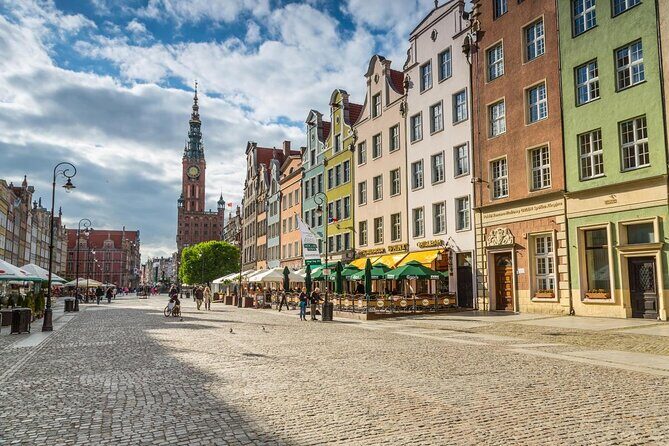
- Długa Street and the Royal Route: your “walking spine” of Gdańsk
- Neptune’s Fountain: a symbol, but also a timing win
- St. Mary’s Church: big brick scale and a real star attraction
- The Crane: medieval port tech you can still recognize
- Gdynia: harbor promenade energy and Polish naval story
- Sopot: the pier walk and the resort square rhythm
- The guide factor: what makes this tour feel relaxed
- What to wear and pack for an 8-hour TriCity day
- Should you book the TriCity Tour (Gdańsk, Gdynia, Sopot) private 8h)?
- FAQ
- How long is the private TriCity tour (Gdańsk, Gdynia, Sopot)?
- Is hotel pickup and drop-off included?
- Which languages is the tour offered in?
- Is this tour private?
- What’s included in the price?
- Are admission fees included?
- What is the cancellation policy?
Key things to know before you go
- Private, hotel pickup-and-drop-off: Your guide meets you at your hotel lobby and you head out by car, which saves energy for a walking day.
- Gdańsk first, then the coast: You start with three hours in Gdańsk, then shift to harbor-minded Gdynia and beachy Sopot.
- Royal Route highlights on foot: Długa and Długi Targ connect major sights in a single easy-to-follow walk.
- Symbol stops built in: Neptune’s Fountain, St. Mary’s Church, and the medieval Crane all appear at the right moments for photos and context.
- English guide option: The tour is offered in English, making it easier to understand the city’s layered past.
TriCity in one day: why this route makes sense
Gdańsk, Gdynia, and Sopot sit close enough that you can visit all three without a complicated schedule. The smart move here is doing them in a logical flow: start inland and historic with Gdańsk, then move toward the harbor culture of Gdynia, and finish with Sopot’s seaside promenade and pier.
This tour also respects your time. The day isn’t just “see a bunch of streets.” It’s built around landmark clusters, so when you walk, you’re walking for a reason. You get a guide to connect the dots between Polish, Prussian, German, and Hanseatic influences in Gdańsk—then you switch gears to a 20th-century port city in Gdynia—then you end with a classic resort vibe in Sopot.
And because it’s private, you can usually match your pace. Want to linger on a gate or spend an extra few minutes with the view? A private setup is the easiest way to do that.
Other Sopot tours we've reviewed near Gdansk


Price and what you’re really paying for
At $351.49 per person for an ~8-hour private tour, this is not a cheap “hop on a bus” deal. The value is in the package: professional guide + private transportation + hotel pickup/drop-off.
Here’s the honest math mindset I’d use. If you’re traveling solo, the per-person cost can sting because you’re funding the whole vehicle and guide time by yourself. If you’re splitting among a small group, it often becomes more reasonable because the fixed costs (car + guide) spread out.
The other value point: many of the big sights in Gdańsk are listed as free admission time on the itinerary. That means you can spend your money on optional entry where you care most, rather than paying for every stop whether you want to or not.
Your day schedule: how the timing feels on the ground
The tour is paced in blocks that feel practical for a single day:
- Gdańsk: about 3 hours
- Old Town: about 1 hour (as part of the Gdańsk focus)
- Royal Route walking (Długa/Długi Targ): about 45 minutes
- Neptune’s Fountain: about 15 minutes
- St. Mary’s Church: about 30 minutes
- Crane stop: about 15 minutes (with admission not included)
- Gdynia: about 2 hours
- Sopot: about 2 hours
This mix is key. You get a real chunk of time in the “main story” city (Gdańsk), then shorter but still meaningful time in each follow-up location. It’s enough to feel like you experienced each place’s personality, not just drove past it.
Gdańsk: the Baltic seaport with layers you can actually read
Gdańsk is the backbone of the day, and it earns it. It’s a Baltic city and a major seaport, but it’s also a place shaped by shifting power—Polish, Prussian, German, and periods of autonomy as a free city state. That mix shows up in the architecture and the waterfront character, and a good guide helps you see the pattern instead of memorizing dates.
During your time in Gdańsk, focus on three things:
- The medieval city center feeling: cobblestones, old waterfront energy, and the sense of a trading hub.
- The city’s shipbuilding and seaport identity: this matters because it connects directly to what you’ll see later in Gdynia.
- The Hanseatic influence: it explains why so many buildings and public spaces feel “merchant city” in spirit.
If you like cities where the past isn’t locked behind museum doors—where it’s visible while you walk—this start is a strong choice.
Walking Old Town and the waterfront vibe
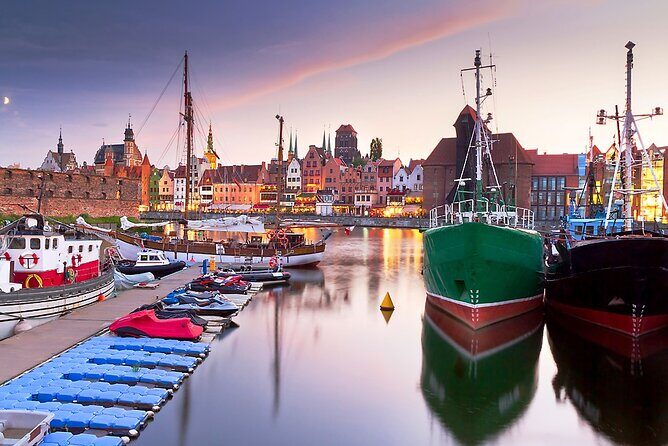
You’ll spend about an hour in the Old Town area. This is the part that helps you orient fast. You’re not only hitting famous spots; you’re also getting a feel for how the historic center hangs together.
Old Town here matters because it’s not a single monument. It’s an environment: streets, waterfront views, and that old-town density that makes you slow down. If you’re someone who enjoys getting bearings quickly, this segment does the job.
A small practical note: Old Town streets can be uneven. Wear shoes you trust for cobblestones.
Other Gdynia tours we've reviewed near Gdansk



Długa Street and the Royal Route: your “walking spine” of Gdańsk
Długa Street and Długi Targ are often treated like a highlight list. Here’s why it’s more than that: it’s the Royal Route, historically tied to processions for kings visiting the city. So when you walk it, you’re walking a corridor that once had ceremonial importance.
This section is surrounded by buildings reconstructed in historical style—especially from the 17th century—and it’s framed by elaborate city gates at both ends. You’ll also pass sights like:
- the Town Hall
- Neptune’s fountain (later, but you’ll understand its setting here)
- Arthur’s Court, once a meeting place for merchants
The best way to enjoy this walk is to treat it like a moving story. Each gate and façade is a clue to who held power, who traded, and what the city wanted to show off.
Neptune’s Fountain: a symbol, but also a timing win
Neptune’s Fountain sits in front of the Artus Court area and is a Gdańsk symbol. The fountain’s roots go back to 1633, and it’s built around a bronze Neptune sculpture. The base was later renovated in a rococo style and added sea creatures, which is why it looks like more than just a simple statue.
You’ll have about 15 minutes here. That time is perfect because the goal is to see it, get a photo, and move on. It’s also a great moment to let your guide connect the symbolism: a coastal city putting its identity into public art.
Local-style superstition is part of the legend too—coin-tossing for luck. If you want to do it, keep it quick and then keep walking.
St. Mary’s Church: big brick scale and a real star attraction
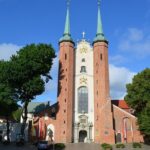
St. Mary’s Basilica (the Basilica of the Assumption of the Blessed Virgin Mary) is one of those places where “largest brick church” sounds like a marketing line—until you’re there. It’s said to be the largest brick church in the world. Construction started in 1343 and took shape in stages until 1502.
You get about 30 minutes at the church. In that time, you can appreciate the size even if you don’t turn it into a long, detailed museum visit. Key highlights mentioned include:
- important medieval and baroque works
- a stone Pietà from about 1410
- a copy of Hans Memling’s The Last Judgement
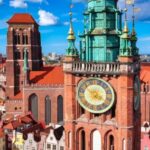
- an astronomical clock built in the late 15th century by Hans Düringer over about 7 years
If you like architecture and art that’s tied to the daily life of a city—not just separate “museum culture”—this stop lands well. It’s also a natural break in the walking-heavy day.
The Crane: medieval port tech you can still recognize
The Crane is small in time (around 15 minutes), but it’s packed with meaning. Built in the first half of the 15th century between the pylons of Brama Szeroka (the Wide Gate), it was once the largest port crane in Europe. The big practical point: it could lift around 4 tons up to about 36 feet using tread wheels operated by workers.
Today, it’s part of the National Maritime Museum. Admission here is listed as not included, so you’ll want to decide what you want from the stop:
- If you mostly want the landmark and a quick story, the timing works perfectly.
- If you care about maritime museum details and plan to enter, budget for optional admission at your discretion.
Either way, this stop gives you a tangible bridge between Gdańsk’s shipbuilding past and what you’ll see next in Gdynia.
Gdynia: harbor promenade energy and Polish naval story
After the medieval focus, Gdynia shifts the mood. It was constructed in the 1920s as a modern harbor setting, and the promenade area is the most characteristic part of town. The vibe feels more functional and maritime-forward than medieval, which makes the transition from Gdańsk feel logical.
You get about 2 hours here, enough time to appreciate the harbor identity and take in the ships docked in the area. Among the vessels and institutions referenced:
- ORP Blyskawica, a destroyer from the 1930s and the oldest preserved ship of its class
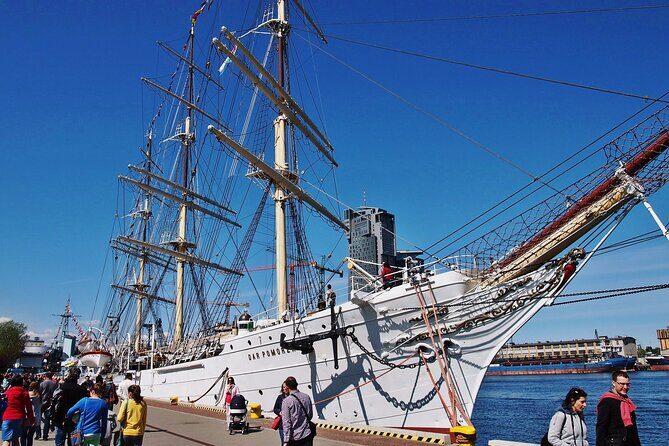
- Dar Pomorza, a famous sailing frigate
- Naval Museum, focusing on Polish navy history
- Emigration Museum in the former Maritime Station, covering Polish emigration (19th century to modern days)
- Gdynia Aquarium for underwater life
Because the itinerary doesn’t force a deep dive into each museum, you can tailor your focus. If you love ships, spend more time looking at the docked vessels. If you prefer human stories, the Emigration Museum angle is worth considering. And if you’re traveling with kids or you just want a slower, visual break, the aquarium option can be a good reset.
Sopot: the pier walk and the resort square rhythm
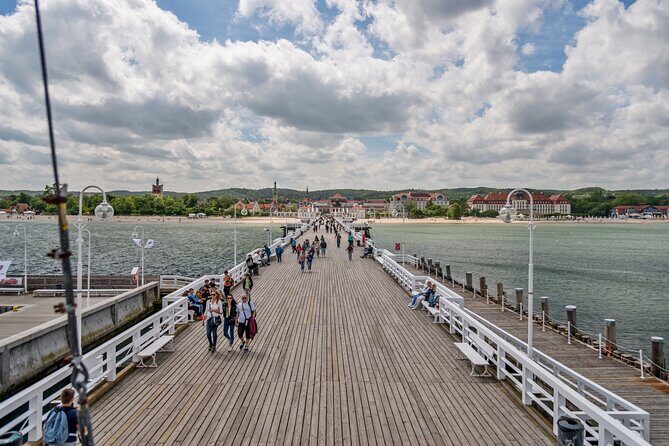
Finish in Sopot, and you’ll feel the shift instantly. Sopot is described as a luxury seaside resort town, known for mass events, shopping, and its signature pier. The pier is a standout: about 560 yards into the sea and the longest wooden pier in Europe.
At the end of the pier, the concentration of iodine is said to be twice that of the shoreline—so walking there is often treated like a health-friendly ritual. Whether you treat that as science or as a nice extra story, the real draw is simple: it’s a long, satisfying walk with sea views and a sense of reaching somewhere.
You’ll also have about 2 hours at Sopot, which gives you time for the main flow:
- the pier
- Plac Zdrojowy, the central square that extends the pier experience on land
- nearby views from the lighthouse area
- and the outdoor concert hall area if you want to see the summer-event setup
This ending works well because it’s your decompression stop after history and ports. You can finish with your feet tired but your mind rested.
The guide factor: what makes this tour feel relaxed
Private tours live or die by the guide. The strongest praise here points to professionalism plus a friendly approach, with guides who don’t overload you with information.
In particular, names that came up include Andrzej Falkowski, praised for deep local history and background on lots of cool sights, and Peter, described as extremely knowledgeable while still keeping the pace easy and accommodating. Even when you want details, the best guides know how much to give in a day like this—especially when you’re moving from city to city.
When you book, think of the guide as your translation tool. They help you read what you’re seeing—why gates matter, why merchant buildings look the way they do, and why the port story continues across the three cities.
What to wear and pack for an 8-hour TriCity day
This itinerary mixes vehicle time with meaningful walking. I’d plan like this:
- Comfortable shoes for cobblestones in Gdańsk and the walking sections on the Royal Route and pier
- A light layer for sea air, especially near the water
- A phone battery plan if you’re doing a lot of photos at Neptune’s Fountain and St. Mary’s
If you want to go inside places beyond what’s already listed as part of the stops, remember that not all admission fees are included. Bring a little extra cash/card just in case you decide to step in.
Should you book the TriCity Tour (Gdańsk, Gdynia, Sopot) private 8h)?
If your goal is to experience the three-city personality swap in one day, this tour is a strong match. You’ll get Gdańsk’s historic power and seaport feel, then Gdynia’s modern harbor identity, then Sopot’s pier and seaside rhythm. The private format and hotel pickup make it easier to enjoy rather than manage.
I’d pass (or at least reconsider) if:
- you want a slow, museum-heavy day in just one city
- you’re highly sensitive to pacing because the schedule is tight across three locations
- you expect every stop to include admission—because the Crane admission is listed as not included
If you’re the kind of traveler who likes walking routes with clear landmarks and a guide who keeps the story moving, this is a smart way to do TriCity without wasting time.
FAQ
How long is the private TriCity tour (Gdańsk, Gdynia, Sopot)?
It runs for about 8 hours (approx.).
Is hotel pickup and drop-off included?
Yes. Pickup and drop-off from your hotel are included.
Which languages is the tour offered in?
The tour is offered in English.
Is this tour private?
Yes. It’s private, meaning only your group participates.
What’s included in the price?
Included features are hotel pickup and drop-off, a professional local guide, an air-conditioned vehicle, and private transportation.
Are admission fees included?
Entry or admission fees are not included (optional). The Crane stop is listed as not included for admission.
What is the cancellation policy?
You can cancel for a full refund up to 24 hours in advance of the experience start time. If you cancel less than 24 hours before, the amount paid isn’t refunded.