REVIEW · GDANSK
SUP Private Tour in Motlawa River
Book on Viator →Operated by Adamus on tour · Bookable on Viator
Gdańsk from a SUP board feels instantly personal. This private paddle tour on the Motława River puts you at water level for big Gdańsk landmarks like the Crane and the Green Gate, with warm-weather SUP gear handled for you and multiple departure times so you can shape your day.
What I like most is the way the route mixes easy fun with water-and-history storytelling. A guide named Hania is especially good at making the city click, and the whole experience feels relaxing once you find your balance.
One thing to consider: SUP is simple, but it still asks for decent balance, and the tour depends on good weather.
In This Review
- Key things to know before you paddle the Motława
- Private SUP on the Motława River: the real payoff
- How the timing and length affect your day
- Meeting at Kamienna Grobla: start where the action is
- What you actually need (and what you don’t)
- The stops: landmark viewing from the best seat in town
- 1) Długie Pobrzeże embankment: Hanseatic League spirit on the water
- 2) The Crane: the symbol you finally see up close
- 3) Wyspa Spichrzów (Granary Island): where wealth was stored
- 4) Wartka Bridge: a modern link that still feels like Gdańsk
- 5) Wyspa Ołowianka: lead-metal storage and later granaries
- 6) SS Soldek: a living museum at river level
- 7) Brama Mariacka: the gothic gate and the street behind it
- 8) Green Gate (Brama Zielona): palace energy with a political footnote
- 9) Brama Krowia (Cow Gate): a simple name with a backstory
- 10) Motława Channel fortifications: the flood system you can still read
- The guide factor: when history stays human
- How hard is the SUP part, really?
- Gear and comfort: why included equipment matters
- Price and value: what $50.85 buys you
- Who should book this SUP tour?
- Should you book the SUP private tour on the Motława?
- FAQ
- How long is the SUP tour on the Motława River?
- What’s included with the tour?
- Do I need any special SUP skills?
- Where does the tour start and end?
- Is the tour private?
- Is it offered in English?
- What if the weather is poor?
Key things to know before you paddle the Motława
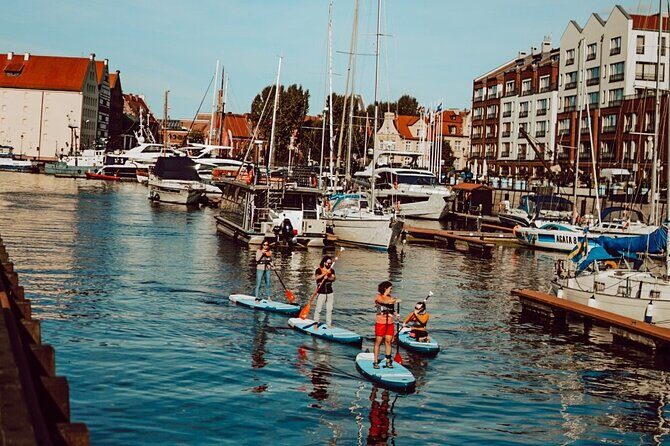
- Private group only, so you can move at your pace instead of fighting for space
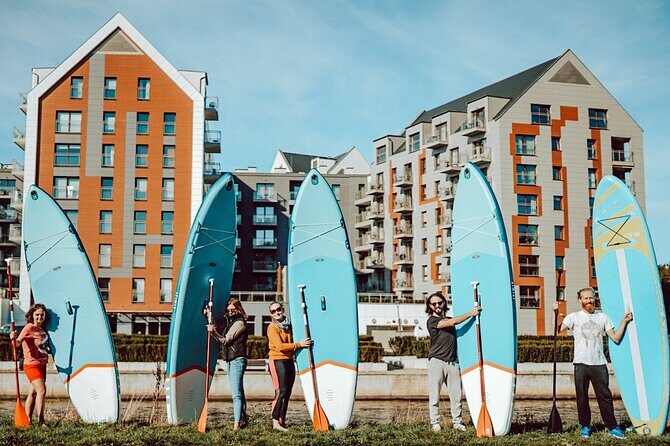
- All key gear included: SUP board, paddle, leash, and life jacket
- Great landmark density along the Motława, so the sights feel close and immediate
- A history-forward route built around Hanseatic-era trading wealth and the Teutonic/Gdańsk waterfront story
- You choose your timing with different departure options to fit your schedule
- Bring water with you, since bottled water is not included
Private SUP on the Motława River: the real payoff
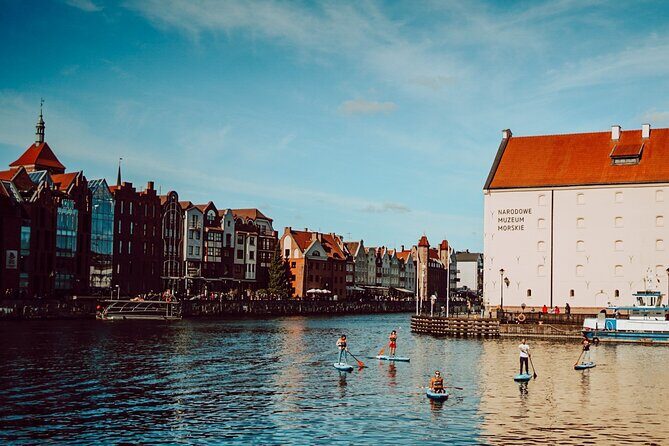
There’s a reason SUP works so well as a sightseeing format: you’re not just looking at Gdańsk, you’re part of the river. On this private tour, you glide past waterfront structures that can feel monumental from land but take on a new scale when you’re riding the water between them.
The Motława is perfect for this. It’s active enough to make movement feel alive, but it’s also calm enough that most people can participate without needing special athletic skills. The tour is built for a relaxed pace, with planned stops to help you take in the views and the stories along the way.
And yes, you get the practical pieces handled. You don’t have to show up and figure out what to rent. The board, paddle, leash, and life jacket come with you. For most people, that’s where value starts: less hassle, fewer add-ons, more time on the actual experience.
Other Motława River cruises in Gdansk
How the timing and length affect your day
The tour runs about 1 hour 40 minutes to 2 hours 30 minutes, depending on the flow of the route and your pace. That time window matters in Gdańsk because you can pair this with other nearby sights without turning the day into a sprint.
You also get a choice of departure times. That’s a big deal when you’re trying to avoid the worst light or when you want to fit this between other activities (or just build in a slower morning). If you’re planning more than one thing, picking the right start time can make the difference between a fun day and a rushed one.
Your tour ends back at the meeting point, Kamienna Grobla, which keeps the logistics straightforward. You’re not trying to figure out a second pickup point later.
Meeting at Kamienna Grobla: start where the action is
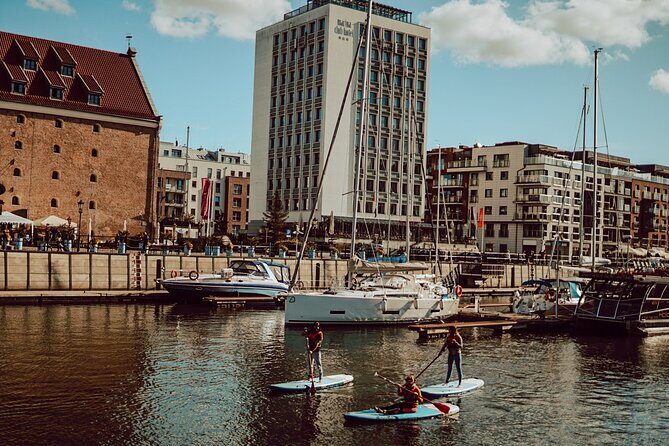
You meet at Kamienna Grobla, 80-700 Gdańsk. This spot gives you an easy transition from “city mode” to “river mode.” Since the activity ends back at the same place, you’re not managing a complicated route afterward.
One practical note: the tour is described as being near public transportation. That helps if you’re staying somewhere central and don’t want to plan parking or taxis for something that’s only a couple of hours.
What you actually need (and what you don’t)
The tour includes the core SUP kit: board, paddle, leash, and life jacket. That’s the big checklist item for first-timers, because the gear is usually where the first major friction is.
What’s not included is bottled water. Simple fix: bring your own water. For a 2-hour ride in warm weather, you’ll thank yourself.
You’ll also want to take seriously the idea that SUP requires balance. The ride is described as fun and easy for many people, but balance still matters. If you’re prone to motion sickness or you know you struggle with standing steadily, it’s worth thinking through how comfortable you’ll feel once you’re moving with the current.
The stops: landmark viewing from the best seat in town
This tour is paced with multiple short stops, not long lectures. That style keeps your attention fresh and lets you enjoy the view even if you’re not the type who wants to stand still for 30 minutes at a time.
Here’s what you can expect as you move along the Motława.


1) Długie Pobrzeże embankment: Hanseatic League spirit on the water
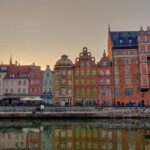
The tour begins at the Motława river embankment at Długie Pobrzeże. Even before the famous single landmarks, this stretch gives you that old waterfront feeling connected to the Hanseatic League era.
The benefit here is setup. You’re not dropped into the middle of the sightseeing hype. You start with a sense of place, and then the iconic structures make more sense as you pass them.
2) The Crane: the symbol you finally see up close
Next you’ll paddle to the Crane, one of Gdańsk’s defining symbols and a reminder of the city’s trading age. From the water, the Crane isn’t just a photo subject. It feels like part of the river system that once powered all that commerce.
The stop is short, so the goal is quick orientation: get the key view, learn what it represents, then move on while you still have energy.
3) Wyspa Spichrzów (Granary Island): where wealth was stored
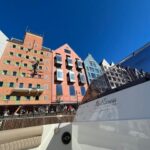
Wyspa Spichrzów, also called Granary Island, is a highlight for people who like city history tied to real infrastructure. The numbers here are striking: by 1643, there were said to be 315 granaries on the island, able to store up to 250,000 tons of grain and servicing over 200 ships.
That’s not just trivia. It explains why Gdańsk became one of Europe’s richest trading ports on the Baltic. And it explains why the waterfront buildings matter even today.
You’ll also be told that Granary Island is being brought back into public use through major construction projects. So this stop isn’t only about the past—it hints at what’s changing now, which makes the area feel current rather than museum-only.
4) Wartka Bridge: a modern link that still feels like Gdańsk
At Wartka Bridge, you get a quick look at something newer: the footbridge opened in June 2017, connecting the main town near the Hilton hotel to Ołowianka.
A short stop like this works well on a SUP tour. It gives you a view of the city’s evolution without killing your momentum.
5) Wyspa Ołowianka: lead-metal storage and later granaries
Then it’s Wyspa Ołowianka. The island name comes from Polish word ołów, meaning lead—because lead metals shipped from Silesia were stored there in the Teutonic era.
Later, warehouses on the island were used as granaries. In this area, you can also spot granary examples near The Philharmonic Hall and The Royal Granary.
This stop is where the waterfront logic clicks: the city’s wealth wasn’t just about one trade item. It was about how the port handled multiple materials over centuries. The island becomes a living map.
6) SS Soldek: a living museum at river level
Next you pass the SS Soldek, described as the first steamship built in Polish Gdańsk after 1945 and now turned into a living museum.
Seeing a ship up close from the water has a different effect than viewing it behind a fence. Even in a brief stop, it tends to bring the whole “trading age” theme into sharper focus because the story isn’t only centuries old—it connects to the postwar era as well.
7) Brama Mariacka: the gothic gate and the street behind it
You’ll then see Brama Mariacka, a shadowy gothic gate, with the most beautiful street in Gdańsk behind it (as the description puts it). Even if you don’t walk away with the full perspective of that street, the gate itself is worth the view from the river.
This is one of those stops that helps you match what you see on land with the city geometry. Waterfront gates like this feel less like separate attractions and more like part of a system.
8) Green Gate (Brama Zielona): palace energy with a political footnote
The Green Gate is a standout for many people because it’s big and distinctive right on the water. It’s a four-arched gatehouse that was built as a palace for Polish monarchs—though no Polish king ever stayed there.
There’s also a modern political note: Lech Wałęsa had his office here before moving to the European Solidarity Centre. That small detail helps the gate feel tied to real events, not just architecture.
From SUP height, it looks even more like a fortress-meets-palace structure than it does from the sidewalk.
9) Brama Krowia (Cow Gate): a simple name with a backstory
Then you pass Brama Krowia, the Cow Gate, located on the Motława end of ul. Ogarna. The name is explained as likely coming from the road used to drive cattle.
Short stops like this are great for keeping variety. You get a different kind of story—less royal and grand, more practical, tied to how people moved goods.
10) Motława Channel fortifications: the flood system you can still read
The final stretch focuses on the Motława Channel fortifications. You’ll learn that Gdańsk was surrounded by a bastion fort, and that a stone lock in the Motława could flood the surroundings to protect the city.
You’ll see what’s left. That’s the key: this stop works best if you like noticing remnants and understanding how defense systems shaped the waterfront.
If you’ve ever wondered why rivers mattered so much to city power, this is the moment that answers it.
The guide factor: when history stays human
A big part of why this tour works is how the guide keeps the information usable instead of turning it into a lecture. A guide named Hania is highlighted for friendliness and for sharing lots of knowledge and interesting facts in a way that keeps it engaging.
You’ll probably notice the difference right away: the route isn’t only about catching landmarks. It’s about helping you connect them into one waterfront story—trading wealth, storage islands, gates, and fortifications.
On a SUP tour, that matters because you’re already doing something physical. A good guide gives your eyes something to do besides admire the view.
How hard is the SUP part, really?
The activity is described as not requiring special skills. Still, there’s an honest catch: you need good balance. That’s normal for SUP anywhere, but it’s especially important to know up front.
The upside is that the experience is easy and relaxing for many people once you get comfortable on the board. The fun factor is high, too. People tend to look your way from bridges and along the waterfront, which makes the experience feel social even though it’s private.
If you’re comfortable standing and adjusting your stance, you’ll likely do fine. If balance is an issue for you, slow down mentally and expect a bit of trial-and-error at the start.
Gear and comfort: why included equipment matters
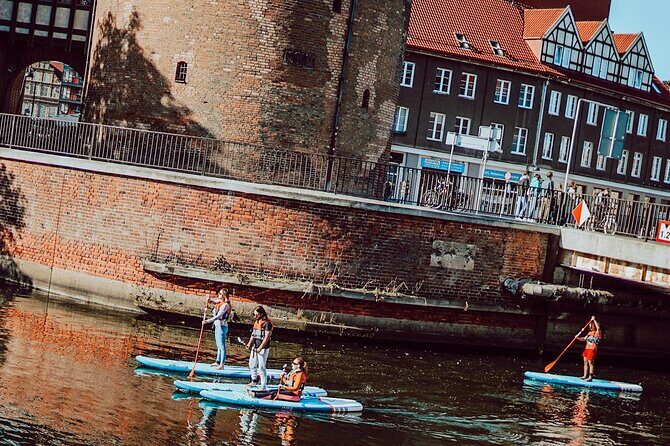
When gear is included—board, paddle, leash, and life jacket—you don’t spend your pre-tour time chasing rentals or worrying whether the equipment is right. It also means the operator can plan the whole experience around that specific setup.
That can improve safety and comfort, at least in the practical sense that everyone has the right basic kit for the river conditions.
Just remember: bring your own water. It’s a small thing, but it prevents the post-ride grumpiness.
Price and value: what $50.85 buys you
At $50.85 per person, this is priced like a guided activity rather than just a cheap rental. The value comes from three places:
- You get a private guided route through major waterfront sights
- You get all core SUP equipment included
- You get a structured route with short stops that keeps your sightseeing efficient
If you were to hire a guide for history or pay for a boat tour, you’d likely spend more. And if you were to paddle on your own, you might still see the landmarks—but you’d miss the context that makes them click.
This is a strong choice when you want active sightseeing plus city stories without added ticket chaos.
Who should book this SUP tour?
This works especially well if you:
- Want a fun, active way to see Gdańsk without spending your day walking
- Like history tied to places you can actually see and pass in sequence
- Prefer a private experience rather than sharing space with strangers
- Enjoy water views and close-up landmark spotting
It’s also a good fit for couples and small groups because the tour is private and the pace suits people who want to take it easy.
If you’re the type who likes to linger long at one spot, the short stop format may feel a bit quick. But you can always extend your sightseeing on land after the ride.
Should you book the SUP private tour on the Motława?
Book it if you want a different way to see Gdańsk—one where the city feels connected to the river instead of separated from it. The route packs major landmarks into a tight, balanced flow, and the guide adds story so the views don’t feel random.
Skip it or reconsider if:
- You don’t do well with balance on a moving board
- Weather is unreliable for your dates (the tour needs good weather)
- You want long, slow time at a single attraction rather than a paced route
For most people looking for a memorable, doable experience in Gdańsk, this is a smart use of a couple hours.
FAQ
How long is the SUP tour on the Motława River?
It lasts about 1 hour 40 minutes to 2 hours 30 minutes, approximately.
What’s included with the tour?
The tour includes the SUP board, paddle, leash, and a life jacket.
Do I need any special SUP skills?
Most travelers can participate, and the experience is described as not requiring special condition or skills, but it does require good balance.
Where does the tour start and end?
You start at Kamienna Grobla, 80-700 Gdańsk and the tour ends back at the same meeting point.
Is the tour private?
Yes. It’s a private tour/activity, and only your group participates.
Is it offered in English?
Yes, it’s offered in English.
What if the weather is poor?
This experience requires good weather. If it’s canceled due to poor weather, you’ll be offered a different date or a full refund.