One-hour puzzle treasure hunts beat boring sightseeing. In Gdańsk, this scavenger game turns landmarks into a real logic problem, starting with St. Mary’s Church and moving through the old town with hidden finds. I like how it mixes city stories with hands-on challenges, so you’re not just reading plaques.
My favorite part is the format: you solve clues (including logic and math) while walking, and the whole thing ends with a payoff. The only real drawback to consider is that the game relies on screens and written tasks, so if your group struggles with text-heavy puzzles or screen visibility, the experience can feel tighter than you’d hope.
In This Review
- Key things to know before you play
- A Puzzle Walk That Starts at St. Mary’s Church
- How the Gdańsk Scavenger Hunt Works (Mobile Ticket, Team Play, Hidden Envelopes)
- Stop 1: St. Mary’s Church and the First Round of Clues
- The City Game: Legends, Math, and Looking for What Is Not Obvious
- Timing and How Much Walking You Should Plan For
- Your Screens, Language, and Difficulty: What to Watch Before You Start
- Price and Value: Is $23.66 Worth It?
- Who This Puzzle Hunt Is Best For in Gdańsk
- Should You Book the Scavenger Hunt in Gdańsk?
- FAQ
- Where does the scavenger hunt start in Gdańsk?
- How long does the experience take?
- Is this scavenger hunt offered in English?
- Do I need to print anything, or is it mobile?
- Is the activity private?
- Will I get confirmation after booking?
- Are service animals allowed?
- Is it near public transportation?
- What kind of challenges will I be solving?
- What is the cancellation policy?
- FAQ
- Where can I expect the activity to end?
- Is everyone able to participate?
- What if I’m traveling in a group?
- Does the hunt include city monuments and stories?
- Is there any special thing at the end?
- What should I do if I have questions about materials during the game?
- Are there any restrictions on who can join?
- How early should I arrive?
- Is the tour entirely walking?
- What payment level is this priced at?
Key things to know before you play
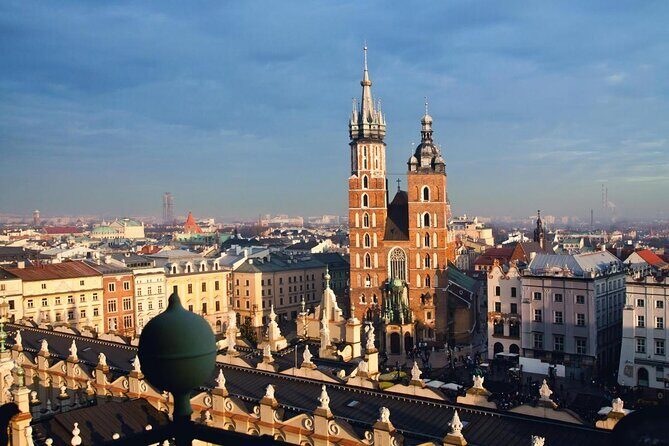
- St. Mary’s Church kicks off the hunt, so you get history fast and don’t waste time wandering.
- Hidden envelopes add a tactile scavenger element, not just phone-tapping.
- Logic and math clues mean this is built for puzzle people, not only casual photo tourists.
- English is available, but double-check the language of any written materials once you start.
- Teams split up, which usually keeps energy high and decisions moving.
- You end back at the meeting point, so plan to regroup easily at the finish.
A Puzzle Walk That Starts at St. Mary’s Church

If you want Gdańsk to feel like a story you’re helping to solve, this format works. The scavenger hunt is designed as a short walking game that uses Gdańsk’s monuments as anchors for puzzles. That matters, because it stops the usual problem with self-guided sightseeing: you see buildings, but you don’t have a reason to pay close attention.
The first major landmark connection is St. Mary’s Church. Starting there is smart for two reasons. First, it gives you a clear sense of where you are in the city right away. Second, it sets the tone: this isn’t random trivia. You’ll be solving clues that tie back to the monuments around you, plus some surprises that go beyond the obvious postcard stuff.
Also, the experience is offered in English, which makes it easier to stay fully locked in on the tasks. When the game is running well, language shouldn’t be an obstacle between you and the next step.
Other scavenger hunts and city games in Gdansk


How the Gdańsk Scavenger Hunt Works (Mobile Ticket, Team Play, Hidden Envelopes)

The structure is straightforward: you get a mobile ticket, then you follow the game instructions to solve puzzles around Gdańsk. This is a private activity, so only your group plays. That’s a big value point. You’re not being squeezed into a packed herd while trying to figure out clues.
The game doesn’t rely only on map-spots. It uses hidden envelopes as part of the challenge. That changes the feeling instantly. You’re scanning streets and building details like a detective, not like someone doing a slow walk with headphones.
You’ll also deal with more than one puzzle type. The city clue portion includes stories and legends, while the logic side uses reasoning skills—yes, including math. If you like Sudoku-style thinking or enjoy working out codes, you’ll probably find the challenges satisfying instead of frustrating.
Finally, there’s a built-in finish: it ends with a treasure. That’s not a random reward. It gives the whole hunt an arc, so the walking and problem-solving feels like a single mission rather than a checklist.
Stop 1: St. Mary’s Church and the First Round of Clues
Your start point is Plac zabaw z huśtawkami, Podwale Przedmiejskie 26, Gdańsk. From there, the first landmark focus is St. Mary’s Church. Expect the early minutes to be about getting oriented and getting your first puzzle running, because you need momentum before the hunt spreads out.
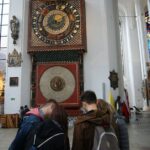
St. Mary’s is the kind of place where you can get lost in details fast—sculptural features, shapes, and historic context. A puzzle start uses that energy well. Instead of just looking at the church, you’re forced to pay attention closely enough to connect what you see with what you’re asked to solve.
What I’d do if you’re hoping for an easy start: arrive a few minutes early and make sure everyone in your group is ready to read the prompts and discuss answers. These games go best when your team is talking out loud and not freezing in silence.
The City Game: Legends, Math, and Looking for What Is Not Obvious
Once the hunt gets rolling, the experience blends two types of engagement.
First is the city-and-monument side: you’ll solve puzzles tied to Gdańsk’s monuments and learn stories and legends along the way. This is valuable because it gives meaning to what you’re seeing. You’re not hunting just for locations—you’re hunting for context.
Second is the logic side: you’ll benefit from a logical and mathematical head. That doesn’t mean you need to be a math whiz. It means the puzzles are structured so reasoning matters. If your group enjoys cracking clues together, this becomes genuinely fun.
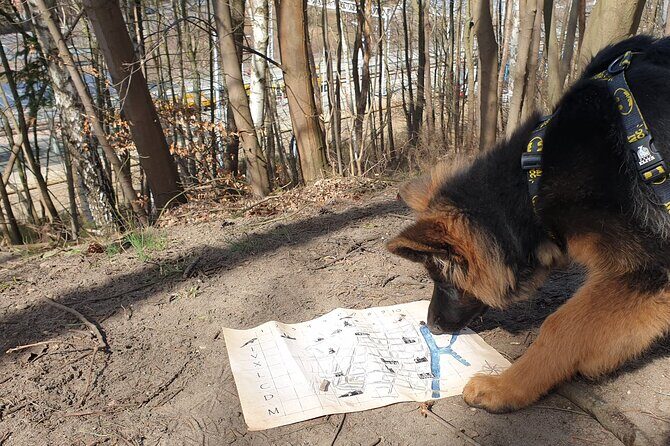
The hunt also includes a scavenger action layer—finding hidden envelopes in the city. That’s where your walking changes from casual to active. You’ll start noticing doorways, street angles, and any small “pause points” where an envelope could plausibly be tucked away. Even if you miss one quickly, the hunt keeps pulling you forward.
One more note: the game is written to include humor. Several groups describe the coordinator and the overall tone as friendly and light. That matters for a short 60–90 minute experience, because it keeps the tension low even when a clue gets tricky.
Timing and How Much Walking You Should Plan For
The duration is listed at about 1 hour. In practice, you should mentally prepare for a slightly longer session. One account describes having around 100 minutes for tasks. That means your group should plan to be flexible with the pace, especially if you want to read clues carefully instead of rushing.
The walking itself is part of the fun, but it’s not a full-day tour. Think of it as a compact old-town circuit. Since the goal is puzzles at monuments, you’ll spend time stopping and discussing rather than just strolling.
Here’s a practical way to protect your enjoyment: if you get stuck on a puzzle, don’t let one moment steal the whole clock. Work as a team, try the most obvious logic step first, then move on if needed. These games are built so you can succeed without perfection.






Your Screens, Language, and Difficulty: What to Watch Before You Start
This is where the experience can vary. The game uses digital prompts and screens, and at least one run reported too-dark iPads, which made reading difficult. It’s not something you can predict perfectly before you arrive, but you can handle it.
My advice: check the screen brightness immediately when you start. If you wear glasses, have them on from the beginning. If your group includes someone who struggles with glare or low contrast, sit closer to the device and take turns reading aloud.
Language is another practical factor. The experience is offered in English, but one account described a mismatch where a team received code sheets in Polish instead of English. That doesn’t mean it will happen to you, but it does mean you should confirm language materials at the start. If anything looks wrong, ask right away so you don’t lose time later.
Difficulty also deserves a quick reality check. Some puzzle-hunts feel too open or too wordy. One account said tasks were difficult and text-heavy with limited time. If your group doesn’t enjoy reading and decoding, the experience may feel tight. If your group does enjoy puzzles and teamwork, that same text density is usually the point—it’s how the story and the clues are delivered.
Price and Value: Is $23.66 Worth It?
At $23.66 per person, this is priced like an affordable activity that adds more than a simple walk. The value comes from a few things working together:
- You pay for a structured route with built-in stopping points.
- You get puzzle design that uses both city context and logic challenges.
- You avoid the blank-page problem of doing everything solo.
- You end with a reward (treasure), which makes the time feel complete.
Is it a bargain compared to a guided tour with a professional guide speaking for the whole time? Not always. But it’s a bargain compared to paying for multiple museum tickets or spending hours on “just wandering.” You’re buying a format that turns your time into an interactive mission.
If you’re traveling with friends who like games, the per-person value gets even better. Team play means you’re splitting the thinking load and keeping the energy up for the full loop.
If your group mostly wants slow, quiet sightseeing with minimal effort, you might feel the price is paying for work. This is an activity-first experience.
Who This Puzzle Hunt Is Best For in Gdańsk
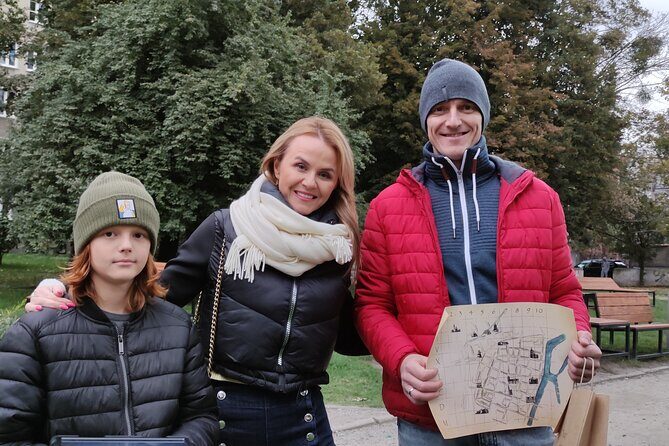
This scavenger hunt fits best when you want your vacation to include movement and problem-solving. You’ll likely enjoy it if you:
- like puzzles, codes, or logic challenges
- don’t mind walking in the old-town core
- enjoy learning through clues rather than lectures
- travel with a group that likes to talk and decide together
It also makes sense for people who want English support and a private setup. Since it’s private, your group can move at your pace without everyone else’s pace dictating your decisions.
On the other hand, if your group is sensitive to screen readability, relies on large-font materials, or dislikes text-heavy tasks, give extra attention to how your team reads prompts and how you handle stuck moments.
Should You Book the Scavenger Hunt in Gdańsk?
I’d book it if you want a playful way to experience Gdańsk’s monuments without turning your day into a lecture. The mix of hidden envelopes, city legends, and logic/math puzzles is a rare combo for an affordable, time-limited activity. Add the fact that it’s private and offered in English, and it’s a strong choice for couples and small groups who like doing something together.
Skip it or choose it carefully if your idea of sightseeing is mostly standing still, taking photos, and reading less. It’s also worth being mindful of the screen and language issues that can crop up—check brightness and confirm English materials at the start.
FAQ
Where does the scavenger hunt start in Gdańsk?
It starts at Plac zabaw z huśtawkami, Podwale Przedmiejskie 26, Gdańsk, Poland.
How long does the experience take?
It lasts about 1 hour (approx.).
Is this scavenger hunt offered in English?
Yes, it is offered in English.
Do I need to print anything, or is it mobile?
You’ll use a mobile ticket.
Is the activity private?
Yes. It’s a private tour/activity, and only your group will participate.
Will I get confirmation after booking?
You’ll receive confirmation within 48 hours of booking, subject to availability.
Are service animals allowed?
Yes, service animals are allowed.
Is it near public transportation?
Yes, it is near public transportation.
What kind of challenges will I be solving?
You’ll solve puzzles tied to the city and monuments, look for hidden envelopes, and work with logic and math.
What is the cancellation policy?
Free cancellation is available. You can cancel up to 24 hours in advance for a full refund.
FAQ
Where can I expect the activity to end?
The activity ends back at the starting meeting point.
Is everyone able to participate?
Most travelers can participate.
What if I’m traveling in a group?
You’ll play as a group, and your session is arranged only for your participants since it’s private.
Does the hunt include city monuments and stories?
Yes, you’ll solve puzzles connected to monuments and learn stories and legends.
Is there any special thing at the end?
The game ends with a treasure.
What should I do if I have questions about materials during the game?
Since the experience uses written and digital prompts, it’s best to ask right away if anything looks wrong so you don’t lose time.
Are there any restrictions on who can join?
The only participation guidance provided is that most travelers can participate; specific restrictions are not listed.
How early should I arrive?
Arriving a bit early helps you get oriented at the meeting point before the game begins.
Is the tour entirely walking?
It’s a walking-based game, designed around moving between city points to solve puzzles.
What payment level is this priced at?
The price is listed as $23.66 per person.